Have you ever been told “you’re so strong” and felt a heavy weight drop in your chest instead of a sense of pride?
For so many women, being praised for handling everything has quietly turned from a compliment into an expectation—and eventually, a prison. If you are the person everyone depends on, the one who never falls apart and carries the emotional load for everyone else, you are not alone.
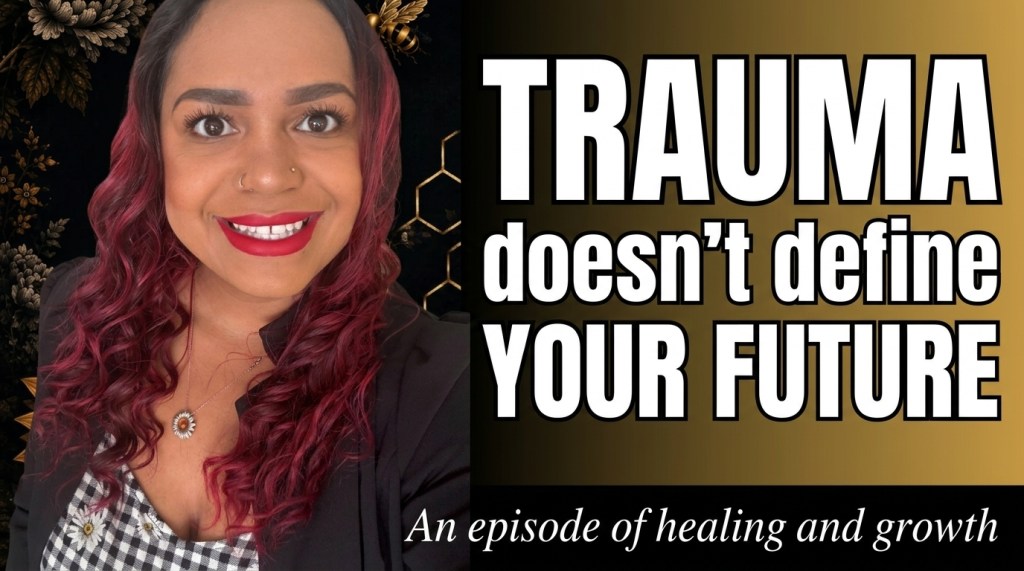
In this powerful episode of Thrive by The Rising Muse, host Naty Matos and Veda Green break down the “strong woman myth,” unpacking why hyper-independence develops, how it impacts your body, and how to finally give yourself permission to lay the heavy load down.
▶️ Watch the Full Episode on YouTube
Why the “Strong Woman” Label Is a Trap
The strong woman myth doesn’t begin as a lie—it begins as survival.
Many women learned early on that vulnerability wasn’t safe. Maybe crying didn’t change anything, asking for support led to disappointment, or showing emotion got you shamed. So you adapted. You became composed, capable, and self-contained.
In trauma psychology, this is known as functional adaptation: becoming highly competent because your environment required it. The world praises that competence, but rarely asks what it cost you to build it.
The problem isn’t strength itself; it’s when strength becomes the only role you are allowed to play. You stop asking for help because it feels like failure. You end up looking fine on the outside while feeling completely alone inside—dependable, but not deeply known; admired, but not supported.
How Hyper-Independence Hijacks Your Nervous System
One of the clearest signs of this pattern is hyper-independence. It sounds noble—“I got this,” “I don’t need anybody,” “I’d rather do it myself.” But underneath that self-reliance is often a nervous system bracing for impact.
When care is inconsistent, your body makes a simple decision: It is safer to depend on myself. That strategy protects a child, but it isolates an adult.
Common signs you’re operating in hyper-independence:
- Minimizing your own needs to prioritize everyone else
- Rejecting help even when you are visibly exhausted
- Feeling uncomfortable or anxious when someone tries to care for you
- Living with light sleep, physical tension, and constant alertness
When you live like no one is coming to help, your body stays stuck in fight-or-flight mode. As Naty explores in the episode, rest feels foreign because your nervous system hasn’t learned that it is safe to put the armor down.
When Competence Turns Into Loneliness
In family and relationship systems, overfunctioning and underfunctioning work in pairs. When you consistently anticipate needs, fix problems, and absorb tension, everyone else unconsciously steps back. You end up becoming the “emotional adult” in every room.
In the episode, Naty shares a vivid image: a rowboat with two people. If one person does all the rowing, the other never learns to hold an oar. Over time, competence without reciprocity turns into deep loneliness and burnout. Control might soothe anxiety in the moment, but it suffocates real connection in the long run.
What Real Strength Actually Looks Like
We often confuse strength with self-erasure, but biblical and emotional maturity mean something very different.
Jesus was strong, yet He expressed deep sorrow, asked His friends for support, and wept openly. He never confused stoicism with faith. Scripture reminds us that power comes through Christ, not through isolated self-sufficiency.
Real strength looks like:
- Letting someone see you without your armor
- Admitting when you are tired without apologizing
- Delegating without feeling guilty
- Receiving support without feeling like you have to earn it
Admitting weakness isn’t failure—it’s the doorway to genuine intimacy, healing, and rest.
Ready to Unpack the Full Conversation?
Unlearning years of hyper-independence takes time, but you don’t have to navigate it alone. Dive into the full episode to hear Naty discuss:
- The physiological cost of chronic overfunctioning
- How church culture and ministry can accidentally reward burnout
- Practical steps to set boundaries before reaching a total meltdown
📺 [Click here to watch the full episode on YouTube now] and join the conversation in the comments!
Frequently Asked Questions
What is the strong woman myth?
It is the belief that a woman must always be capable, composed, and self-sufficient, regardless of her emotional or physical load.
Is being strong a bad thing?
No. Healthy strength is a blessing. The problem arises when strength turns into emotional numbness or an inability to receive care.
Where can I listen to the Thrive podcast?
You can stream Thrive by The Rising Muse on YouTube, Spotify, Apple Podcasts, RedCircle, and all major podcast platforms.
Loved this week’s episode insight? Help us unlock our next level of community care by subscribing to our YouTube channel today!
Sow a seed into this ministry to help us spread His light and transform lives—click here to join our mission today!