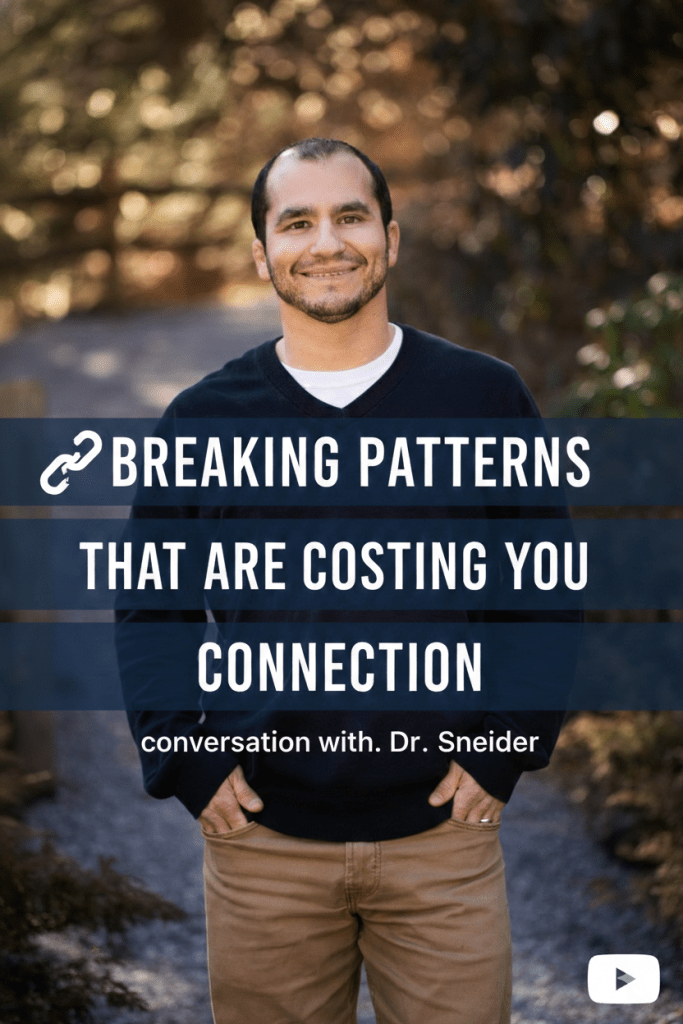
Building Emotional Safety and Deep Connection in Relationships: Insights from Dr. Dan Schneider

Why do so many arguments feel like they go in circles?

You start talking about dishes, tone, or timing… and somehow it turns into something much bigger. The truth is, most relationship conflict isn’t about the surface issue. It’s about what’s happening underneath — the hurt spots, fears, and emotional wounds that get triggered when we feel unsafe.

In this episode, we sit down with Dr. Dan Schneider to unpack one powerful truth: emotional safety is the foundation of lasting intimacy.

When emotional safety is missing, even small misunderstandings can feel threatening. But when it’s present, couples can:

  • Express needs without fear of criticism
  • Disagree without escalating
  • Repair trust after hurt
  • Rebuild closeness even after setbacks

Dr. Schneider shares practical, research-backed tools to help couples:

  • Communicate without spiraling into blame
  • Identify and talk about “hurt spots” before they explode
  • Make daily “trust deposits” that strengthen the connection
  • Use structured conversations that actually lead somewhere
  • Reignite intimacy through intentional moments of connection

One of the most powerful ideas he introduces? Trust is like a piggy bank. Every honest conversation and consistent action is a deposit. But when trust is broken, the coins spill out — and repair requires intentional rebuilding.

If you’ve ever thought:

  • “Why do we keep having the same fight?”
  • “How do we rebuild after trust has been shaken?”
  • “Is it possible to feel close again?”

This episode is for you.

We’re not just talking about avoiding conflict. We’re talking about transforming it — using it as a doorway to deeper understanding, stronger emotional safety, and lasting intimacy.

Dr. Dan Sneider, Ed.D. is a couples therapist and educator. He is also the creator of The Intimacy Shift, a 12-week program helping couples rebuild emotional safety and lasting connection.
Dr. Sneider blends Emotionally Focused Therapy, Internal Family Systems, attachment theory, neuroscience, and practical communication tools. His approach is structured, compassionate, and deeply rooted in helping partners understand themselves and each other in a new way.

To contact Dr. Sneider: https://intimacyshift.com/

Visitors to his website will get FREE access to my ‘6 Keys to Unlocking Intimate Conversations with Your Partner.’ It is a unique 12-page PDF. It includes templates, tools, and practices to transform your relationship.Here are links to his socials also: InstagramYouTubeLinkedIn, and Facebook.

🎧 Tune in to hear how small, intentional shifts can radically change the emotional climate of your relationship. Discover why vulnerability is the missing piece to the connection you’ve been craving.
Embracing Healing and Empathy Through Trauma-Informed Care – A Sneak Peek into Thrive Podcast

In a world where health and wellness discussions often narrow down to symptoms and diagnoses, there emerges a beacon of hope and understanding—a holistic approach known as trauma-informed care (TIC). As we gear up for the launch of the much-anticipated podcast, Thrive, set to premiere on April 7th, we delve into a topic that resonates deeply with our core themes: Christianity, mental health, parenting, family, and women’s issues. Today, we explore the transformative potential of trauma-informed care, an approach that aligns perfectly with Thrive’s mission to foster healing, empathy, and connection.

Understanding Trauma-Informed Care

Trauma-informed care represents a paradigm shift in health services, focusing on the question, “What happened to you?” rather than “What’s wrong with you?” This approach recognizes the profound impact of trauma on an individual’s well-being and strives to understand their entire story. It’s an ethos that doesn’t just aim to treat but to heal, acknowledging the person’s experiences, strengths, and resilience.

The Pillars of Trauma-Informed Care

Safety First: Creating environments where individuals feel both physically and emotionally secure is the foundation of TIC. This sense of safety is pivotal for healing.

Trust and Transparency: Openness and honesty in communication are key. Trust is a two-way street that fosters a therapeutic alliance.

Peer Support: Sharing experiences with others who have walked similar paths can be incredibly healing. It’s about building a community of understanding and support.

Collaboration: True healing involves working together, respecting each other’s expertise, and making decisions collaboratively.

Empowerment: Recognizing and nurturing individual strengths and resilience is at the heart of TIC. It’s about highlighting what individuals are capable of, not just what they’ve endured.

Humility and Responsiveness: Acknowledging personal biases and the impact of historical trauma is essential. TIC is about being adaptable and responsive to the unique needs of each individual.

Why Trauma-Informed Care Matters

The significance of trauma-informed care extends beyond the individual to the community and society at large. It promotes better patient engagement, improved health outcomes, and enhances the well-being of caregivers. It’s a testament to the power of empathy, understanding, and kindness.

Bringing Trauma-Informed Care into Our Lives

Incorporating the principles of trauma-informed care into our daily interactions doesn’t require a medical degree. It starts with being a good listener, creating safe spaces for open dialogue, showing kindness in our actions, and educating ourselves about the impact of trauma. These small steps can make a profound difference in someone’s life.

Thrive: A Journey of Healing and Understanding

As Thrive prepares to launch, our aim is to create a platform that embodies the principles of trauma-informed care. Each episode is designed to enlighten, inspire, and connect with listeners on a deep level, covering a wide range of topics from Christianity and mental health to parenting, family, and women’s issues. Thrive is not just a podcast; it’s a movement towards a more empathetic and understanding society.

Trauma-informed care reminds us of the power of seeing the person behind the symptoms, of understanding the story behind the pain. As we eagerly anticipate the premiere of Thrive, let us commit to approaching every interaction with empathy, kindness, and an open heart. Because when we understand what has happened to someone, we open the door to healing and connection.

Remember, it’s not just about what’s wrong; it’s about what happened. And that matters. Join us on April 7th for the launch of Thrive, where together, we can embark on a journey of healing, understanding, and thriving.