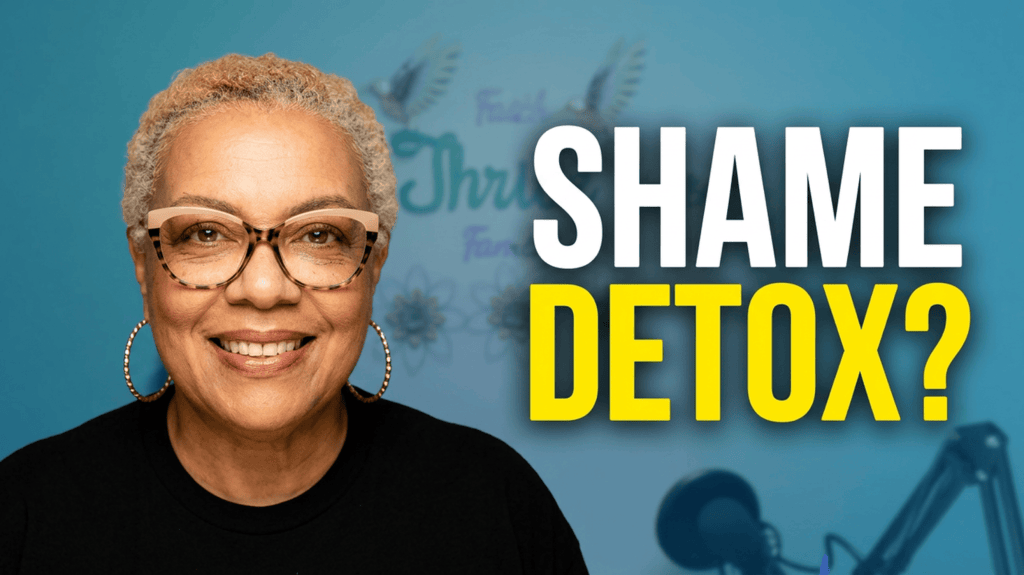
Shame Detox: How to Recognize Toxic Shame and Start Healing at the Root

Have you ever caught yourself over-apologizing for simply taking up space, obsessing over a minor mistake, or feeling like no matter how much you accomplish, it is never quite enough? What if the loudest, harshest voice inside your head isn’t actually yours?

In our latest episode of Thrive, we sit down for a deeply raw, eye-opening conversation about the invisible weight so many of us carry: toxic shame.

Shame doesn’t just make you feel bad—it quietly rewrites your identity. It influences how you date, parent, communicate, and even how you pray. If you have ever felt trapped in a endless loop of perfectionism, performance, or self-criticism, this conversation was recorded specifically for you.

Here is a glimpse of what we unpack in this powerful episode, and why you need to tune in today.

1. What Shame Actually Is (And Why It’s Not Guilt)

Before you can heal shame, you have to define it. In the episode, we break down the critical difference between the signals your mind sends you:

  • Guilt says: “I did something wrong.”
  • Healthy shame says: “That behavior doesn’t align with who I want to be.”
  • Toxic shame says: “I am wrong.”

Toxic shame doesn’t just correct your actions; it attacks who you are. We discuss how shame is deeply embodied—triggering physical threat states like elevated cortisol, a tight chest, or avoided eye contact—and how to spot it when it masks itself as discipline or ambition.

2. How Shame Gets Installed Early

Children are not born believing they are defective. We explore the relational root causes—from emotional invalidation and public humiliation to fear-based messaging—that teach us to believe mistakes threaten our belonging.

When raised with discipline lacking emotional connection, a child internalizes a dangerous narrative: “If I fail, I lose love.” In this episode, we unpack how to recognize these early installations so you can finally stop passing them down.

3. How Shame Shows Up in Relationships & Marriage

Shame never stays buried; it leaks into adult life. It shows up as hyper-independence, emotional withdrawal, people-pleasing, or an anxious need to perform to be loved.

We also get real about relationships, appearance, and marriage. We talk through the hard truth that no milestone—no ring, baby, or house—can change another human being. You’ll learn how toxic shame makes you personalize relational problems (“If I were prettier or better, they’d treat me right”) and how to start grounding your worth in secure love rather than conditional acceptance.

4. Religious Trauma vs. True Grace

Why do so many people walk away from faith spaces? We tackle the heavy topic of religious trauma and shame-based theology.

From the double standards of public shaming to fear-based messaging, we contrast harmful institutional practices with the compassionate model set by Jesus with the woman at the well. You will learn the difference between godly conviction (which draws you toward repair and closeness) and self-condemnation (which pushes you into isolation and hiding).

5. Practical Steps to Detox Shame at the Root

Healing isn’t about pretending nothing happened; it’s about disrupting the belief system shame built. In this episode, we walk through actionable tools to help you:

  1. Name the Voice: Separate yourself from the critic, the prosecutor, or the old tape.
  2. Practice Self-Compassion: Move from self-attack to supportive self-talk.
  3. Reconnect with Your Body: Shift your posture, breathe, and allow yourself to be seen.
  4. Speak Truth to Safe People: Disarm shame by speaking it out loud in safe relationships.
  5. Rewrite Your Spiritual Narrative: Choose restoring grace over punishing condemnation.

Ready to Stop Hiding and Start Healing?

Healing is rarely instant—it’s about unlearning, building safety, and taking small steps toward freedom every single day. You are not a mistake, and you don’t have to carry this weight alone any longer.

🎧 Watch or listen to the full episode of Thrive now to begin your shame detox journey.
Loved this conversation? Don’t forget to subscribe, leave a review, and share this episode with someone in your life who needs a gentle reminder of their worth today!

Loved this week’s episode insight? Help us unlock our next level of community care by subscribing to our YouTube channel today!

Sow a seed into this ministry to help us spread His light and transform lives—click here to join our mission today!

Are You Strong in Public, but Unraveling in Private?

Have you ever found yourself knowing all the right Scriptures, showing up for everyone else, and looking completely put-together on the outside—yet in private, you’re secretly struggling with overthinking, anxiety, or emotional triggers?

If so, you are far from alone.

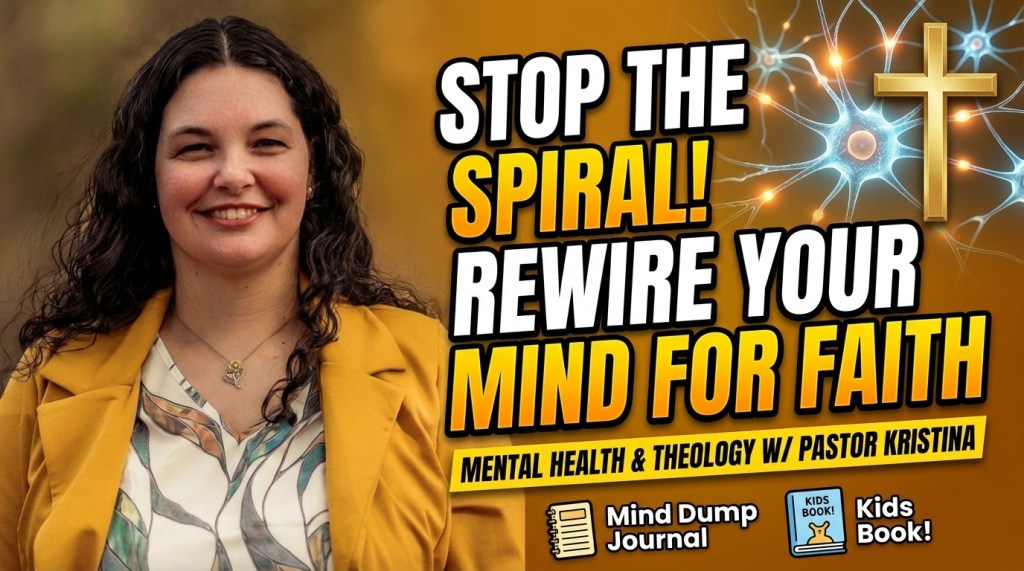
In our latest podcast episode, we sat down with Pastor Kristina Gibbons—ordained pastor, certified pastoral counselor, and author of the Mind Dump Journal—for a deep dive into the intersection of faith, brain science, and emotional transformation.

Why Surface-Level Fixes Don’t Work

Most of us spend years trying to manage our symptoms instead of untangling the root cause. But what if the key to lasting change isn’t just “trying harder,” but actually rewiring your brain?

In this conversation, Pastor Kristina breaks down:

  • The “Mind Dump” Method: How getting chaotic thoughts out of your head and onto paper physically transforms your perspective.
  • Neuroplasticity Meets Scripture: What actually happens in your neural pathways when you practice Romans 12:2 and “renew your mind.”
  • Taking Thoughts Captive: A step-by-step approach to intercepting toxic thought loops before they control your behavior.
  • Generational Healing: How her new children’s book, Asher Shines Bright, is helping parents teach kids to take their big worries to God early in life.

Whether you’re feeling stuck in a mental spiral or simply want practical, faith-based tools to master your internal monologue, this masterclass is built for you.

🎬 Watch the Full Episode Now!

Stop settling for surface-level quick fixes and start building neural pathways rooted in peace and spiritual authority.

🔗 Connect & Explore Pastor Kristina’s Resources:

Loved this week’s episode insight? Help us unlock our next level of community care by subscribing to our YouTube channel today!

Sow a seed into this ministry to help us spread His light and transform lives—click here to join our mission today!

The Conflict Inside You Isn’t a Weakness—It’s Your Missing Superpower

Ever feel like your mind is a boxing ring where your harsh inner critic and your weary, permissive self are locked in an endless title fight?

You are not alone. In a culture that shouts “Grind harder!” and whispers “Self-care!”, most of us are exhausted just trying to figure out which voice to listen to. But what if we’ve got the whole relationship wrong?

This episode of Thrive by The Rising Muse breaks down a life-altering concept: Discipline and Compassion are not opposing forces. They are actually powerful, inseparable partners in building genuine emotional freedom, unshakable resilience, and deep psychological maturity.

We’re not just talking self-help clichés; we are diving deep into:

  • The Clinical Psychology Behind It: How childhood and parenting styles (from Authoritarian to Permissive) shaped your default inner voice—and how to internalize a “Mature Parental Voice” that’s both firm and gentle.
  • The Trauma Connection: Why discipline feels like punishment to you, and compassion feels like failure (and how to fix it).
  • A Simple, 4-Step Action Plan: A daily framework to break free from self-criticism spirals or stagnation, starting today.

Are you ready to stop swinging between being your own tyrant and your own doormat?

Learn the art of integration. Watch the full episode now to discover how to hold yourself to a high standard without losing your softness, and how to heal without collapsing into inaction. This is the mature path to inner peace.

Watch the Episode: Discipline vs Compassion | Which One Actually Heals?

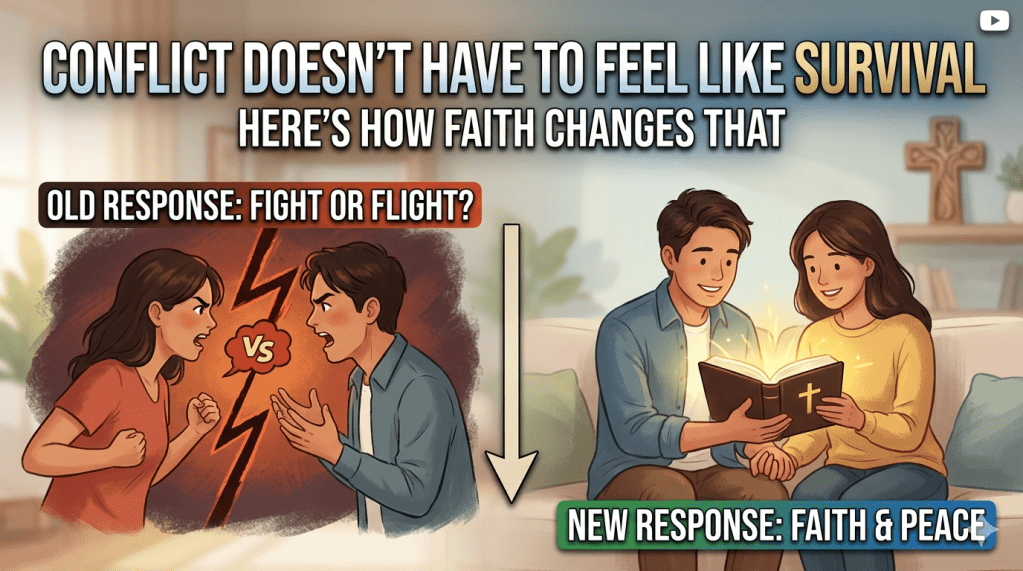
Why Communication Breaks Down During Conflict?

(And How Faith, Awareness, and Compassion Can Help)

Have you ever walked away from a conversation with someone you love, feeling completely misunderstood, disconnected, or more alone than before?

When tension rises, intimacy and understanding seem to vanish in an instant. But what if the breakdown isn’t because you’re bad at expressing yourself? What if it’s rooted in something much deeper—your nervous system’s natural response to threat and trauma?

In this video, we are breaking down the complex biology of why communication falters during conflict, and how you can use your faith and emotional awareness to stay connected when conversations get hard.

What You’ll Learn in This Episode:

  • The Body First: How your nervous system triggers fight, flight, freeze, or fawn modes before a conflict even starts in your mouth.
  • The Power of a Holy Pause: Practical ways to live out James 1:19 (“quick to listen, slow to speak”) when your physical nerves are completely frayed.
  • Recognizing What Lies Beneath: How hidden wounds, unmet needs, and shame hijack dinner-time disagreements and turn minor issues into major fights.
  • The Grace-Filled Script: A simple, 10-minute boundary trick to use when you’re too overwhelmed to think straight, ensuring you protect your relationship instead of pushing each other away.

Key Takeaway: The most mature person still experiences moments of immaturity when emotions activate their survival response. The key isn’t being perfect—it’s learning how to regulate.

Stop Choosing Disconnection. Watch Now!

Conflict is inevitable, but disconnection is a choice. You don’t have to navigate these hard conversations alone. Watch the video to learn how to transform your conflicts into opportunities for deeper connection, grounded presence, and courageous love.

The Power of Second Chances: Lessons from Easter on Growth, Faith, and Redemption

Have you ever felt like your story was over because of mistakes or hardships? Perhaps you’ve wondered if there’s any hope for a fresh start after experiencing failure. If so, you’re not alone. Many of us have faced moments of despair, but the message of Easter offers a powerful reminder: no matter your past, a new beginning is always possible. In this post, we explore how faith, resilience, and God’s grace open the door to second chances, transforming brokenness into growth and hope.

Embracing the Truth: Your Story Isn’t Over

Easter is often seen as a celebration of resurrection—a miracle that signifies hope and renewal. But beyond the historical event of Jesus rising from the dead, Easter also symbolizes that our personal stories are still being written. As one speaker beautifully put it, “Your story isn’t over,” and this truth can be a lifeline when we feel stuck or overwhelmed by our mistakes. Think about Mary, the mother of Jesus. She carried her child through pregnancy, raised him, and watched him undergo unimaginable suffering. Despite her pain, she witnessed the ultimate victory—her son’s resurrection. Her story didn’t end in grief; it was a testament to perseverance and hope. If Mary’s story can continue beyond heartbreak, so can yours.

Key takeaways
  • No matter what you’ve been through, your narrative can still include chapters of redemption and growth. God’s grace enables us to rewrite our stories, no matter how dark the past.
  • When you’re struggling, pray the honest prayer, “God, help my unbelief.” Trusting in God’s presence and purpose, despite your doubts, is a form of real faith.
  • Faith isn’t the absence of doubt but a decision to trust God even when life feels uncertain or painful.
  • Embrace the discomfort because it signifies progress. Growth is a process that requires grace, patience, and persistence.
  • Speak to yourself with kindness. Treat yourself as you would a dear friend who’s healing and growing.
  • Giving yourself grace is essential for healing and embracing the second chances God provides.
  • God’s grace isn’t just for salvation but for everyday renewal. It’s accessible, abundant, and available whenever you’re ready to accept it.

Living the Second Chance: Practical Steps

To apply this powerful truth to your life, consider these steps:

  1. Be honest with yourself about where you are. No judgment, just acknowledgment.
  2. Lean into your faith—even if it’s just small prayers like “God, I trust You.”
  3. Practice grace—for yourself and others. Remember, healing takes time.
  4. Embrace the second chance by letting go of past mistakes. You are not your past; you are who you are becoming.

Reflect on your testimony: where you were, what you’ve overcome, and where you’re headed. Choose to leave behind guilt and shame—give them over to God—and step into the newness He offers.

Remember

: God’s love is greater than your failures, and His grace is always enough for a new beginning.


Final Reflection: Your Reset Button Is Always Within Reach

This Easter, remember that the resurrection isn’t just a historical event—it’s a daily invitation for renewal. No matter how broken you feel or how many times you’ve stumbled, God’s grace is waiting for you to accept it. You are worthy of healing, growth, and a fresh start. So, take hold of your second chances. Trust the process, lean into faith during the hard times, and extend grace to yourself as you move forward. Your story isn’t over; it’s just beginning again.


FAQs

Can I truly start over after making big mistakes? Absolutely. God’s grace makes every new beginning possible. As 2 Corinthians 5:17 reminds us, “The old has gone, the new is here.”

How do I keep faith when I feel like giving up? Focus on small prayers and trust that God is working beneath the surface. Remember, perseverance produces character and hope.

Why does growth often feel painful? Growth involves breaking down old beliefs and habits, which can be uncomfortable or chaotic before new strength emerges.

Is grace only for others or also for myself? Grace is for everyone, including you. You deserve forgiveness and second chances just as much as anyone else.

How do I accept God’s gift of a second chance? Start by honest reflection, prayer, and releasing guilt. Accept His love and step into the new chapter He’s offering.


In Closing

This Easter, let the message of resurrection inspire you to embrace second chances, trust God’s timing, and walk boldly into your future. Remember, your story is still being written—and with God’s grace, it’s a story of hope, growth, and renewal.

Discover how Easter reminds us that second chances are possible through faith, grace, and ongoing growth, empowering you to rewrite your story regardless of past mistakes.