Shame Detox: How to Recognize Toxic Shame and Start Healing at the Root

Have you ever caught yourself over-apologizing for simply taking up space, obsessing over a minor mistake, or feeling like no matter how much you accomplish, it is never quite enough? What if the loudest, harshest voice inside your head isn’t actually yours?

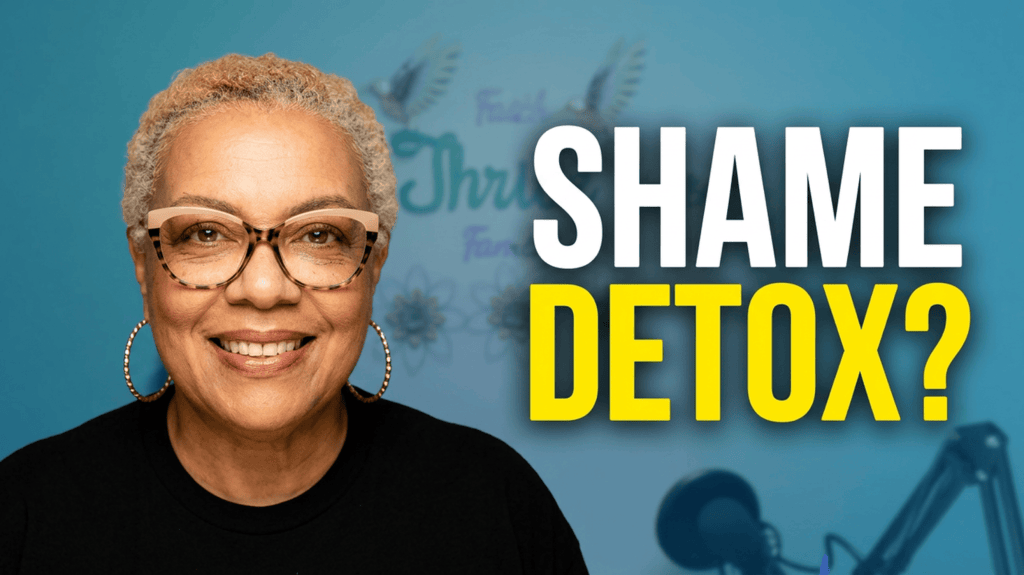
In our latest episode of Thrive, we sit down for a deeply raw, eye-opening conversation about the invisible weight so many of us carry: toxic shame.

Shame doesn’t just make you feel bad—it quietly rewrites your identity. It influences how you date, parent, communicate, and even how you pray. If you have ever felt trapped in a endless loop of perfectionism, performance, or self-criticism, this conversation was recorded specifically for you.

Here is a glimpse of what we unpack in this powerful episode, and why you need to tune in today.

1. What Shame Actually Is (And Why It’s Not Guilt)

Before you can heal shame, you have to define it. In the episode, we break down the critical difference between the signals your mind sends you:

  • Guilt says: “I did something wrong.”
  • Healthy shame says: “That behavior doesn’t align with who I want to be.”
  • Toxic shame says: “I am wrong.”

Toxic shame doesn’t just correct your actions; it attacks who you are. We discuss how shame is deeply embodied—triggering physical threat states like elevated cortisol, a tight chest, or avoided eye contact—and how to spot it when it masks itself as discipline or ambition.

2. How Shame Gets Installed Early

Children are not born believing they are defective. We explore the relational root causes—from emotional invalidation and public humiliation to fear-based messaging—that teach us to believe mistakes threaten our belonging.

When raised with discipline lacking emotional connection, a child internalizes a dangerous narrative: “If I fail, I lose love.” In this episode, we unpack how to recognize these early installations so you can finally stop passing them down.

3. How Shame Shows Up in Relationships & Marriage

Shame never stays buried; it leaks into adult life. It shows up as hyper-independence, emotional withdrawal, people-pleasing, or an anxious need to perform to be loved.

We also get real about relationships, appearance, and marriage. We talk through the hard truth that no milestone—no ring, baby, or house—can change another human being. You’ll learn how toxic shame makes you personalize relational problems (“If I were prettier or better, they’d treat me right”) and how to start grounding your worth in secure love rather than conditional acceptance.

4. Religious Trauma vs. True Grace

Why do so many people walk away from faith spaces? We tackle the heavy topic of religious trauma and shame-based theology.

From the double standards of public shaming to fear-based messaging, we contrast harmful institutional practices with the compassionate model set by Jesus with the woman at the well. You will learn the difference between godly conviction (which draws you toward repair and closeness) and self-condemnation (which pushes you into isolation and hiding).

5. Practical Steps to Detox Shame at the Root

Healing isn’t about pretending nothing happened; it’s about disrupting the belief system shame built. In this episode, we walk through actionable tools to help you:

  1. Name the Voice: Separate yourself from the critic, the prosecutor, or the old tape.
  2. Practice Self-Compassion: Move from self-attack to supportive self-talk.
  3. Reconnect with Your Body: Shift your posture, breathe, and allow yourself to be seen.
  4. Speak Truth to Safe People: Disarm shame by speaking it out loud in safe relationships.
  5. Rewrite Your Spiritual Narrative: Choose restoring grace over punishing condemnation.

Ready to Stop Hiding and Start Healing?

Healing is rarely instant—it’s about unlearning, building safety, and taking small steps toward freedom every single day. You are not a mistake, and you don’t have to carry this weight alone any longer.

🎧 Watch or listen to the full episode of Thrive now to begin your shame detox journey.
Loved this conversation? Don’t forget to subscribe, leave a review, and share this episode with someone in your life who needs a gentle reminder of their worth today!

Loved this week’s episode insight? Help us unlock our next level of community care by subscribing to our YouTube channel today!

Sow a seed into this ministry to help us spread His light and transform lives—click here to join our mission today!


🌿 Breaking the Mold in Faith, Leadership, and Voice

A Conversation with Sarah J.R. Smith

What if your voice was never meant to fit the mold?

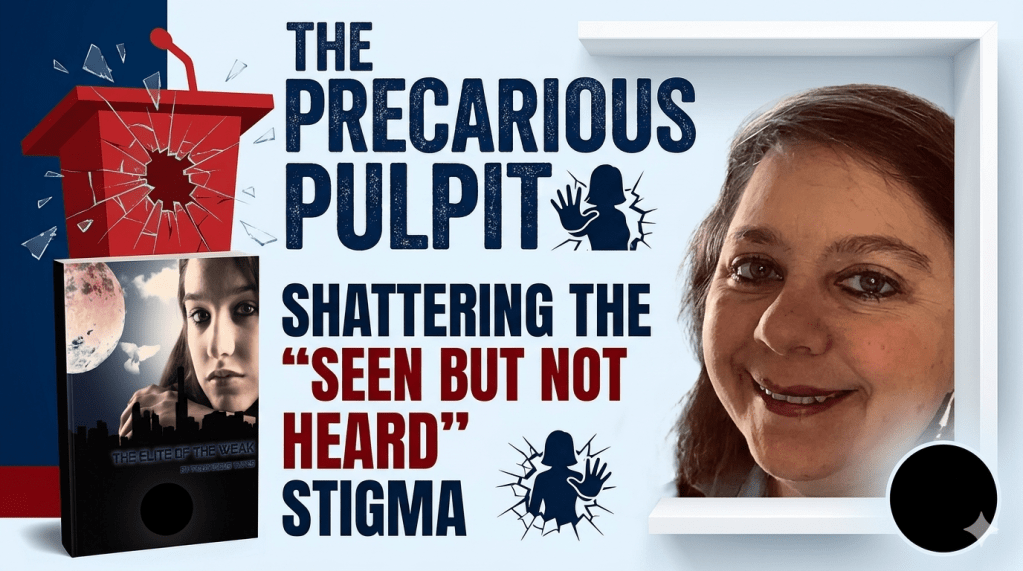
In this powerful episode of Thrive by The Rising Muse, we sit down with Sarah J.R. Smith—author, pastor, mother, and model-breaker (also known as Precarious Yates)—to unpack what it really means to walk boldly in your calling, even when it challenges tradition.

🔥 Why You Need to Listen

For many women in faith spaces, the message has been clear: stay quiet, stay small, stay within the lines.

But what happens when God calls you outside of that?

Sarah shares her journey of stepping into leadership despite resistance, unlearning limiting beliefs, and embracing a faith rooted in truth—not fear. From her global missionary experiences to her work addressing real-world issues like human trafficking and spiritual warfare, her story is both raw and empowering.

What We Cover

  • Finding your voice in spaces that expect silence
  • Breaking barriers as a woman in ministry
  • Unlearning harmful traditions and rebuilding faith
  • Navigating leadership, family, and the mental load
  • Standing firm in your calling—even when it’s uncomfortable

Sara JR Smith—also known by her pen name, Precarious Yates. She’s an author, a pastor, a wife, a mom—and honestly, a model-breaker in every sense of the word.
From missionary work across Ireland, India, and the Philippines… to writing bold, unfiltered stories that dive into real-world darkness and spiritual warfare. You can hear more from her on  Facebook, X (Former Twitter), and Instagram

Author of the Revelation Special Ops series

Author of The Heart of the Caveat Whale trilogy

Book 1 of Revelation Special Ops
How far will teen spy Hadassah Michelman go to
free kids from modern slavery? Will she stake out all
night in a West African Jungle?
Swim through a polluted river in the Philippines?
Climb through abandoned sewers in Rome?
At least the organization she wants to work for,
RSO supplies handy espionage gadgets. She hopes
they’re enough to get her out of a thousand
impossible situations.
She never imagined anyone from her team would
encounter dinosaurs. Terrorists with biochemical
weapons. Earthquakes in every corner of the globe.
Will she still rescue kids from traffickers when
disasters surround?
Will she have the strength to be the elite of the weak?
And if not, where will she find it?
https://a.co/d/aFhEuuH

🌱 The Takeaway

You don’t need permission to be who God called you to be. Your voice matters.
Your calling is valid. And you were never meant to shrink to belong.

Ready to be challenged, encouraged, and inspired?

👉 Tune in to this episode of Thrive by The Rising Muse and step boldly into your calling.

📌 Follow us on social media @therisingmuse for more conversations that uplift and empower.

Are you ready to break the mold?

The Importance of Reputation: Balancing Authenticity and Perception

By Dan First

Proverbs 3:3-4NIV
Let love and faithfulness never leave you
Bind them around your neck, write them on the tablets of your heart
Then you will win favor and a good name in the sight of God and man
.

All of us are known for something… Our behavior is usually the cause of our reputation. It would be a pretty great thing for people to think of us as loving and faithful. This verse makes me think of the multitude of times I have read on social media some form of “I don’t care what anyone thinks of me.”

First of all, that’s not true. Every sane person cares at least a little bit about what broader society thinks of them, and they care even more what their circle thinks. Even people who wish to consider themselves really unique will only stray so far from the accepted norms of their chosen community. The larger majority will take precautions to stay safely within the boundaries of what they know their primary peer group will approve of because they care what those people think.

Oftentimes the people who claim to be living as their “most authentic self” are the most predictable. They faithfully copy the dress code, ideology, and catchphrases of the groups they want to feel a part of. You know what they will think and say before their lips ever move.

BUT, if you are a person who claims to not care what anyone thinks of you… why is that? A bad reputation can only hold you back in multiple dimensions of your life. Your reputation is going to affect the way people see your family members, your spouse, and your children. Your reputation could affect the way people view the organizations you are a part of and care about. Having a good reputation before God ought to be our primary goal, but we should also care what the people around us observe about us. There’s likely to be a lot of truth about our reputation—for better or for worse.

There’s an old Yiddish saying I’ve heard: “If your friend calls you a donkey, ignore him. If five friends call you a donkey, buy a saddle.

About Dan:

Daniel First has been an entrepreneur, song writer, worship leader, recording artist, speaker, and pastor. He has spent thirty years studying and teaching the Bible. He and his wife, Brandy, have been married for 28 years and have 7 children.

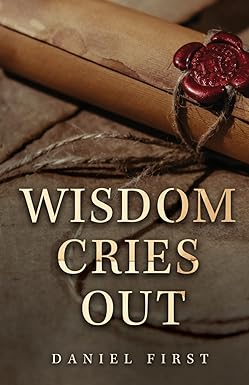
Dan’s book “Wisdom Cries Out” talks to us about the meaning of abundant life in God and the scriptures. You can obtain Dan’s book on Amazon , Prairie Lights Blooks and Barnes and Nobles.

True Value in a World Obsessed with Numbers

As parents, we often find ourselves learning valuable lessons from our children, unexpected teachers in the school of life. This week, I had a simple yet profound encounter with my toddler while teaching him the names of coins—penny, dime, nickel, and quarter. Little did I know, this innocent lesson would unveil deeper truths about the nature of value in our lives.

I asked my three-year-old to arrange the coins in order of perceived value. His tiny hands meticulously placed the nickel ahead of the dime because, in his eyes, bigger meant better. It was a moment of innocence, but it carried a profound message: sometimes, our perception of value is skewed by superficial attributes like size or shine.

In reflecting on this, I couldn’t help but draw parallels to a recent incident I came across online. A professional, undoubtedly talented and passionate about her craft, was denied participation in a podcast simply because she lacked a substantial social media following. Her value was reduced to mere numbers, overlooking the quality of her content and the depth of her expertise.

It’s a sobering reality check—a reminder that in a world fixated on metrics and numbers, true worth often goes unnoticed. We’ve become conditioned to equate popularity with value, overlooking the substance beneath the surface. But what if, like my toddler’s perception of coins, our judgments are misguided? What if genuine talent, authenticity, and integrity hold more weight than mere numbers on a screen?

Scripture echoes this sentiment, urging us not to conform to the world’s standards of value and success. In Romans 12:2, we’re encouraged to “not be conformed to this world, but be transformed by the renewing of your mind.” It’s a call to recalibrate our understanding of value, to see beyond the superficial and embrace the intrinsic worth of each individual.

Furthermore, Proverbs 11:1 reminds us that “a false balance is an abomination to the Lord, but a just weight is his delight.” God’s perspective transcends worldly measures of worth; He sees the heart, not the external façade. In His eyes, true value lies in character, integrity, and the sincere pursuit of righteousness.

As we navigate a world that often distorts the true meaning of value, let us heed the lessons from a toddler’s innocent perspective. Let us resist the temptation to measure worth by external standards and instead seek the deeper truths that define genuine value. And above all, let us find solace in the unwavering truth that in God’s eyes, we are valued not for what we possess or portray, but for who we are—beloved children, cherished and esteemed beyond measure.

So, the next time you’re tempted to equate value with popularity or status, remember the lesson of the coins and the wisdom of Scripture. True worth cannot be quantified by numbers; it is found in the richness of character, the depth of integrity, and the purity of heart. In embracing this truth, we discover a freedom that transcends the fleeting measures of the world—a freedom rooted in the unshakable assurance of our infinite worth in the eyes of our Heavenly Father.

Until next time, be blessed.

Don’t forget to checkout our podcast Thrive by The Rising Muse where we get in depth conversations about faith, family and mental health.