Legalizing the Gospel

This may not be a popular topic, but here we go.

In the last decade or so, I have seen a movement of Christians trying to put laws in place according to what the Bible says we should or should not do. I am a follower of Jesus, but this movement, in my opinion, has brought out several issues.

1. Politicians who pretend to be Christian just to obtain votes.
The Bible says, “You will recognize them by their fruits” (Matthew 7:16). However, in my observation, the masses are bending over backwards to justify some people’s behaviors, decisions, and actions just because their mouths have said they are Christians—even though their fruits are not showing.

2. Looking the other way.
I’ve also observed Christians compromising their own values just to have someone in office who will get things done the way they want, something like “the end justifies the means.”

Here’s my issue with Christianity by law: Are people realizing that forcing someone into a particular behavior does not mean they are accepting or living for Christ?

For example, you could mandate by law that all citizens attend church every Sunday. People might show up at their nearest church, but that doesn’t mean the message is going into their hearts.

God gave us free will. “Now the Lord is the Spirit, and where the Spirit of the Lord is, there is freedom” (2 Corinthians 3:17). Jesus never forced anyone to accept Him. Why are we? Jesus came to show us His unconditional love—a love that leads us to repentance and to fall in love with Him enough to follow Him to the ends of the earth.

When you force someone into submission, they don’t love what they’re doing—they resent it. They may outwardly show the “good” behavior you want to see, but their heart has not turned toward God.

Legislating Faith vs. Living Faith

Legislating faith is spiritual laziness. We are called to “go and make disciples of all nations” (Matthew 28:19), to witness what God has done in our lives, and to show His love through our actions. Instead, some want the government to force people to behave according to our beliefs so we can feel like we’ve accomplished something—when in reality, we have not.

We don’t want to do the hard work of loving everyone, forgiving everyone, and showing mercy to everyone. Instead, we often live with selective love for those who think, believe, and behave like we do. We exercise selective outrage toward those we judge, while ignoring the person in the mirror.

Should society be a free-for-all? No. But when we impose laws to force our faith on the masses, we are not pleasing God. We are not making disciples—we are making people who resent the gospel. And it’s not because of their hardened hearts, but because of our hypocrisy.

We appear hypocritical when we only address the sins of others but excuse the sins of those “within the faith.” “Why do you look at the speck in your brother’s eye and pay no attention to the plank in your own eye?” (Matthew 7:3).

When someone outside the church falls, we often respond with outrage. But when someone in our faith circle falls, we excuse it as a “moment of weakness.” That’s not mirroring Jesus—it’s hypocrisy.

The Call to Love

When someone doesn’t think like us, we dismiss them as evil, forgetting that God placed them in our path so we could witness to them and love them.

And yes, even love our enemies. “But I say to you, love your enemies and pray for those who persecute you” (Matthew 5:44).

So when I see people who claim to follow Christ spewing hate, it hurts my heart. Because we should know better. Did we forget where we were before Jesus rescued us? Did we forget that He forgave our sins—and continues to forgive them?

“For it is by grace you have been saved, through faith—and this is not from yourselves, it is the gift of God” (Ephesians 2:8-9).

If that’s true for us, then it is also true for those around us.

The Harvest Is Plentiful

The Word says, “The harvest is plentiful, but the laborers are few” (Luke 10:2). It is time to reflect on how our thoughts and behaviors are either drawing people to Jesus or pushing them away.

You may say you’ve tried and seen no results. But sometimes you’re only meant to plant the seed. Someone else waters, and another sees the fruit (1 Corinthians 3:6–7). But don’t miss your role as a planter.

I know it’s hard not to give up, but I can testify: I was a wreck, and God chased me relentlessly to show me His love. Even now, when I fall flat on my face, He picks me up, cleans me off, and sets me back on solid ground. He knows my flaws, yet He still uses me to reach people. He has assigned each of us to love and serve specific souls.

The Bottom Line

It is our job to show God’s love, grace, and mercy. It is not the government’s job to legislate Christianity, so we can feel good about forcing people into behaviors that don’t lead to salvation.

We don’t win souls by writing laws. We win them by living out the gospel.

#FaithOverPolitics #ChristianLiving #discipline

“When God Seems Silent: Navigating Spiritual Desolation”

In the quiet moments of our spiritual journey, we often encounter a profound silence that can feel both unsettling and enlightening. This silence, sometimes perceived as abandonment by God, invites us to explore the depths of our faith and the resilience of our spirit. On the most recent episode of Thrive by The Rising Muse, we discuss why this happens and how to overcome it.

Spiritual silence is a phase where the usual signs of divine presence seem absent. It’s a time when prayers feel unanswered, and the comforting sense of God’s presence is elusive. This silence can be a test of faith, urging us to seek deeper understanding and connection.

Feeling abandoned by God is a common experience during spiritual silence. It’s a period marked by doubt and questioning, where the absence of divine reassurance challenges our beliefs. Yet, this feeling can also be a catalyst for growth, pushing us to redefine our relationship with the divine.

Instead of resisting the silence, embracing it can lead to profound insights. This period of quiet can be an opportunity to listen more intently to our inner voice and to find strength in solitude. It encourages us to trust in the unseen and to find peace in the unknown.

Experiencing spiritual silence and feeling abandoned by God are integral parts of the spiritual journey. They teach us resilience, patience, and the importance of faith in the unseen. By embracing these moments, we open ourselves to deeper spiritual growth and understanding.

Subscribe Now:

Stay connected for more insights and reflections on your spiritual journey. Subscribe now to receive updates and new posts directly to your inbox.

Losing Sight of Grace: The Danger of Selective Compassion

In the last few days, a lot of terrible things have happened. I’ve learned that before putting my thoughts and emotions out there, I need to sit back, reflect, and process. But there are two thoughts that I can’t seem to shake. This may be long, but I believe it’s important—so I hope you’ll stay with me.

A Heart for All Humanity

As followers of Christ, we should have a heart for all humanity—not just some. All lives matter. I don’t say that as a political statement but as a believer in the truth that we are all created by the same God.

I consider myself pro-life, but not only in the sense of being “pre-birth” pro-life. I believe in valuing and protecting life from conception until death. And today, I want to talk about death.

Naturally, some deaths affect us more deeply than others, often depending on proximity or connection. But when we discount certain lives and elevate others, we fall into hypocrisy. In recent days, I’ve seen passions flare over who “deserves” to be mourned. I’ve also seen those passions ignite harsh words and even violent rhetoric—tragically, this from fellow believers.

But here’s the truth: when someone is murdered, it doesn’t matter who they were. In the heart of Christ, every life lost is a tragedy. Every soul violently taken is one less person fulfilling the purpose God created them for. Whether it’s a child in a classroom, a baby killed in war, a politician in their home, or a public figure—each loss is a wound to the body of Christ.

Yes, our minds can only process so much grief, so we compartmentalize. But we cannot allow ourselves to become numb to some pain while being outraged at others.

The Trap of Bias

I once had a professor who told us, “Just because it’s my wine doesn’t mean it’s the best wine.” She was teaching about bias in journalism, but the principle applies to life as well. We all have biases, but in today’s culture, we often let them dictate how we treat—and love—others.

When we label an entire group of people as “evil” simply because we disagree with them, we fall right into the enemy’s trap of division. When we believe our culture, background, or community is somehow superior, we’ve missed the very heart of Jesus’ message.

You can’t pray with compassion for one criminal simply because they share your background, beliefs, or community, and then condemn another criminal because they don’t. God’s grace isn’t limited by our biases.

I’ll never forget reading that Jeffrey Dahmer professed faith in Christ before his death. If even Jeffrey Dahmer can be redeemed, then no one is beyond salvation. That truth forces me to ask myself: where do I stand? Am I the one spewing hatred—or the one pointing people to the hope of Christ?

Our Testimony Online

We sometimes forget that the internet is also a mission field. If you present yourself online as a follower of Christ—posting Bible verses and church photos—but then turn around and spew hate when tragedy strikes, you damage your testimony. You lose credibility. And the next time you try to witness to someone, online or in person, your words may carry less weight.

My mother used to tell me, “If you don’t have anything good to say, just stay quiet.” That’s not just motherly wisdom—it’s biblical truth. Proverbs 17:27-28 reminds us:

“The one who has knowledge uses words with restraint, and whoever has understanding is even-tempered. Even fools are thought wise if they keep silent, and discerning if they hold their tongues.”

Life Is Fleeting

The second thought I keep returning to is how fragile life really is.

The people who died last week—and those who perished on 9/11, 24 years ago—woke up that morning with no idea they would not return home. Some may have had moments to call out to God in their final seconds, but others were gone before they even realized what was happening.

Too many of us think we have time—time to reconcile, to forgive, to repent, to turn back to God. But we don’t.

Scripture warns us that none of us knows the day or the hour. And though many focus on the signs of the Second Coming, the reality is that each of us lives on our own clock—one that could stop at any moment, whether by the free will of another, divine intervention, or natural causes.

Not everyone dies peacefully in bed surrounded by loved ones, like in the movies. Reality includes crime, disasters, and disease that interrupt our vision of a long life.

James 4:13-14 says:

“Come now, you who say, ‘Today or tomorrow we will go into such and such a town and spend a year there and trade and make a profit’—yet you do not know what tomorrow will bring. What is your life? For you are a mist that appears for a little time and then vanishes.”

And Luke 12:20 adds:

“But God said to him, ‘Fool! This night your soul is required of you, and the things you have prepared, whose will they be?’”

The message is clear: tomorrow is not promised. The time to live fully surrendered to Christ is now.

Building a Business from Rest and Spiritual Alignment

In a world that glorifies hustle and constant activity, the idea of building a business from a place of rest and spiritual alignment might seem counterintuitive. Yet, this approach can lead to profound success and fulfillment. Imagine starting your day with a sense of peace, knowing that your business decisions are aligned with your core values and spiritual beliefs. In the latest episode of Thrive by The Rising Muse, we talk to Lynette Williams from Laptop Mommas about how to navigate this balance.

The first step in this journey is to find your center. This involves understanding your spiritual beliefs and how they align with your business goals. As entrepreneur Lynette says, “When I aligned my business with my spiritual values, everything fell into place.”

Rest is not just about taking breaks; it’s about creating a sustainable rhythm in your work life. By prioritizing rest, you allow creativity and innovation to flourish. As Lynette Williams puts it, “Rest is where my best ideas are born.”

Every business decision should reflect your spiritual alignment. This means being intentional about the partnerships you form, the products you create, and the impact you have on the world. “When your actions align with your values, success follows naturally,” says Williams.

Building a business from rest and spiritual alignment is not just a strategy; it’s a lifestyle. It requires courage to step away from the hustle and trust in a deeper process. But the rewards—both personal and professional—are worth it. Embrace this journey, and watch your business thrive in ways you never imagined.

Stay updated with more insights on building a business that aligns with your spiritual values. Subscribe now for more inspiring content.

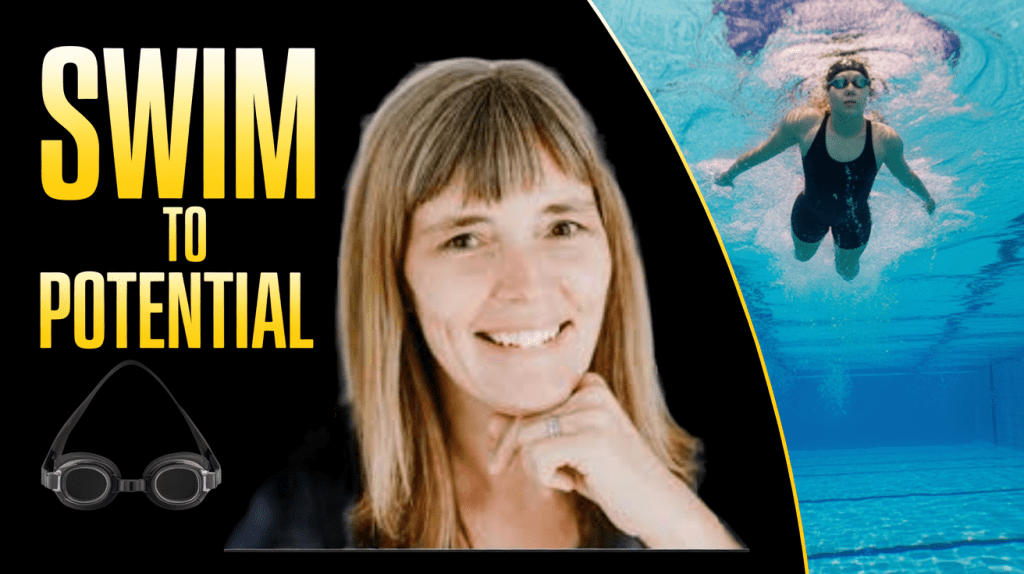
Empowerment Through Swimming: A Journey of Transformation

Imagine standing at the edge of a pool, heart racing, and mind flashing back to every challenging water experience. For many adults, swimming isn’t just about learning strokes; it’s about facing a fear that’s been lurking for decades. This journey of overcoming fear and building confidence is a powerful testament to personal growth and empowerment.

“Swimming is 80% mental and 20% physical,” says Cori, a seasoned swim instructor. Her approach transforms more than just your relationship with water; it changes your relationship with yourself. By focusing on mindfulness and somatic awareness, Cori helps her students stay present and avoid panic, teaching them to trust their bodies and minds.

On this week’s episode of Thrive by The Rising Muse, Cori shares stories of students who, after conquering their fear of water, found the courage to make significant life changes. “I took my swim lesson and then I quit my job,” one student said. This empowerment extends beyond the pool, encouraging individuals to face life’s challenges with newfound confidence.

The journey begins with small steps, like learning to float or putting your face in the water. Cori emphasizes the importance of creating a safe environment where students can explore their fears and build confidence at their own pace. This approach not only teaches swimming but also instills a sense of self-assurance that ripples into other areas of life.

Empowerment through swimming lessons is about more than just mastering a skill; it’s about transforming fear into freedom and building a confident, resilient self. Whether you’re learning to swim or facing other life challenges, the lessons of mindfulness, presence, and self-trust can guide you towards a more empowered life.

Subscribe Now: Dive into more stories of transformation and empowerment by subscribing to our blog and YouTube page. Join us on this journey of growth and discovery.

Understanding ADHD in Children: Myths, Realities, and Support

Imagine a world where your child is constantly in motion, struggling to focus, and behaving impulsively. This is the reality for many parents of children with ADHD. Despite common misconceptions, with the right support, these children can thrive.

Dr. Tamar Shtrambrand, a clinical psychologist and mother of three children with ADHD, shares that ADHD often manifests as difficulty in following multi-step directions, trouble making friends, and challenges in regulating emotions. These children are often misunderstood as being defiant or overly sensitive.

A prevalent myth is that children with ADHD are not intelligent or capable. Dr. Shtrambrand emphasizes that these children are often creative and intelligent but require different approaches to learning and interaction.

Parents can support their children by understanding their unique needs. Dr. Shtrambrand suggests focusing on a balanced diet, ensuring adequate sleep, and incorporating physical activity. She also highlights the importance of structure and routine in helping children manage their symptoms.

Dr. Tamar Shtrambrand is not only a brilliant clinical psychologist but also a mom of three teens—each with ADHD, and one on the high-functioning autism spectrum. She has over 20 years of experience as an occupational therapist working with children with special needs, and later in life, she became a clinical psychologist, earning her PhD online while raising her family and leaning into her faith.


She homeschooled her children, is deeply rooted in her Jewish spiritual journey, and brings a wealth of both personal and professional insight into today’s topic: Childhood ADHD—what it looks like, what families can do, and how to navigate this journey with compassion, patience, and empowerment.

Understanding ADHD is crucial for providing the right support. By debunking myths and focusing on tailored strategies, parents can help their children thrive. Remember, you’re not alone in this journey. Subscribe now for more insights and support.

Discovering Self Through the Journey: The Transformative Power of Travel

In a world where the hustle and bustle often drown out the whispers of our inner selves, travel emerges as a beacon of self-discovery and healing. In this episode of “Thrive by the Rising Muse,” Naty and Veda sit down with Theresa Charles, founder of Nomadic Noni, to explore how travel can be a profound act of self-care and empowerment.

“Travel in and of itself can be self-care,” Theresa shares, emphasizing the importance of focusing on oneself during these journeys. Whether it’s solo travel or group trips, the act of stepping outside one’s comfort zone can lead to significant personal growth and healing.

Theresa has spent over two decades connecting people with their roots through travel. Her work with Nomadic Noni is not just about visiting new places but about creating immersive experiences that foster cultural understanding and personal transformation. From Afrocentric bridal showers in Chicago to youth heritage trips in Ghana, Theresa’s initiatives highlight the importance of cultural connections.

One of the most poignant moments Theresa recalls is her visit to the slave dungeons at Cape Coast Castle in Ghana. “When you are in that space, something changes within you,” she reflects. These experiences are designed to be more than just vacations; they are journeys that change perspectives and lives.

As they discuss, travel is not just about seeing new sights but about engaging deeply with the world and oneself. For those feeling disconnected or burnt out, perhaps the journey toward healing begins with a passport and an open heart.

Subscribe Now: Join us on this journey of self-discovery and cultural exploration. Subscribe to “Thrive by the Rising Muse” for more inspiring stories and insights.

Holistic Healing and Faith: A Journey Toward Wholeness

In today’s fast-paced world, our minds, bodies, and spirits are often treated as separate parts of who we are. But what if true healing comes from seeing ourselves as whole beings? This is where holistic healing and faith integration meet—creating a path that brings balance, peace, and restoration.

On this week’s episode of Thrive by The Rising Muse, hosts Naty and Veda sit down with Melissa Armstrong, a former nurse turned holistic health coach, to explore how faith and wellness complement each other. Melissa opens up about her personal journey from traditional nursing into holistic health, sharing the ways trauma, emotional wounds, and nutrition all impact our well-being.

Together, they dive deep into the role of faith as a bridge that connects the inner world with the divine—allowing healing to flow naturally. Through practices like meditation, mindful living, and spiritual grounding, Melissa reminds us that healing isn’t just about fixing symptoms, but about restoring joy, balance, and connection.

Key Takeaways from this Episode:

  • Trauma affects both the mind and the body—and healing requires tending to both.
  • Faith provides purpose, strength, and hope throughout the wellness journey.
  • Holistic practices like meditation, nutrition, and mindful living create harmony when integrated with spiritual beliefs.
  • Healing is a journey, not a destination, and every person is worthy of wholeness.

If you’ve ever wondered how faith and wellness can work together, this conversation will inspire and encourage you. Whether you’re seeking healing from trauma, looking for balance in your daily life, or simply curious about holistic health, this episode will leave you with powerful insights and practical steps forward.

To connect with Melissa, www.holistichealthbymelissa.com

🎧 Listen now and discover how faith and holistic healing can transform the way you see wellness and wholeness.

👉 Don’t forget to subscribe to Thrive by The Rising Muse for more stories and conversations that inspire growth, healing, and resilience.

Off Topic: Riverside FM’s New Co-Creator — A Game Changer for My Workflow

I’ll be honest — I’m not the most tech-savvy person out there. I love creating content, hosting conversations, and sharing stories, but when it comes to editing and organizing, I’ve always found myself wishing for a magic button that could make it all easier.

Well… Riverside FM may have just given me that button.

Their new Co-Creator feature has completely transformed the way I manage my podcast episodes and content. Editing, which used to be the most time-consuming part of my process, is now faster, simpler, and way less stressful. The interface is intuitive, and I no longer feel like I’m battling with software just to make my episodes sound and look the way I want.

One of the things I love most is that since my content is already in the system, the Co-Creator can pull directly from it to help me:

  • Come up with accurate and relevant title ideas
  • Create blog posts (like this one!)
  • Draft newsletters to keep my audience updated
  • Generate specific clips for social media that perfectly capture the best moments of my episodes

Recently, I had a long recording that I knew would turn into two separate episodes. In the past, managing that would have been a headache — organizing the content, creating separate promotional materials, and ensuring everything aligned with each episode’s focus. With Co-Creator, I was able to easily create parallel content for each episode without the usual back-and-forth, and it felt almost effortless.

I can’t emphasize this enough: I love it. If you’re a creator seeking a recording platform that surpasses simply capturing audio and video, you should seriously consider Riverside FM. This new Co-Creator feature isn’t just a cool add-on — it’s a productivity powerhouse that makes content creation smoother, smarter, and a whole lot more enjoyable.

Sometimes technology really does make life easier. And for me, Riverside’s Co-Creator has been a total game-changer.

ContentCreationTips #PodcastingLife #RiversideFM #PodcastTools #ContentCreator #EditingMadeEasy #CreatorLife #ProductivityTools #TechForCreators #PodcastGrowth #SocialMediaTips #WorkflowHack

Breaking Homeschool Myths with Tam – The Truth They Don’t Tell You (Part 2)

When you think about homeschooling, what comes to mind? Socially awkward kids? Limited opportunities? Confusing college admissions?

In this lively, eye-opening Part 2 of our homeschooling conversation on Thrive by The Rising Muse, we’re back with Tam — a homeschooling veteran with over a decade of experience — to pull back the curtain on what it’s really like to educate your kids at home.

Picking up where we left off in Part 1, Tam dives even deeper into busting myths, sharing laugh-out-loud stories, and revealing surprising truths that will change how you see homeschooling forever.

We talk about:

  • Why “socialization” isn’t the issue you think it is.
  • How homeschoolers get into college (yes, there’s a system, and it works).
  • The flexibility that makes real-world preparation possible.
  • Creative, affordable curriculum options most parents don’t know about.
  • The courage it takes to do things differently — and why it’s worth it.

Whether you’re a seasoned homeschool parent, just curious, or someone who’s been told “your child needs to be bullied to build character” (spoiler: we have thoughts on that), this episode will make you laugh, think, and maybe even reimagine what school can look like.

🎧 Listen to Part 2 now — and if you missed it, go back to catch Part 1 for the full conversation. You’ll walk away informed, inspired, and maybe even ready to start your own homeschooling journey.