Healing the Inner Child: A Journey to Wholeness

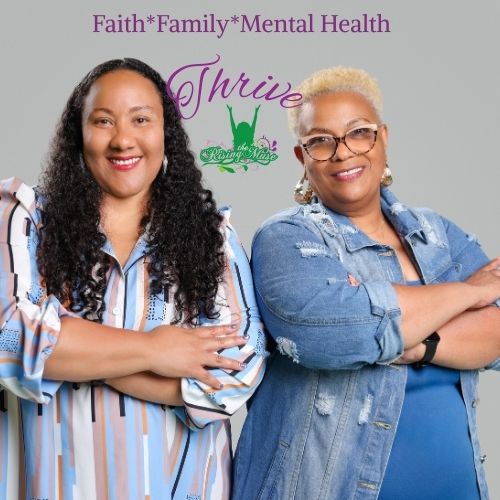
In this episode of “Thrive by the Rising Muse,” hosts Naty and Veda explore the profound topic of healing the inner child. This conversation is not just about revisiting the past but about embracing the journey to emotional and spiritual wholeness. Naty and Veda share personal stories and insights, reminding us that the inner child is the part of us that holds both joy and pain, shaping who we become.

Understanding the Inner Child

Naty and Veda explain how childhood experiences, both joyful and painful, influence our adult lives. They emphasize the importance of acknowledging these memories to facilitate healing and personal growth. Steps to Healing: The episode outlines practical steps for healing, including acknowledging hurt, reparenting oneself, and setting boundaries. Naty and Veda share their personal journeys of forgiveness and the freedom it brings. Spiritual Insights: Drawing on scripture, they explore how faith and God’s love play a pivotal role in the healing process, providing hope and restoration.

Join us for this heartfelt episode as we explore the path to healing and thriving. Tune in to “Thrive by the Rising Muse” and embark on your journey to wholeness.

Subscribe now to stay updated on our latest episodes and follow us on social media @TheRisingMuse for more insights and inspiration.

Setting Boundaries: Protecting Your Peace

In today’s fast-paced world, setting boundaries is more crucial than ever for maintaining personal peace and emotional safety. Boundaries are not about shutting people out; they are about protecting your peace and energy. This episode explores the significance of boundaries, drawing on biblical references, personal anecdotes, and practical advice to help you establish boundaries without guilt.

The Importance of Boundaries

Boundaries are essential for protecting personal peace. They are like doors, not walls, defining where you end and others begin. Even Jesus set boundaries, withdrawing to rest and pray, showing us that saying no is a complete sentence and can be a holy act. Boundaries help prevent resentment and maintain healthy relationships.

Practical Advice on Setting Boundaries

Communicating boundaries clearly and lovingly is crucial. Expect pushback when setting boundaries, but remain consistent. Boundaries are a form of sacred stewardship of one’s emotions and peace. Choosing peace over guilt is a powerful act of faith.

Embracing boundaries is embracing peace. By setting boundaries, you guide your emotional well-being and show others how to love you well. Remember, boundaries are not a rejection; they are a direction.

Subscribe now to our podcast for more insights on living a balanced and peaceful life.

Breaking the Silence on Burnout: A Journey to Healing

In today’s fast-paced world, burnout is a silent epidemic affecting countless individuals. It’s more than just feeling tired; it’s a deep soul-level exhaustion that leaves us feeling empty and disconnected. In this episode of Thrive by the Rising Muse, Naty and Veda open up about the hidden struggles of burnout and share insights on how to recognize and heal from it.

Burnout isn’t just about being overworked. It’s the exhaustion that comes when you give more than you receive, when the balance between pouring out and being poured into disappears. It manifests as irritability, numbness, loss of motivation, and even spiritual silence. Recognizing these signs is the first step towards healing.

Rest is not laziness; it’s sacred. In faith circles, we’re often encouraged to push through, but sometimes strength looks like taking a step back. Naty emphasizes that rest is a holy practice, modeled by God Himself. It’s essential to release the guilt associated with rest and embrace it as a form of self-care and stewardship.

Burnout thrives where boundaries are missing. Saying ‘no’ is crucial for maintaining balance and preventing burnout. It’s important to prioritize your well-being and understand that you can’t pour from an empty cup. Setting boundaries allows you to serve others from a place of abundance rather than obligation.

In faith communities, burnout can be mistaken for a spiritual attack. However, it’s often a sign that you’re doing too much of the wrong thing for too long. Naty reminds us that God doesn’t call us to burn out; He calls us to balance. By reconnecting with ourselves and God, we can find the strength to overcome burnout.

Burnout doesn’t mean you’re broken; it means you’ve been carrying too much for too long without refills. Remember, you are still enough, still chosen, and still loved. Embrace rest as your right and take the necessary steps to heal. Subscribe now to continue this journey with us and discover more insights on thriving in life.

Subscribe now to our podcast for more episodes on mental health and spiritual well-being. Let’s walk this journey together and find balance in our lives.

When Love Hurts: Recognizing Unhealthy Relationship Patterns

In a world where love is often portrayed as the ultimate healer, what happens when it becomes the source of our deepest wounds? Join Naty and Veda in this eye-opening episode of “Thrive by the Rising Muse” as they delve into the complexities of unhealthy relationship patterns, offering insights that are both personal and universally relatable.

Naty shares her personal journey through friendships and relationships that left her questioning her worth and identity. From constant criticism to emotional manipulation, she highlights the subtle signs that often go unnoticed until it’s too late. “Love is supposed to heal, not hurt,” she reminds us, urging listeners to recognize the red flags in their own lives.

Through candid anecdotes and heartfelt reflections, they emphasize the importance of vulnerability in healing. She recounts moments of self-doubt and the courage it took to break free from toxic dynamics. Her story serves as a powerful reminder that true love builds up, rather than tears down.

This episode is not just about identifying problems but also about finding solutions. The hosts provide practical resources and support for those seeking to escape unhealthy relationships. She encourages listeners to reach out, share their stories, and embrace the healing journey.

Whether you’re navigating romantic relationships, friendships, or family dynamics, this episode offers a beacon of hope and a path to healthier connections. Tune in to “Thrive by the Rising Muse” and discover how you can step into a love that truly reflects God’s heart.

Don’t miss out on this transformative episode. Subscribe to “Thrive by the Rising Muse” and join a community dedicated to healing, growth, and thriving in love.

Unveiling the Hidden Scars: Understanding Spiritual Abuse

In a world where faith is often a source of strength, there lies a shadowy corner where it can be twisted into a tool of control. This episode of “Thrive by the Rising Muse” delves into the often-overlooked realm of spiritual abuse, a form of domestic violence that manipulates faith and scripture to dominate and silence. Join us as we explore the profound impact of this hidden abuse and the path to healing.

Spiritual abuse occurs when religious beliefs are weaponized to control or harm. It can manifest in intimate relationships, families, and even within religious institutions. The episode highlights how scripture is sometimes misused to justify mistreatment, leaving deep emotional scars. Naty and Veda share personal stories and insights, shedding light on the subtle yet damaging nature of this abuse.

Resources for Healing: For those seeking support, the episode offers valuable resources, including the National Domestic Violence Hotline and the Faith Trust Institute. These organizations provide guidance and support for survivors of spiritual abuse. Additionally, the episode encourages listeners to connect with survivor groups and rediscover their faith outside the abuser’s influence.

Conclusion: Spiritual abuse is a silent epidemic that thrives in the shadows. By bringing it into the light, we empower survivors to reclaim their faith and their lives. Watch the full episode to gain a deeper understanding of this issue and learn how to support those affected. Remember, you deserve a life filled with faith, healing, and abundance.

Watch the full episode on our YouTube channel and share it with someone who might need to hear this message. Let’s spread awareness and support each other in the journey towards healing. Subscribe now to stay updated on future episodes.

Navigating the Silent Battles: Mental Health and Breast Cancer

In the heart of Breast Cancer Awareness Month, we delve into the often-overlooked mental health challenges faced by those battling breast cancer and their caregivers. This journey is not just about survival but also about managing the silent battles of anxiety, depression, and fear that accompany the physical fight. Join us as we uncover these stories and insights in our latest episode.

The Unseen Struggles: Breast cancer is a formidable opponent, affecting one in eight women in the U.S.

While treatment advances have improved survival rates, the mental health toll remains significant. Patients often grapple with “chemo brain,” body image issues, and the constant fear of recurrence. Caregivers, too, bear a heavy burden, juggling medical appointments, emotional support, and their own mental health. Discover personal stories and expert advice in our episode.

Journaling, support groups, and therapy are vital tools for managing mental health. Movement, even gentle exercises, can offer healing. For caregivers, self-care is crucial. As one caregiver shared, “You can’t pour from an empty cup.” Taking time for oneself is not selfish but necessary to provide quality care. Learn more about these coping strategies in our discussion.

Faith can be a powerful anchor, offering hope and strength. Community support, whether through churches or peer groups, provides a network of care and understanding. As one participant noted, “Faith doesn’t erase the pain, but it gives us an anchor.” Hear more about the role of faith in our episode.

Breast cancer is a journey of both physical and emotional healing. By acknowledging and addressing the mental health challenges, we can better support those affected. Remember, healing is not just physical; it’s emotional and spiritual. Let’s continue to raise awareness and support each other in this journey.

Don’t miss our latest episode of Thrive by the Rising Muse, where we dive deep into these topics with heartfelt stories and expert insights. Subscribe now and join the conversation. Together, we can navigate these challenges and thrive.

Legalizing the Gospel

This may not be a popular topic, but here we go.

In the last decade or so, I have seen a movement of Christians trying to put laws in place according to what the Bible says we should or should not do. I am a follower of Jesus, but this movement, in my opinion, has brought out several issues.

1. Politicians who pretend to be Christian just to obtain votes.
The Bible says, “You will recognize them by their fruits” (Matthew 7:16). However, in my observation, the masses are bending over backwards to justify some people’s behaviors, decisions, and actions just because their mouths have said they are Christians—even though their fruits are not showing.

2. Looking the other way.
I’ve also observed Christians compromising their own values just to have someone in office who will get things done the way they want, something like “the end justifies the means.”

Here’s my issue with Christianity by law: Are people realizing that forcing someone into a particular behavior does not mean they are accepting or living for Christ?

For example, you could mandate by law that all citizens attend church every Sunday. People might show up at their nearest church, but that doesn’t mean the message is going into their hearts.

God gave us free will. “Now the Lord is the Spirit, and where the Spirit of the Lord is, there is freedom” (2 Corinthians 3:17). Jesus never forced anyone to accept Him. Why are we? Jesus came to show us His unconditional love—a love that leads us to repentance and to fall in love with Him enough to follow Him to the ends of the earth.

When you force someone into submission, they don’t love what they’re doing—they resent it. They may outwardly show the “good” behavior you want to see, but their heart has not turned toward God.

Legislating Faith vs. Living Faith

Legislating faith is spiritual laziness. We are called to “go and make disciples of all nations” (Matthew 28:19), to witness what God has done in our lives, and to show His love through our actions. Instead, some want the government to force people to behave according to our beliefs so we can feel like we’ve accomplished something—when in reality, we have not.

We don’t want to do the hard work of loving everyone, forgiving everyone, and showing mercy to everyone. Instead, we often live with selective love for those who think, believe, and behave like we do. We exercise selective outrage toward those we judge, while ignoring the person in the mirror.

Should society be a free-for-all? No. But when we impose laws to force our faith on the masses, we are not pleasing God. We are not making disciples—we are making people who resent the gospel. And it’s not because of their hardened hearts, but because of our hypocrisy.

We appear hypocritical when we only address the sins of others but excuse the sins of those “within the faith.” “Why do you look at the speck in your brother’s eye and pay no attention to the plank in your own eye?” (Matthew 7:3).

When someone outside the church falls, we often respond with outrage. But when someone in our faith circle falls, we excuse it as a “moment of weakness.” That’s not mirroring Jesus—it’s hypocrisy.

The Call to Love

When someone doesn’t think like us, we dismiss them as evil, forgetting that God placed them in our path so we could witness to them and love them.

And yes, even love our enemies. “But I say to you, love your enemies and pray for those who persecute you” (Matthew 5:44).

So when I see people who claim to follow Christ spewing hate, it hurts my heart. Because we should know better. Did we forget where we were before Jesus rescued us? Did we forget that He forgave our sins—and continues to forgive them?

“For it is by grace you have been saved, through faith—and this is not from yourselves, it is the gift of God” (Ephesians 2:8-9).

If that’s true for us, then it is also true for those around us.

The Harvest Is Plentiful

The Word says, “The harvest is plentiful, but the laborers are few” (Luke 10:2). It is time to reflect on how our thoughts and behaviors are either drawing people to Jesus or pushing them away.

You may say you’ve tried and seen no results. But sometimes you’re only meant to plant the seed. Someone else waters, and another sees the fruit (1 Corinthians 3:6–7). But don’t miss your role as a planter.

I know it’s hard not to give up, but I can testify: I was a wreck, and God chased me relentlessly to show me His love. Even now, when I fall flat on my face, He picks me up, cleans me off, and sets me back on solid ground. He knows my flaws, yet He still uses me to reach people. He has assigned each of us to love and serve specific souls.

The Bottom Line

It is our job to show God’s love, grace, and mercy. It is not the government’s job to legislate Christianity, so we can feel good about forcing people into behaviors that don’t lead to salvation.

We don’t win souls by writing laws. We win them by living out the gospel.

#FaithOverPolitics #ChristianLiving #discipline

“When God Seems Silent: Navigating Spiritual Desolation”

In the quiet moments of our spiritual journey, we often encounter a profound silence that can feel both unsettling and enlightening. This silence, sometimes perceived as abandonment by God, invites us to explore the depths of our faith and the resilience of our spirit. On the most recent episode of Thrive by The Rising Muse, we discuss why this happens and how to overcome it.

Spiritual silence is a phase where the usual signs of divine presence seem absent. It’s a time when prayers feel unanswered, and the comforting sense of God’s presence is elusive. This silence can be a test of faith, urging us to seek deeper understanding and connection.

Feeling abandoned by God is a common experience during spiritual silence. It’s a period marked by doubt and questioning, where the absence of divine reassurance challenges our beliefs. Yet, this feeling can also be a catalyst for growth, pushing us to redefine our relationship with the divine.

Instead of resisting the silence, embracing it can lead to profound insights. This period of quiet can be an opportunity to listen more intently to our inner voice and to find strength in solitude. It encourages us to trust in the unseen and to find peace in the unknown.

Experiencing spiritual silence and feeling abandoned by God are integral parts of the spiritual journey. They teach us resilience, patience, and the importance of faith in the unseen. By embracing these moments, we open ourselves to deeper spiritual growth and understanding.

Subscribe Now:

Stay connected for more insights and reflections on your spiritual journey. Subscribe now to receive updates and new posts directly to your inbox.

Losing Sight of Grace: The Danger of Selective Compassion

In the last few days, a lot of terrible things have happened. I’ve learned that before putting my thoughts and emotions out there, I need to sit back, reflect, and process. But there are two thoughts that I can’t seem to shake. This may be long, but I believe it’s important—so I hope you’ll stay with me.

A Heart for All Humanity

As followers of Christ, we should have a heart for all humanity—not just some. All lives matter. I don’t say that as a political statement but as a believer in the truth that we are all created by the same God.

I consider myself pro-life, but not only in the sense of being “pre-birth” pro-life. I believe in valuing and protecting life from conception until death. And today, I want to talk about death.

Naturally, some deaths affect us more deeply than others, often depending on proximity or connection. But when we discount certain lives and elevate others, we fall into hypocrisy. In recent days, I’ve seen passions flare over who “deserves” to be mourned. I’ve also seen those passions ignite harsh words and even violent rhetoric—tragically, this from fellow believers.

But here’s the truth: when someone is murdered, it doesn’t matter who they were. In the heart of Christ, every life lost is a tragedy. Every soul violently taken is one less person fulfilling the purpose God created them for. Whether it’s a child in a classroom, a baby killed in war, a politician in their home, or a public figure—each loss is a wound to the body of Christ.

Yes, our minds can only process so much grief, so we compartmentalize. But we cannot allow ourselves to become numb to some pain while being outraged at others.

The Trap of Bias

I once had a professor who told us, “Just because it’s my wine doesn’t mean it’s the best wine.” She was teaching about bias in journalism, but the principle applies to life as well. We all have biases, but in today’s culture, we often let them dictate how we treat—and love—others.

When we label an entire group of people as “evil” simply because we disagree with them, we fall right into the enemy’s trap of division. When we believe our culture, background, or community is somehow superior, we’ve missed the very heart of Jesus’ message.

You can’t pray with compassion for one criminal simply because they share your background, beliefs, or community, and then condemn another criminal because they don’t. God’s grace isn’t limited by our biases.

I’ll never forget reading that Jeffrey Dahmer professed faith in Christ before his death. If even Jeffrey Dahmer can be redeemed, then no one is beyond salvation. That truth forces me to ask myself: where do I stand? Am I the one spewing hatred—or the one pointing people to the hope of Christ?

Our Testimony Online

We sometimes forget that the internet is also a mission field. If you present yourself online as a follower of Christ—posting Bible verses and church photos—but then turn around and spew hate when tragedy strikes, you damage your testimony. You lose credibility. And the next time you try to witness to someone, online or in person, your words may carry less weight.

My mother used to tell me, “If you don’t have anything good to say, just stay quiet.” That’s not just motherly wisdom—it’s biblical truth. Proverbs 17:27-28 reminds us:

“The one who has knowledge uses words with restraint, and whoever has understanding is even-tempered. Even fools are thought wise if they keep silent, and discerning if they hold their tongues.”

Life Is Fleeting

The second thought I keep returning to is how fragile life really is.

The people who died last week—and those who perished on 9/11, 24 years ago—woke up that morning with no idea they would not return home. Some may have had moments to call out to God in their final seconds, but others were gone before they even realized what was happening.

Too many of us think we have time—time to reconcile, to forgive, to repent, to turn back to God. But we don’t.

Scripture warns us that none of us knows the day or the hour. And though many focus on the signs of the Second Coming, the reality is that each of us lives on our own clock—one that could stop at any moment, whether by the free will of another, divine intervention, or natural causes.

Not everyone dies peacefully in bed surrounded by loved ones, like in the movies. Reality includes crime, disasters, and disease that interrupt our vision of a long life.

James 4:13-14 says:

“Come now, you who say, ‘Today or tomorrow we will go into such and such a town and spend a year there and trade and make a profit’—yet you do not know what tomorrow will bring. What is your life? For you are a mist that appears for a little time and then vanishes.”

And Luke 12:20 adds:

“But God said to him, ‘Fool! This night your soul is required of you, and the things you have prepared, whose will they be?’”

The message is clear: tomorrow is not promised. The time to live fully surrendered to Christ is now.

Building a Business from Rest and Spiritual Alignment

In a world that glorifies hustle and constant activity, the idea of building a business from a place of rest and spiritual alignment might seem counterintuitive. Yet, this approach can lead to profound success and fulfillment. Imagine starting your day with a sense of peace, knowing that your business decisions are aligned with your core values and spiritual beliefs. In the latest episode of Thrive by The Rising Muse, we talk to Lynette Williams from Laptop Mommas about how to navigate this balance.

The first step in this journey is to find your center. This involves understanding your spiritual beliefs and how they align with your business goals. As entrepreneur Lynette says, “When I aligned my business with my spiritual values, everything fell into place.”

Rest is not just about taking breaks; it’s about creating a sustainable rhythm in your work life. By prioritizing rest, you allow creativity and innovation to flourish. As Lynette Williams puts it, “Rest is where my best ideas are born.”

Every business decision should reflect your spiritual alignment. This means being intentional about the partnerships you form, the products you create, and the impact you have on the world. “When your actions align with your values, success follows naturally,” says Williams.

Building a business from rest and spiritual alignment is not just a strategy; it’s a lifestyle. It requires courage to step away from the hustle and trust in a deeper process. But the rewards—both personal and professional—are worth it. Embrace this journey, and watch your business thrive in ways you never imagined.

Stay updated with more insights on building a business that aligns with your spiritual values. Subscribe now for more inspiring content.