Embracing Faith: Trusting Through Life’s Greatest Challenges

In a world filled with uncertainties, the power of faith and trust can be our guiding light. Imagine facing life’s toughest challenges and emerging stronger, not by sheer will alone, but through unwavering faith. This is the story of Debbie, a woman whose journey through infertility, loss, and adoption is a testament to the strength found in trusting a higher purpose.

Debbie’s story is not just about overcoming adversity; it’s about embracing the unknown with open arms. From the heart-wrenching loss of her children to the joy of adopting nine, her path is a vivid illustration of how faith can transform despair into hope. As she shares her experiences, Debbie reveals the profound impact of trusting in something greater than oneself.

Throughout her journey, Debbie learned that asking “Why me?” was less important than asking “How do I survive?” This shift in perspective allowed her to focus on the next best step, guided by faith. Her story encourages us to let go of the need for answers and trust the process, knowing that each step forward is a step towards healing and growth.

Debbie’s resilience has not only shaped her life but has also inspired countless others. Her work with Anchor Point, a community support organization, is a living legacy of her faith-driven mission to help families in need. By watching her story, you’ll discover how faith can be a powerful catalyst for change, not just in our own lives, but in the lives of those around us.

Debbie’s journey is a powerful reminder that faith and trust are not just abstract concepts, but tangible forces that can guide us through life’s storms. Her story is a beacon of hope for anyone facing their own challenges, showing that with faith, we can overcome even the most daunting obstacles.

Debbie Simmons is a community activist, businesswoman, wife, mother to 9 adopted children, and, most importantly, a devoted follower of Christ. Her boots-on-the-ground experience, hard-earned wisdom, and faith-centered approach will help you build your business or non-profit, family or life legacy. Her inspiring testimony of living “love without regard to risk” empowers you to boldly walk through the doors God is opening for you with no worries.

Debbie is not a coach; she is a builder. She will inspire you to build the business, family, and life legacies that you have dreamed of. Debbie will teach you how to be an Impact Player for the Kingdom both now and for eternity.

Listeners can download the B.E.S.T. free guide here – https://thedebbiesimmons.com/best-strategy/

Don’t miss the full episode to witness Debbie’s incredible journey and learn how faith and trust can transform your life. Subscribe now and be inspired by her story of resilience and hope. Click on the image below to access the full episode.

Why Juneteenth Still Matters in 2025!

Imagine a world where history is a tapestry of untold stories, woven with the threads of courage, resilience, and truth. In the latest episode of Thrive by the Rising Muse, hosts Naty and Veda explore the significance of teaching real history. This journey not only honors the past but also shapes a more inclusive future.

“Juneteenth isn’t just about a moment in time. It’s about people known and unknown,” says Naty in the episode. The stories of Frederick Douglass, Harriet Tubman, and Sojourner Truth are more than historical footnotes; they are powerful narratives that challenge us to see beyond the surface. By teaching real history, we ensure that these voices are heard, their struggles acknowledged, and their legacies preserved.

Healing Through Understanding: “Freedom came, but the trauma didn’t magically disappear,” Veda reminds us during the discussion. The scars of the past linger, and understanding history is a step towards healing. By acknowledging the pain and resilience of those who came before us, we create a space for empathy and growth. Teaching real history is not just about facts; it’s about fostering a deeper connection to our shared humanity.

“Teach your children about history. Real history,” urges Naty. In a world where misinformation can spread like wildfire, the responsibility to educate the next generation is more crucial than ever. By embracing the full spectrum of history, we empower young minds to think critically, challenge biases, and build a future rooted in equality and understanding.

As we reflect on the stories shared in this episode, let us commit to teaching real history with integrity and passion. By doing so, we honor the heroes who paved the way and inspire future generations to continue the fight for justice and unity.

Join us on this journey of discovery and empowerment. Subscribe to Thrive by the Rising Muse and be part of a community dedicated to truth, resilience, and hope. For this episode, click on the image below.

Impact of Absent Fathers on Our Perception of God

Our relationship with our earthly fathers can profoundly shape our understanding of God. For many, an absent father leaves a void that influences how they perceive divine love and authority. This blog explores the intricate connections between fatherhood and faith, offering insights into healing and transformation.

Understanding the Void

An absent father can create a distorted image of what a father should be—one of protection, provision, and unconditional love. This absence often leads to emotional and spiritual barriers, making it challenging for individuals to trust in God’s love and presence. As discussed in our podcast, these wounds can manifest in feelings of abandonment and mistrust.

Faith as a Healing Path

Faith offers a path to healing these deep-seated wounds. By understanding that God is a perfect father, unlike any earthly one, individuals can begin to rebuild their perception of divine love. Scriptures such as Psalm 68:5, which describe God as a father to the fatherless, provide comfort and a new perspective on God’s unwavering care.

Breaking Generational Patterns

A father’s absence can perpetuate generational patterns of mistrust and fear. However, breaking these cycles is possible through intentional healing and faith-building practices. Engaging in community support, counseling, and mentorship can help overcome the negative impacts of an absent father.

Moving Forward with Hope

Healing from the impact of an absent father is a journey that requires patience and self-reflection. By embracing faith and understanding God’s unconditional love, individuals can find peace and purpose beyond their past experiences. This journey not only transforms personal faith but also sets a new standard for future generations.

The absence of a father can leave lasting scars, but healing is possible. By finding faith and understanding the true nature of divine love, individuals can overcome these wounds and live a life filled with hope and joy. Remember, your story doesn’t end with pain—it’s just the beginning of a new chapter.

Subscribe Now: Join us on this journey of healing and faith. Subscribe to our podcast for more inspiring stories and insights. Click on the image below to view our Father’s Day Episode. We hope you had a great one!

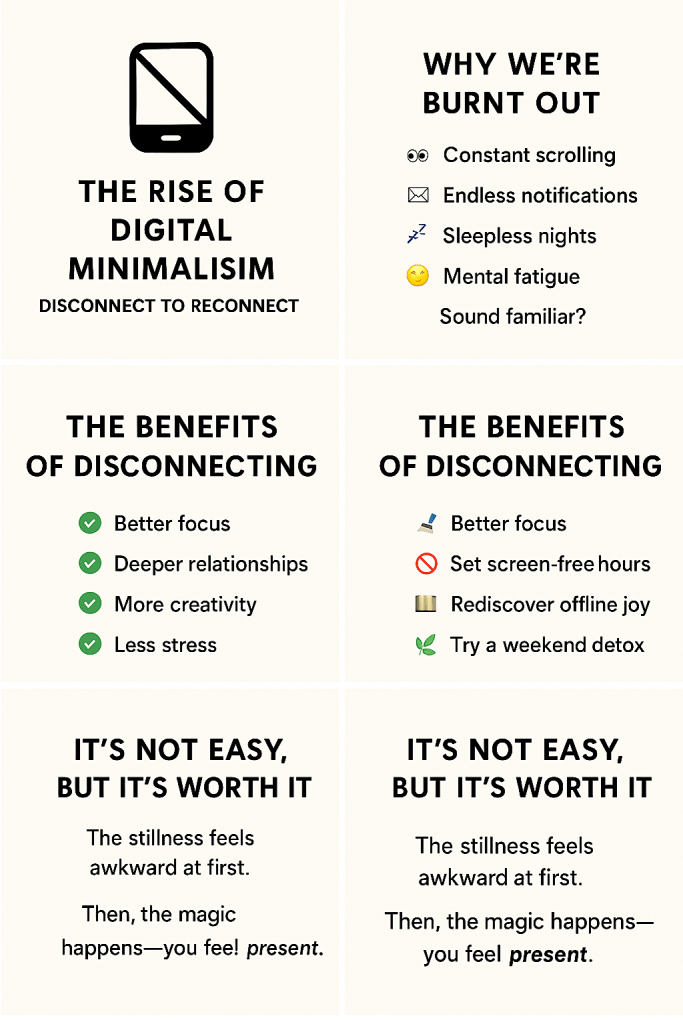
The Rise of Digital Minimalism: How Disconnecting Can Lead to More Meaningful Connections

Introduction:

Have you ever picked up your phone to check one thing, then looked up an hour later wondering where the time went? You’re not alone. In a world where our lives are filtered through screens, digital minimalism is gaining traction as a movement to reclaim our time, minds, and relationships.

What Is Digital Minimalism?

Digital minimalism isn’t about ditching technology altogether. It’s about being intentional with your screen time—using tech as a tool rather than letting it control you. Coined by author Cal Newport, it promotes quality over quantity in digital consumption.

Think:

  • Fewer apps
  • Less mindless scrolling
  • More focus on what matters

Why We’re Craving Less Screen Time

Many people are waking up to the emotional cost of being always connected:

  • Rising anxiety and burnout
  • Decreased attention span
  • Shallow online relationships replacing deep, real-life connections

We’re longing for the stillness and clarity that used to be part of everyday life—and digital minimalism is the path back.

The Benefits of Disconnecting

Going minimalist with your tech habits can spark powerful changes:
✅ Improved mental clarity and focus
✅ Deeper relationships (you’re truly present)
✅ Better sleep and reduced stress
✅ More time for creativity, hobbies, and goals

5 Practical Ways to Embrace Digital Minimalism

  1. Audit your apps. Remove any that don’t serve your purpose or joy.
  2. Set screen-free hours. (Example: no phones after 8 PM.)
  3. Use tech with intention. Ask: “Is this helping me or distracting me?”
  4. Rediscover analog joys. Read a book. Journal. Take a walk.
  5. Go on a digital detox weekend. Experience a full reset.

Real Talk: It’s Not Easy—But It’s Worth It

At first, the silence might feel uncomfortable. But then, something shifts. You start noticing things—the sound of birds, the taste of your food, the way your loved ones smile when you actually look up.

Digital minimalism isn’t just about less tech. It’s about more life.

In a society obsessed with connection, maybe the greatest rebellion is intentional disconnection. Try it—not to reject the digital world, but to reclaim your real one.

🧘‍♀️ Ready to try digital minimalism? Share your first step in the comments or tag me on your favorite platform (we are @therisingmuse everywhere) after your digital detox! #DigitalMinimalistChallenge

Balancing Work, Family, and Personal Goals: A Journey to Fulfillment


In today’s fast-paced world, finding the right balance between work, family, and personal goals can feel like an elusive dream. But with intentional planning and a clear vision, it’s possible to create a fulfilling life that honors all aspects of who you are. This week on Thrive by The Rising Muse, we interviewed Rob Rolston, who gave us a great perspective on wealth.


The Art of Prioritization
“Success is different for everybody,” says Rob, a guest on our recent podcast episode. For him, success isn’t about flashy cars or material wealth; it’s about having the time and freedom to spend with family. This perspective highlights the importance of prioritizing what truly matters to you. By identifying your core values, you can make decisions that align with your long-term vision.


Communication is Key
Rob emphasizes the importance of open communication with his wife, stating, “Everything is discussed openly.” Whether it’s about work, parenting, or personal aspirations, having honest conversations ensures that both partners are on the same page. This transparency fosters a supportive environment where both individuals can pursue their goals without feeling isolated.


Embracing Flexibility
Life is unpredictable, and sometimes plans need to change. Rob shares how having various exit strategies in business allows him to pivot when necessary. This flexibility is equally important in personal life. By being adaptable, you can navigate challenges without losing sight of your goals.


The Power of Compounding
Rob’s journey underscores the power of starting early and the principle of compounding. Whether it’s investing in your career, relationships, or personal development, small consistent efforts can lead to significant growth over time. As Rob puts it, “It’s the same principle of eating an elephant. You only do it one bite at a time.”

Balancing work, family, and personal goals is a continuous journey that requires patience, communication, and adaptability. By staying true to your values and embracing flexibility, you can create a life that is both fulfilling and aligned with your vision. Remember, it’s not about achieving perfection but about making progress towards a life that resonates with your true self.

Robert Rolston was told his learning disabilities and mental health struggles would hold him back. But instead, he built a thriving property business, retired his parents, and gave his family a life most people only dream about.


Subscribe now to stay updated on more insights and stories that inspire a balanced and fulfilling life. Watch the full episode here.

Finding Hope and Healing: Navigating the Journey from Sexual Trauma

Healing from sexual trauma is a deeply personal journey that requires courage, support, and understanding. In our recent conversation on Thrive by The Rising Muse, with Tabitha Westbrook, a licensed trauma therapist and author, we explored the pathways to restoration and hope. Her insights offer a beacon of light for those seeking healing.

Understanding the Urgency:
Tabitha emphasizes the critical need to address sexuality after trauma. “People are realizing and reckoning with the harm they’ve experienced,” she notes, highlighting the importance of movements like Me Too in creating safe spaces for survivors to share their stories.

The Role of Faith and Community:
Faith and community play pivotal roles in the healing process. Tabitha shares, “God is also a God of how and practicality,” underscoring the importance of practical steps and community support in the journey towards healing.


Building Healthy Relationships:
A key aspect of healing is learning to build healthy relationships. Tabitha advises, “Prioritize friendship first, and good things will come from that.” Understanding and respecting boundaries are essential in fostering connections that support healing.

Healing from sexual trauma is not a linear path, but with faith, community, and a commitment to personal growth, it is possible to find hope and restoration. As Tabitha reminds us, “The same God that brought me out, He can bring you out.”
Tabitha Westbrook, LMFT-S, LCMHC-QS, LPC-S, is a licensed therapist who helps people who have messy, funky pasts (and sometimes messy, funky presents) live amazing, empowered lives today. In addition to being a licensed counselor and supervisor, Tabitha is an EMDR Certified Therapist and Approved Consultant, Certified Sex Addiction Therapist, Certified Clinical Trauma Professional, and Certified Christian Trauma Care Provider. 

She’s the Founder & CEO of The Journey and The Process, a private practice with offices in North Carolina and Texas, specializing in complex trauma, with a focus on domestic abuse and coercive control. Tabitha’s a nationally known expert and speaker on domestic abuse & coercive control, providing training to churches, therapists, and agencies. She also helps train domestic abuse advocates through Called to Peace Ministries’ faith-based advocacy training, as well as co-facilitates the G5 Men’s Batterer Intervention Group. Tabitha is the author of the forthcoming book Body & Soul, Healed & Whole: An Invitational Guide to Healthy Sexuality After Trauma, Abuse, and Coercive Control.


Join us on this journey of healing and hope. Subscribe to Thrive by The Rising Muse for more insightful conversations and support.

Somebody’s Gotta Do It – And We’re Grateful They Do

Let’s be honest: everyone thinks their job is hard.

And sometimes—it is. Emails are piling up. Meetings that could’ve been voice notes. A passive-aggressive coworker with too much cologne and not enough boundaries.

But this week on Thrive by The Rising Muse, we’re shining the spotlight on the folks who take “hard job” to a whole new level.

We’re talking about:
🧻 Portable toilet cleaners
🪦 Morticians
🩺 Nurses and OB-GYNs
🧪 Specimen collectors
🦨 Roadkill retrieval crews
😷 Vomit collectors (yes, that’s a real job)

Some of these jobs are disgusting. Some are emotionally draining. Some are dangerous. All of them are essential.

And yet, these workers rarely get recognized. They rarely get thanked. And they almost never go viral for doing the thankless, messy, behind-the-scenes labor that makes the rest of our lives run smoothly.

This Episode Is a Thank You Letter

In this episode, Naty and Veda take you through:

  • The wildest jobs you didn’t know were real (and probably couldn’t handle for five minutes)
  • The emotional and spiritual toll of caring professions like teaching, nursing, and mortuary science
  • The difference between performance gratitude and true, prayerful appreciation
  • Why we believe these roles are more than jobs—they’re callings

And above all, we talk about gratitude—the layered kind.
Gratitude for the people doing the hard, dirty, or emotionally intense work.
Gratitude that we don’t have to do it.
And gratitude to God for designing a world where we’re not all asked to carry the same burdens.

Why This Matters

It’s easy to get tunnel vision with your own stress. But stepping back and recognizing the invisible labor around us is an act of maturity—and worship.

That janitor in your office building?
That flight attendant is trying to stay calm at 30,000 feet?
Is that livestock breeder keeping the food supply running?
They’re not “less than.” They’re vital.

And if we want to grow, to really thrive, we’ve got to practice seeing the sacred in what the world sees as low.

Tune In Now

🎧 Episode: Somebody’s Gotta Do It
📍 Available wherever you get your podcasts
💬 Join the conversation on IG, TikTok, and Fanbase

This one will have you laughing, cringing, reflecting, and praying—and that’s exactly the point.


Need help? Know someone who does?
Mental health crisis: Dial 988
Domestic violence support: Call 800-799-7233 or text 887888
Always make sure you’re safe when seeking support.

Memorial Day: Reflection, Family, and Faith

This weekend, many of us will gather with family and friends, grateful for the pause and the unofficial start of summer. There will be laughter, shared meals, and the simple joy of togetherness. But as we embrace these moments of peace, it’s essential to hold space for the profound reason we are given this day: to remember the brave men and women who made the ultimate sacrifice for our freedoms.

Memorial Day is a day of solemn remembrance. It’s a day to honor those who laid down their lives in service to our nation. For many, this is not a day of celebration but one of quiet reflection, of visiting cemeteries, and of honoring the empty chair at the family table. It’s a powerful reminder that our peace was purchased at a great price.

At The Rising Muse, we believe in the convergence of faith, mental health, family, and personal growth. On Memorial Day, these pillars of our community are poignantly intertwined.

Faith in Sorrow

For families of the fallen, faith can be both a sanctuary and a struggle. The loss of a loved one can test the very foundations of what we believe. Yet, it is often in these moments of profound grief that faith can offer a glimmer of hope—a belief in a peace that surpasses all understanding and a reunion beyond this life. This Memorial Day, let us hold in our hearts the Gold Star Families, who walk a journey of faith and resilience that most of us will never know. Let us pray for their comfort and their strength.

The Weight of Remembrance and Our Mental Health

Grief is a heavy burden, and for military families, it is a unique and often lifelong journey. The quiet respect we show on Memorial Day is a testament to our collective acknowledgment of their loss. It is a way of saying, “Your loved one is not forgotten. Their sacrifice matters.”

Honoring this day with intention is also an act of communal mental well-being. It allows us to connect with a sense of gratitude and to understand the cost of the freedoms we often take for granted. By taking a moment for silent reflection or by participating in a memorial service, we create a space for collective healing and remembrance.

The Enduring Strength of Family

The families of our fallen heroes are a testament to the enduring strength of the human spirit. They carry on the legacy of their loved ones through their own lives of service, courage, and love. They are a vital part of our national family, and on this day, we have a sacred duty to remember them, to support them, and to honor the sacrifices they have also made.

Personal Growth Through Remembrance

How do we live a life that is worthy of such a great sacrifice? This is perhaps the most profound question Memorial Day asks of us. It calls us to a higher purpose in our own lives. It challenges us to be better citizens, kinder neighbors, and more engaged members of our communities.

Let this Memorial Day be a catalyst for your personal growth. Reflect on the freedoms you have and consider how you can use them to make a positive impact. Perhaps it’s by volunteering, by having meaningful conversations with your children about the cost of freedom, or by simply living with a greater sense of purpose and gratitude.

This Memorial Day, as you gather with your loved ones, we invite you to join us at The Rising Muse in a moment of quiet reflection. Let us remember the fallen, honor their families, and commit to living lives that are a testament to their enduring sacrifice.

May we never forget.

Trusting God or Telling Him What to Do? A Heart Check for Believers

We say we trust God. We quote Proverbs 3:5–6:
“Trust in the Lord with all your heart and lean not on your own understanding; in all your ways acknowledge him, and he will make your paths straight.”
But if we’re honest, many of us are doing more leaning on our understanding than we admit. We often try to sit in God’s chair, crafting our own plans, and then asking Him to rubber-stamp them with His blessing.

How often do our prayers sound less like surrender and more like strategy meetings?

“God, Let Me In on the Plan.”

Many of us live like we’re entitled to God’s full blueprint. We forget that faith, by definition, involves the unseen (Hebrews 11:1).
We say, “I trust You,” but then we beg for full disclosure:

“Lord, show me exactly what You’re doing, when You’re doing it, and how it will all turn out.”

But God doesn’t always offer that level of detail—not because He’s withholding, but because He’s cultivating trust. Isaiah 55:8–9 reminds us:
“‘For my thoughts are not your thoughts, neither are your ways my ways,’ declares the Lord. ‘As the heavens are higher than the earth, so are my ways higher than your ways and my thoughts than your thoughts.’”

Faith doesn’t require all the details. It requires trust in the One who holds them.

“God, Let Me Take the Wheel.”

Sometimes, we take action first and pray later, when the consequences catch up. We might even spiritualize it:

“I’m stepping out in faith.”
But were we really? Or were we stepping out in impatience?

Abraham and Sarah tried to “help” God by orchestrating a plan to fulfill His promise through Hagar (Genesis 16). The result? Generational strife. God’s promises don’t need human manipulation. They need patient trust.

“God, Bless My Mess.”

Even when we’ve gone our own way, God is merciful. But how often do we expect Him to bless decisions made without Him?

James 4:13–15 cautions us against presumption:
“Now listen, you who say, ‘Today or tomorrow we will go to this or that city…’ Why, you do not even know what will happen tomorrow… Instead, you ought to say, ‘If it is the Lord’s will, we will live and do this or that.’”

Inviting God into our plans after they’ve failed isn’t the same as surrender. It’s triage. He may still redeem, but it’s far better to build with Him from the start.

Real Trust Looks Like Surrender

Trust is not passive—it’s deeply active. It looks like praying before deciding, seeking God’s heart before our own will, and obeying even when the path is unclear.

Psalm 37:5 puts it simply:
“Commit your way to the Lord; trust in him, and he will act.”

Let’s stop trying to get God on board with our plans. Let’s get on board with His.

What Happens When You Finally Listen to Gods Signs?

What if the nudge you’re feeling isn’t just a thought, but a spark?

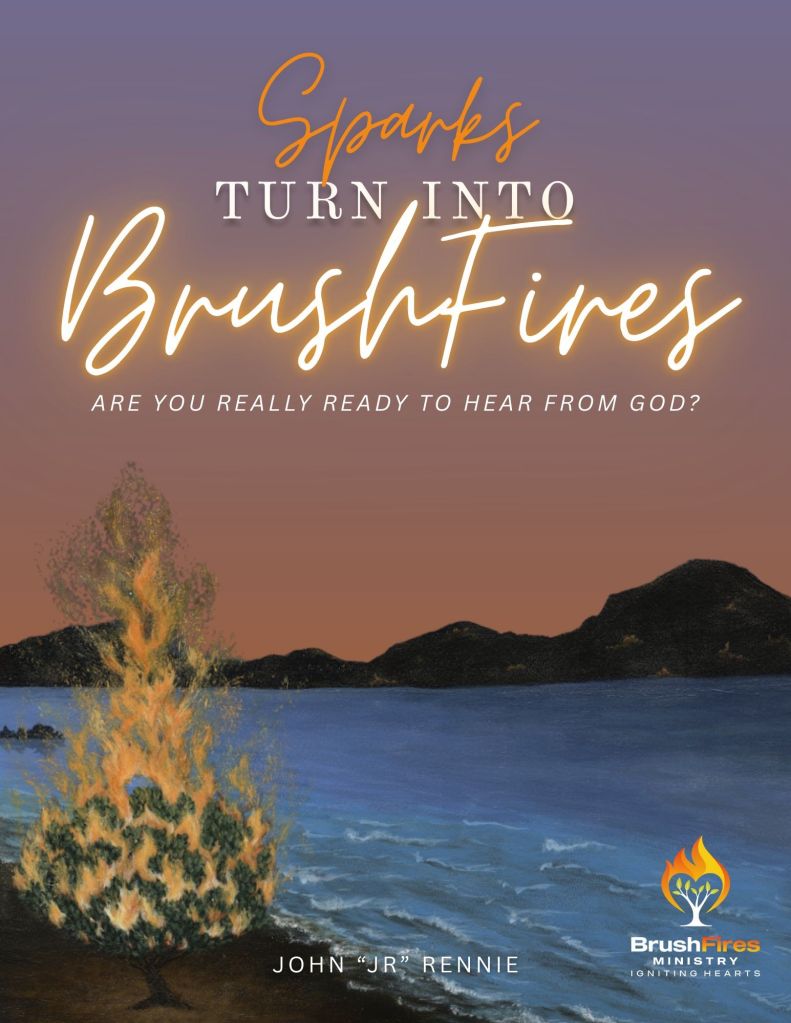
In this week’s episode of Thrive by The Rising Muse, returning guest John JR Rennie joins Naty and Veda for a deep and raw conversation about faith, calling, and his new book, Sparks Turn Into BrushFires.

JR doesn’t show up with pretense. He shows up with lived experience, spiritual wisdom, and a message for anyone who’s been stuck in a dry season, wondering if God is still speaking.

This episode is for:

  • Anyone who’s ever felt disconnected from their purpose
  • Those wrestling with regret, doubt, or burnout
  • Believers looking for real talk, not sugarcoated sermons
  • People are ready to reignite their faith and relationships

From church hurt to divine redirection, JR opens up about what it means to hear God clearly, obey when it’s uncomfortable, and find joy, not after the breakthrough, but during the battle.

We talk faith. We talk about failure. And we talk about the book born from the journey: Sparks Turn Into BrushFires.

As the founder of a nearly 40-year business software company, I thought I was going to ride off into the sunset and retire.  All that changed in 2015 when God decided to redirect me to my True Purpose.  Promptings, new understandings, and inspired guidance brought me to founding the BrushFires Ministry.   A ministry that helps other Believers discover their God Given Purpose and Destiny, just like God had led me to mine.

The BrushFires Ministry has created a system and tool set that allows believers to discover their strengths and weaknesses.  Once they have done this for themselves, they can discover this for their family, friends, and other ministry members.  There is nothing worse than feeling you are being misunderstood, overlooked, and spinning your wheels as a Believer.  I should know.  Our system and services can help the believer to find their jam and achieve that joy-filled state of mind that only the Lord can provide.  

  1. BrushFires Digital Workshop – an online video series to lead individuals, couples, small groups, churches, and organizations through our Workshop materials.
  2. The Design Coaching / Graduate Training programs – through three new workbooks (Mentoring Manual, Graduate Workbook and the Instructor’s Manual) we delve into deeper design insight, counseling tools, group dynamics and Church Body Building techniques.  This is also facilitated through Zoom conference training for the leaders.
  3. Church Leadership Training programs – using the Graduate Training materials, we coach church leaders to implement the BrushFires curriculum and to facilitate the BrushFires program in-house.  This is also facilitated through Zoom conference training for the leaders.
  4. The ReKindle coaching program – Follow up with Design Discovery Meeting graduates to help them pursue their purpose.
  5. Ignite Ministry Coaching – a facilitated Motivated Role exercise to help ministries brainstorm new solutions, new ministries, and new endeavors.

In 2025, the BrushFires program is expanding with the following new services. To connect with BrushFires, you can go to their website, find them on LinkedIn, Instagram, Facebook, and YouTube

🎧 If you’ve ever believed you were too far gone to start over, this episode will change your mind.