Shame Detox: How to Recognize Toxic Shame and Start Healing at the Root

Have you ever caught yourself over-apologizing for simply taking up space, obsessing over a minor mistake, or feeling like no matter how much you accomplish, it is never quite enough? What if the loudest, harshest voice inside your head isn’t actually yours?

In our latest episode of Thrive, we sit down for a deeply raw, eye-opening conversation about the invisible weight so many of us carry: toxic shame.

Shame doesn’t just make you feel bad—it quietly rewrites your identity. It influences how you date, parent, communicate, and even how you pray. If you have ever felt trapped in a endless loop of perfectionism, performance, or self-criticism, this conversation was recorded specifically for you.

Here is a glimpse of what we unpack in this powerful episode, and why you need to tune in today.

1. What Shame Actually Is (And Why It’s Not Guilt)

Before you can heal shame, you have to define it. In the episode, we break down the critical difference between the signals your mind sends you:

  • Guilt says: “I did something wrong.”
  • Healthy shame says: “That behavior doesn’t align with who I want to be.”
  • Toxic shame says: “I am wrong.”

Toxic shame doesn’t just correct your actions; it attacks who you are. We discuss how shame is deeply embodied—triggering physical threat states like elevated cortisol, a tight chest, or avoided eye contact—and how to spot it when it masks itself as discipline or ambition.

2. How Shame Gets Installed Early

Children are not born believing they are defective. We explore the relational root causes—from emotional invalidation and public humiliation to fear-based messaging—that teach us to believe mistakes threaten our belonging.

When raised with discipline lacking emotional connection, a child internalizes a dangerous narrative: “If I fail, I lose love.” In this episode, we unpack how to recognize these early installations so you can finally stop passing them down.

3. How Shame Shows Up in Relationships & Marriage

Shame never stays buried; it leaks into adult life. It shows up as hyper-independence, emotional withdrawal, people-pleasing, or an anxious need to perform to be loved.

We also get real about relationships, appearance, and marriage. We talk through the hard truth that no milestone—no ring, baby, or house—can change another human being. You’ll learn how toxic shame makes you personalize relational problems (“If I were prettier or better, they’d treat me right”) and how to start grounding your worth in secure love rather than conditional acceptance.

4. Religious Trauma vs. True Grace

Why do so many people walk away from faith spaces? We tackle the heavy topic of religious trauma and shame-based theology.

From the double standards of public shaming to fear-based messaging, we contrast harmful institutional practices with the compassionate model set by Jesus with the woman at the well. You will learn the difference between godly conviction (which draws you toward repair and closeness) and self-condemnation (which pushes you into isolation and hiding).

5. Practical Steps to Detox Shame at the Root

Healing isn’t about pretending nothing happened; it’s about disrupting the belief system shame built. In this episode, we walk through actionable tools to help you:

  1. Name the Voice: Separate yourself from the critic, the prosecutor, or the old tape.
  2. Practice Self-Compassion: Move from self-attack to supportive self-talk.
  3. Reconnect with Your Body: Shift your posture, breathe, and allow yourself to be seen.
  4. Speak Truth to Safe People: Disarm shame by speaking it out loud in safe relationships.
  5. Rewrite Your Spiritual Narrative: Choose restoring grace over punishing condemnation.

Ready to Stop Hiding and Start Healing?

Healing is rarely instant—it’s about unlearning, building safety, and taking small steps toward freedom every single day. You are not a mistake, and you don’t have to carry this weight alone any longer.

🎧 Watch or listen to the full episode of Thrive now to begin your shame detox journey.
Loved this conversation? Don’t forget to subscribe, leave a review, and share this episode with someone in your life who needs a gentle reminder of their worth today!

Loved this week’s episode insight? Help us unlock our next level of community care by subscribing to our YouTube channel today!

Sow a seed into this ministry to help us spread His light and transform lives—click here to join our mission today!
Are You Strong in Public, but Unraveling in Private?

Have you ever found yourself knowing all the right Scriptures, showing up for everyone else, and looking completely put-together on the outside—yet in private, you’re secretly struggling with overthinking, anxiety, or emotional triggers?

If so, you are far from alone.

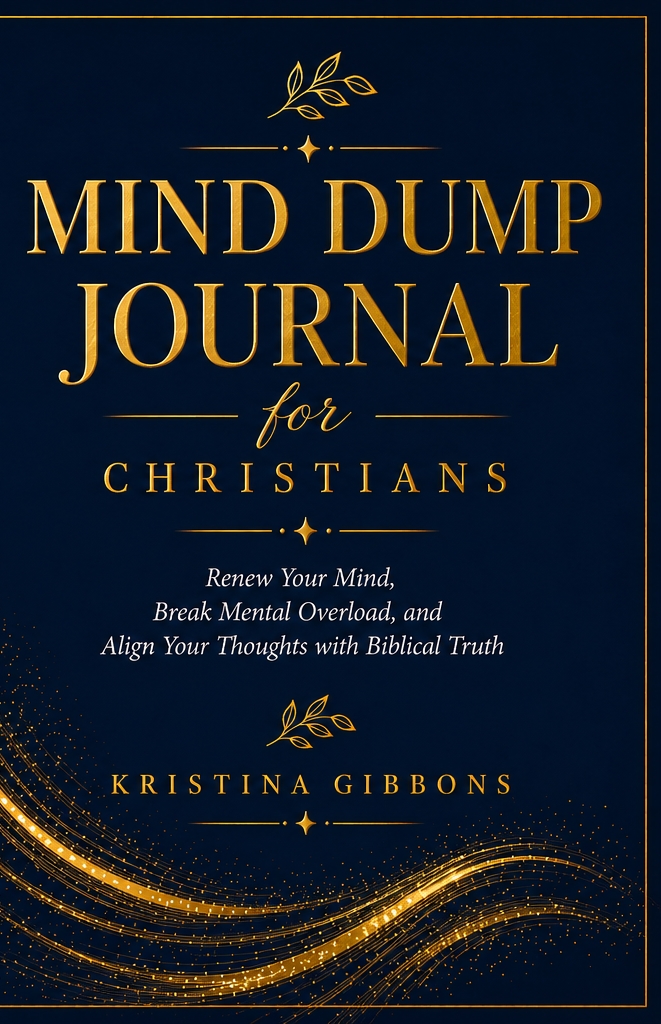
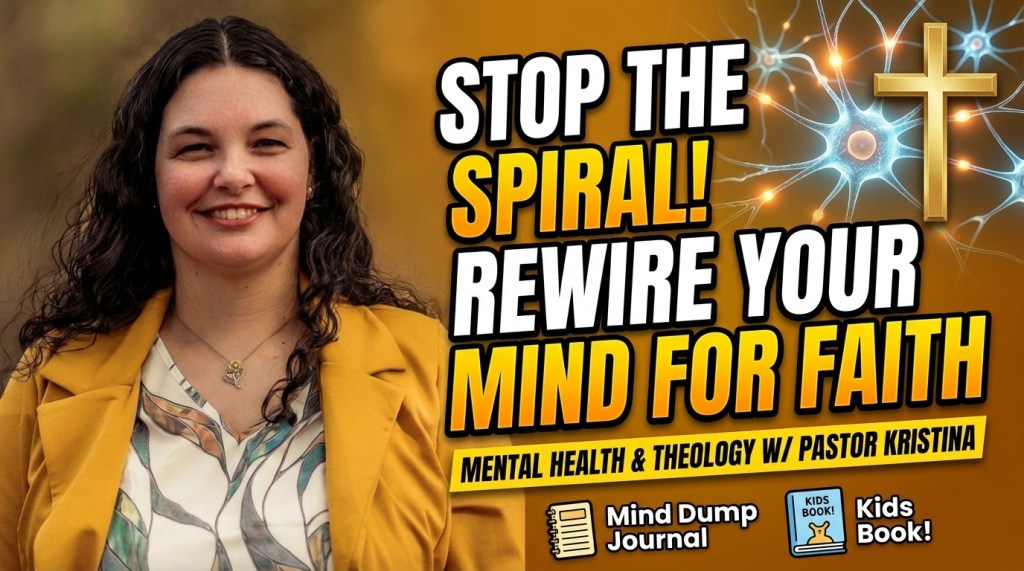
In our latest podcast episode, we sat down with Pastor Kristina Gibbons—ordained pastor, certified pastoral counselor, and author of the Mind Dump Journal—for a deep dive into the intersection of faith, brain science, and emotional transformation.

Why Surface-Level Fixes Don’t Work

Most of us spend years trying to manage our symptoms instead of untangling the root cause. But what if the key to lasting change isn’t just “trying harder,” but actually rewiring your brain?

In this conversation, Pastor Kristina breaks down:

  • The “Mind Dump” Method: How getting chaotic thoughts out of your head and onto paper physically transforms your perspective.
  • Neuroplasticity Meets Scripture: What actually happens in your neural pathways when you practice Romans 12:2 and “renew your mind.”
  • Taking Thoughts Captive: A step-by-step approach to intercepting toxic thought loops before they control your behavior.
  • Generational Healing: How her new children’s book, Asher Shines Bright, is helping parents teach kids to take their big worries to God early in life.

Whether you’re feeling stuck in a mental spiral or simply want practical, faith-based tools to master your internal monologue, this masterclass is built for you.

🎬 Watch the Full Episode Now!

Stop settling for surface-level quick fixes and start building neural pathways rooted in peace and spiritual authority.

🔗 Connect & Explore Pastor Kristina’s Resources:

Loved this week’s episode insight? Help us unlock our next level of community care by subscribing to our YouTube channel today!

Sow a seed into this ministry to help us spread His light and transform lives—click here to join our mission today!
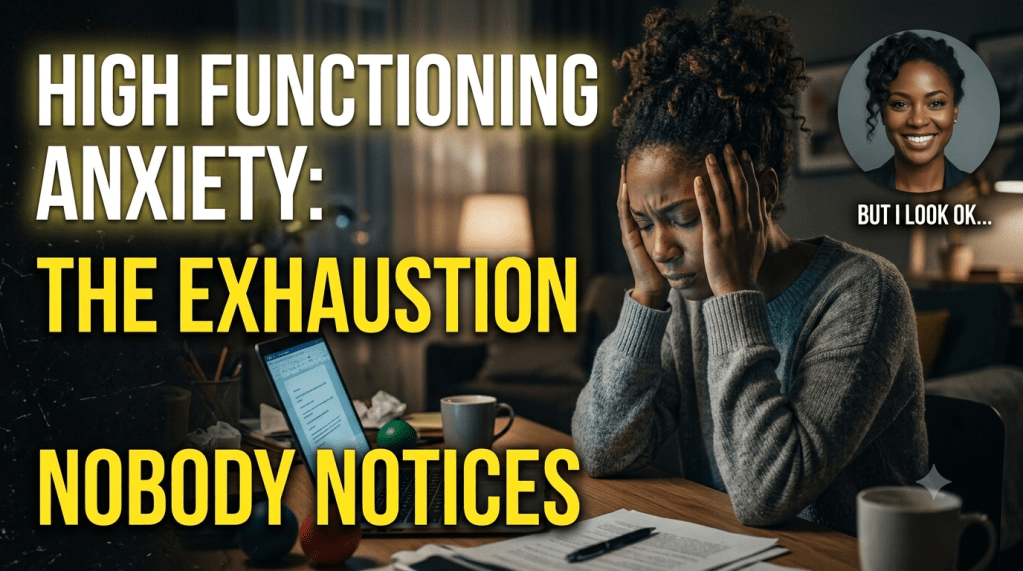
The Exhaustion Nobody Notices: Do You Have High-Functioning Anxiety?

On the outside, you look like you have it all together. You’re the reliable one, the high-achiever, the person who gets things done. People praise your drive and productivity.

But beneath that polished exterior? A constant undercurrent of stress, an overthinking mind that refuses to shut down, and a bone-deep exhaustion that sleep can’t seem to fix.

This is the hidden reality of High-Functioning Anxiety. Because you look okay, your silent storm goes completely unnoticed by the world.

The Hidden Toll of “Holding It Together”

High-functioning anxiety isn’t a medical diagnosis, but it is a very real survival strategy. It hides behind perfectionism and achievement, but it comes at a massive cost:

  • Physical Fatigue: Tight shoulders, jaw clenching, shallow breathing, and migraines.
  • Mental Burnout: An endless loop of anticipating the next problem or over-preparing out of fear of failure.
  • Spiritual Exhaustion: Believing that you are solely responsible for keeping the world spinning, making rest feel like a dangerous risk rather than a necessity.

You don’t have to live in a perpetual state of survival. It is entirely possible to maintain your capabilities without sacrificing your peace, your health, and your joy.

What We Cover in the Full Episode:

In this episode, we dig deep into the roots of this hidden struggle and share practical, actionable steps to help you heal:

  • The “Survival Response”: Why your nervous system is trapped in alert mode (and how to signal safety to your body).
  • Redefining Rest: How to transition from relentless striving to active trusting.
  • Practical Regulation Techniques: Simple grounding exercises to stop a racing mind in seconds.
  • Shifting Identity: How to break the habit of tying your self-worth to your daily output.

Ready to stop just surviving and start truly living? 🎬 Watch the full episode now to discover the practical strategies to regulate your nervous system, reclaim your rest, and heal from the exhaustion nobody else sees.

Sow a seed into this ministry to help us spread His light and transform lives—to join our mission today!

Navigating the Silent Battles: Mental Health and Breast Cancer

In the heart of Breast Cancer Awareness Month, we delve into the often-overlooked mental health challenges faced by those battling breast cancer and their caregivers. This journey is not just about survival but also about managing the silent battles of anxiety, depression, and fear that accompany the physical fight. Join us as we uncover these stories and insights in our latest episode.

The Unseen Struggles: Breast cancer is a formidable opponent, affecting one in eight women in the U.S.

While treatment advances have improved survival rates, the mental health toll remains significant. Patients often grapple with “chemo brain,” body image issues, and the constant fear of recurrence. Caregivers, too, bear a heavy burden, juggling medical appointments, emotional support, and their own mental health. Discover personal stories and expert advice in our episode.

Journaling, support groups, and therapy are vital tools for managing mental health. Movement, even gentle exercises, can offer healing. For caregivers, self-care is crucial. As one caregiver shared, “You can’t pour from an empty cup.” Taking time for oneself is not selfish but necessary to provide quality care. Learn more about these coping strategies in our discussion.

Faith can be a powerful anchor, offering hope and strength. Community support, whether through churches or peer groups, provides a network of care and understanding. As one participant noted, “Faith doesn’t erase the pain, but it gives us an anchor.” Hear more about the role of faith in our episode.

Breast cancer is a journey of both physical and emotional healing. By acknowledging and addressing the mental health challenges, we can better support those affected. Remember, healing is not just physical; it’s emotional and spiritual. Let’s continue to raise awareness and support each other in this journey.

Don’t miss our latest episode of Thrive by the Rising Muse, where we dive deep into these topics with heartfelt stories and expert insights. Subscribe now and join the conversation. Together, we can navigate these challenges and thrive.

When the World Feels Unstable, How Do We Thrive?

Life is unpredictable; right now, it feels like we’re all riding a wave of uncertainty. In our latest episode of Thrive by The Rising Muse, we take off the script and get real—no filters, no outlines, just raw conversation about the struggles many face today. We’re calling it Thrive Raw because sometimes, we just need to speak from the heart.

From massive job layoffs to skyrocketing grocery prices to the weight of mental health struggles—these are more than just headlines. They’re real-life battles people are fighting every single day. In this episode, we unpack the emotions, the fears, and the faith it takes to move forward when life throws the unexpected our way.

So, what do you do when your security is shaken? How do you hold on when it feels like you’re losing everything? More importantly, where is God in all of this? We’re diving deep into these questions and offering encouragement, real talk, and most of all, hope.

✨ Why you need to listen:
✔️ Raw, unfiltered conversation about the struggles happening right now.
✔️ Faith-centered encouragement for anyone feeling lost or overwhelmed.
✔️ Practical advice on how to move forward, find purpose, and rebuild.
✔️ A heartfelt message about the value of your life, no matter your circumstances.

If you or someone you love has been affected by job loss, financial uncertainty, or feelings of hopelessness, we want you to know that you are not alone. Join us for this powerful episode, and let’s navigate these storms together.

🎧 Listen now on your favorite podcast platform!
🔗 Click here for new episode

Let’s keep thriving—together.

#FaithOverFear, #KeepThriving, #MentalHealthMatters, #HopeInHardTimes, #JobLossSupport, #ThriveByTheRisingMuse, #FaithAndMentalHealth, #OvercomingStruggles, #ChristianPodcast, #Encouragement, #FindingPurpose, #LeanOnGod

Breaking the Stigma: Finding Hope and Healing in the Midst of Negative Emotions

We’ve all been there—caught in a whirlwind of emotions like stress, anxiety, and self-doubt. But what if you could transform those negative feelings into something empowering? In this deeply moving episode of Thrive by The Rising Muse, hosts Naty and Veda sit down with Sue Bowles, a master certified life coach and award-winning author, who has turned her personal struggles into a message of hope and healing.

Sue’s journey from trauma to thriving is both inspiring and eye-opening. She’s not only learned to navigate her own emotional ups and downs but has become a powerful advocate for mental health. If you’ve ever wondered how to break free from the grip of anxiety or tackle those negative thoughts head-on, this episode is for you.

Why You Should Listen:

In this candid conversation, Sue shares:

  • The power of vulnerability and how it’s key to healing.
  • The practice of gratitude and how it can immediately interrupt anxiety.
  • Why seeking professional help is a sign of strength, not weakness—especially in faith communities.
  • How to help others who are struggling without judgment, and the role of service in healing.

Sue also opens up about her personal battles with childhood trauma, an eating disorder, and even suicidal thoughts, offering real, raw insights into how she found healing—and how you can too. It’s not a quick fix, but Sue’s philosophy of taking “one step ahead” is the key to navigating your own journey.

Don’t Miss Out:

This episode is filled with wisdom, hope, and practical tools you can start using today. Whether you’re looking for ways to manage negative emotions or simply want to feel inspired by someone who has walked through the fire and emerged stronger, Sue’s message will leave you motivated and empowered.

Sue Bowles is a survivor turned thriver as an author, speaker, and Master Certified Life Coach. Having done the hard work of healing from a childhood rape, an eating disorder, other sexual assaults, and considering suicide, Sue now defines the effect the life-altering events have on her. The events no longer define Sue; she defines them.
“You only have to be a step ahead to help the person behind you” is the bedrock to the value Sue brings. She founded My Step Ahead and is the “Chief Instigator” behind the new Dare to Believe Movement, whose purpose is to nurture others to ‘dare to believe that you matter,’ knowing that nothing changes until that bedrock belief is solidified.
Whether speaking on a podcast, a stage, or one-on-one, Sue’s enthusiasm is contagious, shining the light of hope wherever the listener needs.
Sue’s award-winning first book, “This Much I Know…The Space Between” is available on Amazon and Kindle.

Call to Action:

Ready to break the stigma surrounding mental health and start your healing journey? Listen to the full episode of Thrive by The Rising Muse now!

And for more resources, visit SueBowles.com to grab her free PDF, “Quieting Your Inner Karen,” and discover how to silence that inner critic for good.

Unlocking the Secrets of OCD with Author Marin Canaday

In our latest episode of Thrive by The Rising Muse, we dive into an eye-opening conversation with Marin Canaday—an author, national volleyball champion, and someone who’s bravely battled OCD (Obsessive Compulsive Disorder) since childhood. Marin shares the deeply personal journey that led her to write My Little Monster, a children’s book that creatively illustrates the struggles of living with OCD through the metaphor of a “little monster.”

But this isn’t just any monster story—it’s a powerful exploration of the invisible battles that many face daily. Marin opens up about how her OCD shaped her identity, from her childhood experiences of compulsively confessing small mistakes to her adult struggles with terrifying obsessive thoughts. Yet, her story is one of hope, resilience, and the importance of seeking professional help.

In this episode, we explore key questions:

  • How did Marin’s OCD influence her life as a student and athlete?
  • What role does faith play in navigating mental health challenges?
  • Why is professional support crucial when managing OCD, and how can it make a difference?

Marin’s vulnerability and strength shine through as she discusses how she continues to manage her OCD and the vital role that both therapy and faith have played in her healing process. This is more than a story about overcoming OCD—it’s a testament to the power of resilience and finding purpose even in our darkest moments.

If you’ve ever felt overwhelmed by anxiety, mental health challenges, or simply want to better understand the struggles of those with OCD, this episode is a must-listen. Marin’s journey is a reminder that while we all have our own “little monsters,” they don’t have to control our lives.

Marin Canaday grew up with obsessive-compulsive disorder from early childhood. However, she was
not formally diagnosed with OCD until her adult years. She found studying and sports helped her cope
with her OCD as a child. In adulthood, she continued to struggle with her anxiety disorder but had to
find new ways to cope as her athletic career and days of studying were behind her. Today, Marin writes
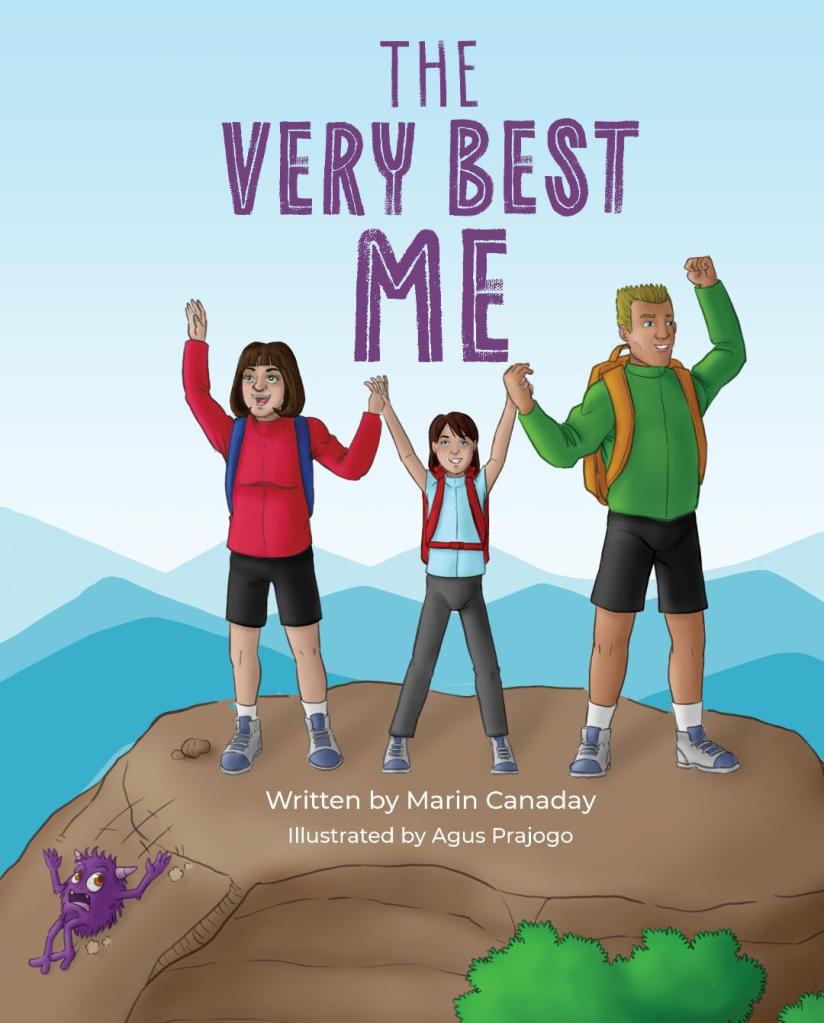
in her free time. She is the author of My Little Monster and The Very Best Me, children’s picture books
that describe her struggle with OCD. She writes to encourage children struggling with anxiety
disorder. To connect with Marin go to her website.

Tune in to hear Marin’s incredible story and learn how you, too, can face your own monsters with strength, faith, and the right support.


Catch the full episode on Thrive by The Rising Muse and discover how Marin Canaday is helping others take control of their mental health—one monster at a time.

Stay connected:

Navigating Multiple Sclerosis

As we commemorate World Multiple Sclerosis Day today, it’s essential to shed light on the holistic impact of this condition. Multiple Sclerosis (MS) is not just a physical ailment; it deeply affects one’s emotional and mental well-being. Today, drawing insights from Dr. Meghan Beier, a renowned rehabilitation neuropsychologist from JohnHopkins.org, we explore three prevalent mental health concerns within the framework of faith and mental resilience.

  1. Depression:
    Depression can be a silent storm brewing within the lives of those affected by MS. It’s not merely a reaction to the illness but can also stem from biological factors, such as inflammatory processes. Dr. Beier emphasizes the importance of recognizing depression as a symptom rather than solely a consequence of MS progression. This understanding enables us to approach it with compassion and targeted interventions, combining medication with cognitive behavioral therapy. As people of faith, we can find solace in knowing that even amidst our darkest moments, there’s a guiding light of hope, urging us to seek help and embrace healing.
  2. Anxiety:
    Anxiety, like a relentless shadow, often accompanies the unpredictability of MS. The fear of exacerbations and uncertainties about the future can weigh heavily on individuals and their loved ones. Yet, faith teaches us to surrender our anxieties to a higher power, trusting in a divine plan beyond our comprehension. Dr. Beier encourages proactive measures, including behavioral therapy and acceptance and commitment therapy (ACT), to empower individuals in managing anxiety. By cultivating resilience through faith-based practices, we can navigate the turbulent seas of anxiety with unwavering courage.
  3. Pseudobulbar Affect:
    Pseudobulbar affect, characterized by uncontrollable emotional expressions, adds another layer of complexity to the MS journey. Despite its challenges, seeking proper diagnosis and treatment is crucial. Here, faith offers us resilience in acceptance and a beacon of strength to face adversities head-on. While talk therapy may not directly address pseudobulbar affect, medical interventions tailored to individual needs can provide relief and restore emotional balance.


As we commemorate World MS Day, let us not only raise awareness but also extend empathy and support to those battling this condition. By addressing the intricate interplay between faith and mental health, we pave the way for holistic healing and resilience. Together, let us foster a community where individuals impacted by MS find solace, strength, and above all, unwavering hope in the journey ahead.

Until next time, be blessed

Remember to subscribe to our podcast: Thrive by The Rising Muse

The puzzle of life

I really do not believe in coincidences. I do believe in a masterplan, which is like a puzzle with many pieces that need to fall into place for the complete picture to come together. Here are some of the issues we face when we are trying to complete the puzzle.

Too many pieces

Photo by Magda Ehlers on Pexels.com

When we look at all the things that we are juggling we become overwhelmed. How is this going to happen? How is that going to happen? It can be overwhelming. But just like a puzzle, you can only put one piece at a time together. The same way, start with the corners. In real life, the corners are those small tasks that make it easy to check off our lists. It will give us a sense of accomplishment to have something done.

I am currently helping homeschool one of my nephews. It is a lot of material that I must review every week to make sure that he has all the lessons he needs to complete. It is also a lot to review afterwards. I made a spreadsheet. That is my way of organizing my pending tasks. I have all the subjects we need to cover with the dates that we will be working. Every week I go cell by cell of that spreadsheet, adding each task that he needs to complete per subject. If it gets to be too much, I do something else and come back to it.

I printed all the worksheets and literature that he will be reviewing this semester and it is in piles in my office. Once I schedule on my spreadsheet the tasks for the week, I go to my piles and pull out those sheets, then I put them in a binder for him.

If I were just looking at the piles of work that needed to be completed, I promise you that I would freeze and get nothing done.

It does not fit

Photo by Ann H on Pexels.com

Many puzzle pieces look alike, and we do not understand why this one is not fitting in place. We can be exceptionally good at trying to get a square peg in a round hole and get frustrated of why is not working. When something is not working, it is time to take a step back. Are you trying to do something that is not beneficial to you? Are you trying to go about something the wrong way? Are you trying to take a shortcut when the only way to get to the goal is by following the steps? Stop, see what you are doing and why are you doing it? Be honest with yourself. Talk to someone you trust about this roadblock. Sometimes another set of eyes can help you see where that piece fits, or if that puzzle piece is not part of your picture at all.

I have tried several business ventures. Aside from writing, I would like to be an entrepreneur, but not all business models are right for me. They do not fit my schedule, my personality and/or my values. I have had to take inventory when things are not working and realize that is not lack of dedication or motivation. This one is not for me. That is ok, not everything is for everyone.

Communicating, writing, interacting with people, that, is my gift. Selling products is not.

It is taking too long

I complete puzzles every day for fun. I do it on a mobile app. The game allows you to do as many pieces as you want. The same puzzle can be divided from 36 to 400 pieces, your choice. My usual setting is 144. The smaller numbers are too easy and boring. The larger numbers take me too long, usually more than one day and I want to see at least one complete puzzle a day. But the game has events that include puzzles of all sizes, you cannot customize those. I am not going to lie; I live the 400 pieces one for the end. It takes too long! But if I do not complete it, I cannot complete the event and get my reward.

The same happens to our daily life. The constant pressure can be paralyzing and give you the desire to give up. Sometimes it is ok to take a break and then come back to the task. Giving up is not a choice if you want the reward. Stopping and restarting is not failure, not continue to try is. Of course, that is if it is not something harmful that you need to stop altogether.

I hope this motivates you to go on today.

Blessings

Check out my new YouTube Channel

There is not much there right now. It is brand new but subscribe as updated content will be added soon! Thanks for all your support.

A moment at a time

Are you having a rough day today? I know we’re all going through something. Don’t allow anyone to minimize how you feel. Yes, sometimes looking around and realizing that there’s people around us whose misfortune looks a lot more severe helps us put our problems in perspective. That doesn’t make your problems any less real or important.

Phrases like:

Photo by Wallace Chuck on Pexels.com

Those words, even if you believe them, do not bring immediate comfort to your anxiety. You think, how can I see that it will be ok, when I can’t get past right now. The great thing about faith and history is that they can reframe our anxiety.

Stop to think, when have you been in a similar situation and how it was resolved. Did God come through for you? I’m sure he did. Because even when the answer to your prayer may have been “No”, with time you have come to realize that it was best for you. Faith is the ability to trust what we don’t see. Are you able?

Amid storms, it’s hard some time to step out of the boat and walk on water. It’s sometimes even hard to breathe.

Let me tell you a story of something that happened to me some years ago. I honestly can’t remember why I was anxious that day. I had a lot going on, but I do know how I got through that day and made it.

There’s a portion of the extended serenity prayer that says: “Living one day at a time, enjoying one moment at a time”. That day I focused on that verse. I remember I was on my way to work when I became overwhelmed with anxiety due to whatever circumstances I was dealing with. I told myself that there was nothing I could do while sitting in my car. I decided to focus on driving.

Photo by Aayush Srivastava on Pexels.com

It was the morning rush, so you can imagine the amount of traffic I was facing. Sometimes when my anxiety levels are very high, I can’t even listen to music; any noise annoys me. In other occasions, is the opposite, I start playing music and sing very loud. I don’t care if I’m ridiculously dancing. It gets the anxiety kicked out.  This particular morning was one of those where noises were not part of the plan. Focusing on traffic was not going to help, but there was nowhere to go. So, I focused on my surroundings.

How many times have you driven down a road without noticing things? We’re going so far and focused on our destination that we miss a lot of what’s around us. That day I saw businesses that I didn’t know where on my commute. I noticed trees and trash on the highway. I wondered, how and when that trash would be picked up? By the time I made it to work, I hadn’t resolved a thing, but I could think more clearly. I have also gained insight into things I hadn’t noticed before.

So, if you’re having the kind of day where you can’t get past the next five minutes, DONT.  Don’t think about what is going to happen five minutes from now. Focus on what’s immediately in front of you. After that, focus on what’s immediately in front of you at that time. Do tasks one at a time. You may think that you’re slowing down, but the reality is that you’re accomplishing something that you were not doing at all, while paralyzed with anxiety. 

Take a breath, what haven’t you noticed around you. It may or may not have the answer to your problem, but it could give you a new perspective.

Photo by Jean van der Meulen on Pexels.com

Want to share with us your moment of stress or ways in which you have battled your own moments of anxiety. Feel free to comment below.

If you want to do so privately, feel free to email me at @therisingmuse

Blessings!

Sponsor