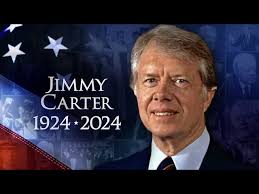
Honoring a Life of Service: National Day of Mourning for President Jimmy Carter

Today, we pause as a nation to honor the life and legacy of President Jimmy Carter, a man whose impact extended far beyond the walls of the White House. Known for his humility, compassion, and unwavering commitment to service, President Carter leaves behind a profound legacy that continues to inspire countless individuals around the world. On this National Day of Mourning, we reflect on his accomplishments outside the political arena and the enduring strength of his faith.

A Champion for Humanity
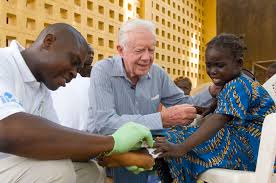
While many remember Jimmy Carter as the 39th President of the United States, his post-presidency years showcased his remarkable dedication to humanity. Carter became a global advocate for peace, human rights, and public health through his work with The Carter Center, which he co-founded with his wife, Rosalynn, in 1982. The Center’s mission to “wage peace, fight disease, and build hope” has led to significant strides in eradicating diseases like Guinea worm, improving election integrity worldwide, and promoting mental health awareness.

One of Carter’s most notable accomplishments was the near eradication of Guinea worm disease, a parasitic infection that once afflicted millions. His relentless efforts and innovative approaches reduced the number of cases to fewer than a handful annually, marking one of the greatest public health victories in modern history.

A Man of Faith in Action
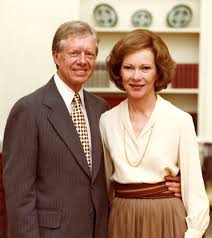
Jimmy Carter’s faith was not confined to words or sermons; it was lived through his actions. A devout Christian, Carter’s beliefs were the cornerstone of his life and work. He taught Sunday school at Maranatha Baptist Church in his hometown of Plains, Georgia, for decades, drawing visitors from around the world. His teachings emphasized love, humility, and justice, values he exemplified in every aspect of his life.

Carter’s faith also informed his commitment to Habitat for Humanity. He and Rosalynn famously donned hard hats and picked up hammers to build homes for those in need, turning their physical labor into a symbol of solidarity and hope. Their annual Carter Work Project mobilized volunteers worldwide and transformed the lives of countless families.

An Inspiring Legacy

Beyond his tangible accomplishments, Carter inspired through his character. In a world often marked by division and discord, he stood as a beacon of integrity and kindness. His ability to listen, empathize, and act with purpose reminds us that leadership is not about power but about service to others.

Carter’s words often reflected his deeply rooted hope: “We must adjust to changing times and still hold to unchanging principles.” This sentiment captures his ability to navigate challenges with grace while remaining steadfast in his values.

A Call to Reflect and Carry Forward

As we mourn the passing of President Jimmy Carter, let us also celebrate the life he led and the legacy he left. His unwavering faith, tireless service, and profound compassion are a testament to what it means to live with purpose. Today, let us honor his memory not only with solemn reflection but by embodying the values he cherished—service, love, and justice.

In our grief, we find gratitude for the lessons he taught us. May his life inspire us to build a better world, one act of kindness at a time.
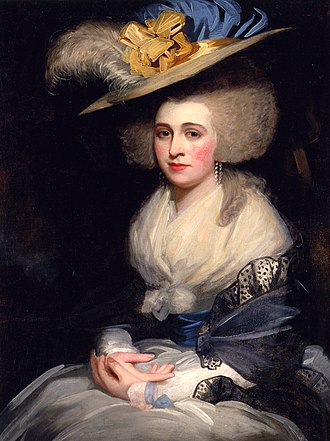
Breast Cancer Awareness: From Nabby Adams to Betty Ford and Nancy Reagan

I’ve never considered myself a history buff, but homeschooling has reignited my curiosity for subjects I might have overlooked in high school. I vividly remember my history class, where I once dozed off while taking notes, and the last word I wrote was “sleep.” Looking back, it seems like my brain was dropping hints about my enthusiasm for the subject. But as an adult, I’ve developed a keen interest in history, especially in the “hows” and “whys” behind significant events. It’s amazing how I missed out on all this earlier in life.

While exploring the lives of historical figures like John Adams through documentaries, I stumbled upon a remarkable woman from that era, Abigail “Nabby” Adams Smith. Nabby was the daughter of John Adams, the second President of the United States, and the sister of John Quincy Adams, the sixth President of the United States.

Nabby’s story took an unexpectedly poignant turn when I learned that she battled breast cancer during a time when science and technology were nowhere near where they are today. She had to undergo a mastectomy, the surgical removal of her breast, in an era without anesthesia. The sheer courage and strength that this must have required are beyond imagination. Tragically, her ordeal did not end there, and she passed away just two years later.

This prompted me to wonder about other women in the White House who may have faced similar challenges. My research led me to two remarkable women:

1. Betty Ford:
Betty Ford, the wife of the 38th President of the United States, Gerald Ford, was diagnosed with breast cancer in 1974. What makes her story particularly inspiring is her openness about her diagnosis and treatment. By sharing her journey, she helped raise awareness about breast cancer and played a crucial role in destigmatizing the disease. In her own words, “Too many women are so afraid of breast cancer that they endanger their lives. These fears of being ‘less’ of a woman are very real, and it is very important to talk about the emotional side effects honestly. They must come out into the open”. Betty Ford survived breast cancer and lived until the age of 93, passing away from natural causes in 2011.

2. Nancy Reagan:
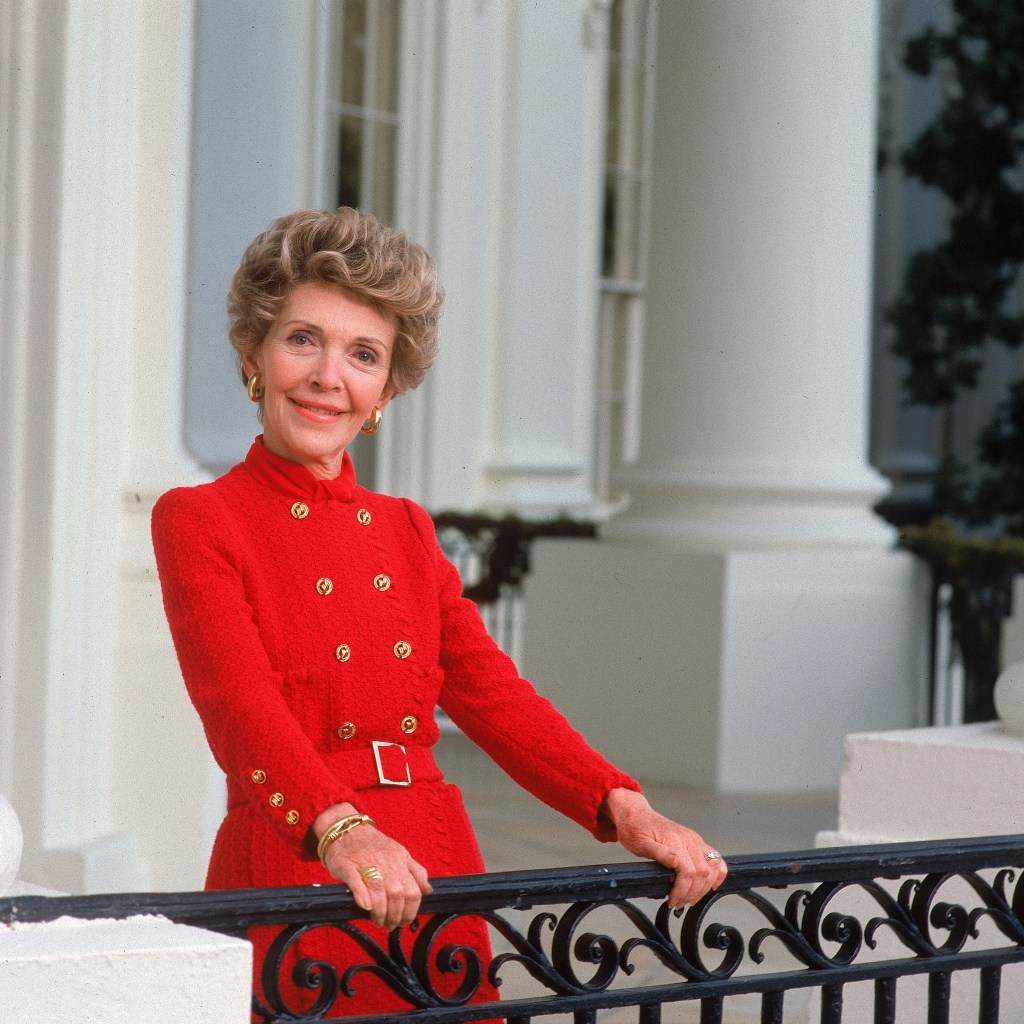
Another prominent figure, former First Lady Nancy Reagan, faced a breast cancer diagnosis in 1987. She underwent a mastectomy and chose to go public with her diagnosis to emphasize the importance of early detection and regular screenings. What sets Nancy Reagan apart is her strong advocacy for her own healthcare decisions. She didn’t conform to the conventional treatment path and was vocal about it. Her story serves as a reminder that individuals battling breast cancer should advocate for their preferences and treatment choices. While research, second opinions, and careful consideration are vital, it’s crucial to stand firm on what feels right for you.

Breast cancer treatment has indeed come a long way since the days of Nabby Adams. It has also progressed significantly since the time of Betty Ford and Nancy Reagan. However, one constant remains: early detection is key. Regular self-breast exams and mammograms are essential tools in the fight against breast cancer.

History is a treasure trove of stories that continue to inspire and educate us. The resilience of women like Nabby Adams, Betty Ford, and Nancy Reagan in their battles against breast cancer reminds us of the strength of the human spirit. Their stories underscore the importance of awareness, early detection, and taking charge of our healthcare decisions. So, remember to take care of yourself, stay informed, and, as always, be blessed.

A Mother’s Love

When I think about a mother, my frame of reference is obviously to think of my own mom. As many daughters, my relationship with my mother has had many stages. If there’s one thing I’m always sure is that noDSC_4396 matter what, my mother loves me and that I love her too. Some days she drives me absolutely crazy, but that is her job and she does it very well. Some days I catch myself behaving just like her, reasoning like her and saying the same things that she says.

Last year for her birthday my brother came to visit, I heard him say something that I could hear myself saying and I joked, “I think we are related”. He then replied, “Don’t forget we have the same mother” Which reminded me that our wit comes from that little 4’10 woman full of personality.

From her I’ve learned that a mother’s love is sacrificial, supportive, unconditional, protective and educational. A mother’s love is essentially the closest thing on earth to God’s love.

Now a mother is more than someone that has a biological connection with another human being. Being a mother is a more intimate connection than DNA. Therefore I know for a fact that there are more mother’s out there than those who have carried a child inside of them. So to every woman who has mothered someone  from her heart. Happy Mother’s Day!

“Don’t you see that children are God’s best gift, the fruit of the womb his generous legacy? Like a warrior’s fistful of arrows are the children of a vigorous youth. Oh, how blessed are you parents, with your quivers full of children! Your enemies don’t stand a chance against you; you’ll sweep them right off your doorstep.” (Psalm 127:3-5, MSG)

As a gift to all the mother’s out there, I’m placing both of my fictional books on sale! They make a great gift for all the mother’s in your life. This sale is only through May 13th by clicking on the book covers below

TheRoadHomeFinal (2)     SeasonsGreetingsFinalCover

$2.99 (save $2)                          $0.99  (save$1)

Philip M. Bryant:Writing Militarily

Our last guest for 2011 is Historical Fiction Writer Phillip Bryant. This is a new side of fiction we’ve never explored at the Rising Muse, so for those history buffs out there, here’s a treat…

“Sometimes a good story can miss the mark when we lack the minutia of details that can transport the reader or give our plot realism. SometimesPhil these details are elusive unless time has been spent living the life we wish to portray. Although a brief article on civil war or military parlance can’t make up for having lived it, I will outlay some things that I hope will be helpful in creating realistic scenes, dialogue, plots, and character arcs.

I have always been a military history buff, the American Civil War being my favorite area of research but most periods of wars have drawn my interest. I’ve also been both a Civil War and WWII reenactor for over ten years.

One thing, no matter what period one is writing about, it was probably an era of conflict. What we see in movies and television is often inaccurate or cliché. Until the Second World War introduced a large and permanent standing army, our wars were fought by volunteer armies raised from state levees and disbanded as soon as peace was achieved. This brings the type of movie character we are familiar with, the fatherly sergeant, the young and inexperienced privates, into conflict with a very real dynamic that existed between soldiers and the command structure used at the time. For the Civil War time period, picking one or two published journals like Hardtack and Coffee by John Billings or Company Aytch by Samuel Watkins will give you an idea of soldier life. Another great resource is The Life of Billy Yank and The Life of Johnny Reb by Bell Irvin Wiley.

Do not assume that the army organization and functionality has remained static. Organization and how armies were used changed with tactics and wars. Here’s a quick guide to the basic elements of an army unit. These exist in any branch of the army (cavalry, artillery).

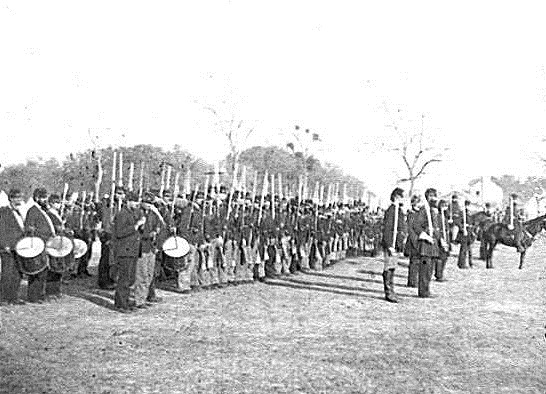
For Revolutionary War, War of 1812, Mexican American War, Civil War, and Spanish American War the basic element was the company. The reason for this is that fire is massed in a tight formation, two ranks. The smallest element in the company was the comrades in arms, a group of four men who made up a skirmish group.

The next formation up was the battalion, a grouping of companies under the second in command of a regiment. It is rare that this unit is separated from the regiment but a battalion could be sent off on a small mission where it is not expected to run into much resistance. Picket (a string of vedettes along a long line like on a river bank separating forces or spread out along a line of miles whose purpose is to be an early warning for the larger force behind it) and garrison duty would be the only reason a battalion might be separated from their regiment.

The primary unit of all of these time periods was the regiment, made up of 10 companies that march, bivouac, and fight together. Volunteer regiments (as opposed to regular army regiments) were raised by the states and federalized for national service. They retained their state designation and the governor of each state had the power to grant commissioned officers. Volunteers were raised from each county in the state, sometimes from specific counties in the state and the volunteers being formed into companies from those who volunteered from that county, so that one served with men one knew already. This was a consistent practice up to WWII. Officers and noncommissioned officers would be elected after the formation of each company or the captaincy of each company would be commissioned by the governor and other commissioned officers by the same process. When writing about soldiers in these time periods, it was the regiment that held their allegiance most and governed their daily lives.

The next unit of note was the brigade, made up of between three to four regiments. When reading about these various wars and battles, one often runs into the brigade being mentioned most as tactics governed the movements of brigade sized units about the battlefield.

The third and fourth unit was the division (made up of three to four brigades) and the corps (made up of three to four divisions). These are forces made up of thousands of men and controlled by the commander of the army.

The last organization is the army, a grouping together in a geographical theater of operations (a term meaning anything from a state to a region to an entire continent). An army was usually comprised of a variety of organizational schemes. For instance, as the civil war progressed and the need to control the vast armies grew, army commanders used a variety of methods to group regiments and brigades together. Up until 1862 the largest designation was the division or, as at Fredericksburg, Right, Center, and Left Grand Divisions made up of several divisions. After the Union disaster of Fredericksburg, Corps were formed and Union armies kept these designations and organization for the duration of the war. The Confederate forces used different means of organizing itself and never adopted the Corps structure.”

PhilbioPhillip M. Bryant Attended the University of New Mexico and earned his bachelor’s degree in history and with a minor in American studies. He has been active in local New Mexico reenacting and on the national level is a member of the 23rd SNY as part of the Army of the Pacific, 1st Federal Division. He has been researching the American Civil War for over 25 years. His sources have included diary accounts, autobiographies, historical monographs and first-hand reports on the actions taken 150 ago published in the War of the Rebellion battle reports and War Department communications. Phillip lives in Albuquerque, New Mexico with his wife of 18 years, is a deacon, an IT administrator, served in the Army National Guard for 15 years, and is a long time history buff. His first novel is out and he’s working on the sequel now.

Phillip’s novel They Met at Shiloh is now available on Amazon!