The Transformative Power of Gratitude: A Thanksgiving Reflection

As Thanksgiving approaches, we often find ourselves reflecting on the blessings of the past year. But what if gratitude went beyond the dinner table and transformed our very way of living? In this episode of Thrive by the Rising Muse, Naty and Veda explore the profound impact of gratitude when it is intertwined with grace and mercy.

We are reminded that true gratitude isn’t just about acknowledging what we have; it’s about letting that thankfulness change how we see and treat others. They discuss the importance of extending grace, even when it’s inconvenient, and how this can lead to deeper, more meaningful relationships.

The episode delves into the concept of grace—giving others what they don’t deserve—and mercy—refraining from giving them what they do deserve. Naty shares personal stories that highlight the power of these virtues in transforming lives and fostering compassion.

Listeners are encouraged to let their gratitude be visible, to let it sound like grace, and to let it move like mercy. We’re challenged to embody the love and compassion that Thanksgiving represents, not just during the holiday, but every day.

This Thanksgiving, let’s make a conscious effort to let our gratitude transform us. By embracing grace and mercy, we can create a ripple effect of kindness and compassion in our communities. Tune in to this inspiring episode and discover how you can make your gratitude truly transformative.

Subscribe now to Thrive by the Rising Muse for more insightful conversations.

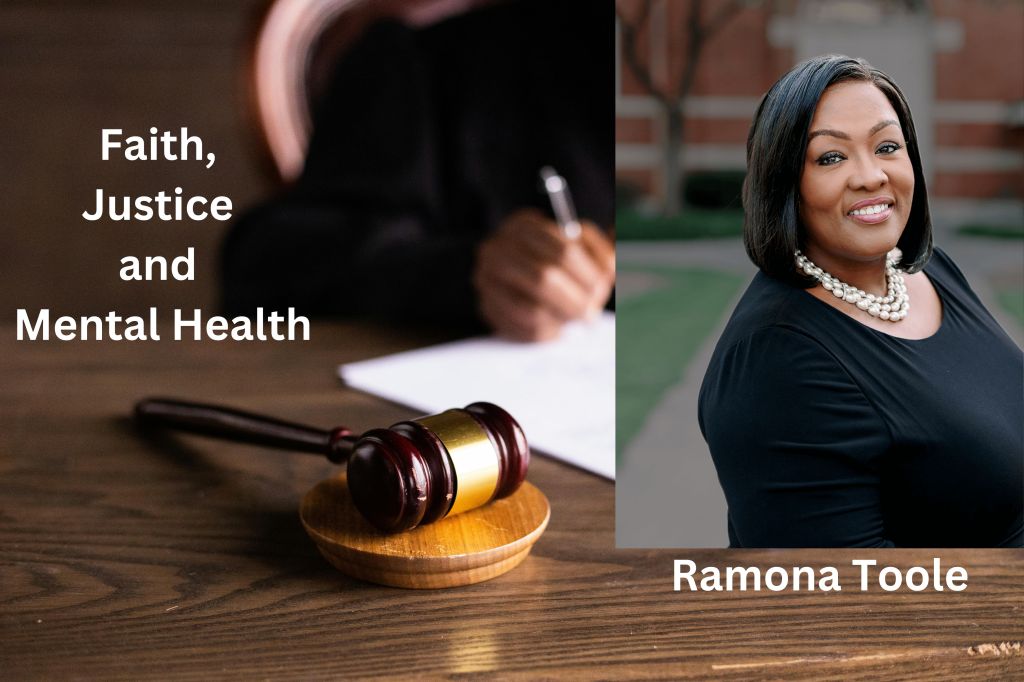
Faith, Justice and Mental Health


In this week’s episode of Thrive by The Rising Muse, we delve into the intricate web of the justice system, shedding light on its nuances, challenges, and the inspiring journey of one individual dedicated to reforming it. Join us as we sit down with Ramona Toole, a beacon of resilience, service, and hope, whose personal story fuels her unwavering commitment to creating a safer and more equitable community for all

Ramona’s upbringing was marked by adversity, with a tumultuous household overshadowed by her father’s abuse and addiction. Yet, amidst the chaos, a pivotal moment ignited her path towards justice. A chance encounter with a black female judge sparked a flame within her, propelling her towards a career in law, driven by the desire to be a voice for the voiceless and a source of inspiration for the marginalized.

For Ramona, faith has been a guiding force, shaping her perspective on justice and compassion. While the legal system may be bound by the separation of church and state, Ramona emphasizes the crucial role of faith in addressing mental health within the justice system. She advocates for holistic approaches, integrating mental health support and rehabilitation services to break the cycle of crime and stigma

Central to Ramona’s mission is bridging the gap between law enforcement and marginalized communities. Through community service projects and mentorship programs, she aims to foster trust, understanding, and mutual respect between officers and civilians. By humanizing the badge and fostering genuine connections, Ramona believes we can cultivate safer, more inclusive communities.

Ramona underscores the importance of equitable access to justice, regardless of background or circumstance. Treating individuals with dignity, providing platforms for dialogue, and amplifying marginalized voices are essential steps towards building a more just society. Additionally, she advocates for comprehensive mental health support, urging policymakers to prioritize funding and accessibility for all.

As Ramona embarks on her journey to become a Gwinnett County State Court judge, her platform extends beyond the courtroom. With a focus on accident cases, civil disputes, DUI offenses, and traffic violations, she seeks to uphold fairness, integrity, and accountability in every case. Her nonpartisan approach underscores her commitment to serving the community above all else.

As we conclude our conversation with Ramona Toole, we are reminded of the power of resilience, compassion, and advocacy in reshaping our justice system. Through her tireless efforts, Ramona exemplifies the transformative potential within each of us to effect meaningful change. Check out our latest episode for more!

Until next time, be blessed.

Zimmerman VS. Dunn

Being trapped at home snowed in, I had the opportunity to watch the Michael Dunn’s trial. I had promised myself that after Jodi Arias I was done with trials, but this one caught my attention because of the circumstances around it.

The media and social media have compared this trial to the George Zimmerman trial, and although there are many similarities, there a huge differences in my opinion. I’ll try to stay as objective as possible and try stay within the lines of facts because I know there are a lot of people being affected by this tragedy.martin

Similarities

  • These two cases came out of Florida and caught media attention
  • An adult shot an unarmed teenager.
  • The shooter and the victim were from different races.
  • In both cases the shooter claimed self defense.
  • In both cases the shooter alleged that the victim had a weapon.
  • In both cases the shooter alleged that he was threatened.
  • In both cases no weapon was found on the teenagers.
  • Racism was an important part of the cases.
  • Gun control has been part of the discussion.

dunnDifferences

  • George Zimmerman called 911, in fact more than once before the incident, so he knew police was on their way. Michael Dunn never called 911.  I know I’m trying to stay to the facts, but this part was hard for me to understand. I can understand that he didn’t call 911 from the gas station because he claimed to be afraid. He said he didn’t do anything wrong. I can even understand his perception, but if he was attacked why wouldn’t he call the police to catch his alleged attackers?
  • George Zimmerman stayed at the scene and immediately told the police that he had been the shooter. Michael Dunn fled the scene and although he didn’t deny being the shooter, he waited for the police to find him.
  • The incident between Zimmerman and Martin was in a dark kind of alley under the rain. The incident involving Dunn and Davis was in a well lit parking lot.
  • In the Zimmerman case there was very few witnesses, mostly what people were able to hear in the rain. With Dunn there were multiple witnesses and even some videos.
  • Zimmerman had physical evidence of an altercation. Dunn had no physical evidence of being attacked.
  • Zimmerman was granted out on bond to await trial. Dunn had to remain in jail throughout the process.
  • In the Zimmerman case there was a loud, high level of interest and outrage from the community and certain important leaders. Although the Dunn case has been classified as a high profile case and the local community has reacted to the case, it has not reached the levels that the other case did.

In terms of the results, a jury has decided that George Zimmerman was not guilty and acted in self defense. In the Michael Dunn case, the jury is deliberating as I type this article.

Keep both the Martins and the Davis in your prayers. Both families lost their child in a very tragic manner. They will not able to see their kids get a career, get married, or have children. I lost a sister when I was very young and it wasn’t a tragic death. I know from watching my mother that there’s not a single day where she doesn’t think about my sister and that although time does make things easier, that pain is always there.

Matthew 5:4 – Blessed are those who mourn, for they shall be comforted.

As a society we need to look at ourselves and how we are living. We are in a place of intolerance and violence. Let’s go back to what Jesus asked us to do:

“’Love your neighbor as yourself.’ There is no commandment greater than these.” Mark 12:31

…and remember that your neighbor is ANY human being around you regardless of gender, race, ethnicity, lifestyle, belief, political affiliation, socio-economical status.

Until next time, be blessed

Christian view on the death penalty

I’ve always had a clear position on the death penalty. I don’t believe in it. I think that if I didn’t grant someone’s life, I have no right to take it away regardless of their actions. Let me clarify that birthing or providing the seed for a child is participating in the process of life, in my definition only God grants life. The whole I brought you into this world and I’ll get you out of it may be a choice of a discipline scare tactic, but in the practice it’s still considered murder.

Thou shall not kill” has a particular effect in my line of thinking. The other reason for my position against the death penalty is because after watching hundreds of hours of real life crime shows and seeing how many innocent people have been sent to death row, some have been saved, some have been executed, I don’t think I could bear the responsibility of being convinced by a prosecutor that someone needs to be put to death and then killing the wrong person. Well, the whole idea of me consenting to killing another person makes my stomach churn. I would be your worse juror in a death penalty case.

As I was doing research last week for my Jeffrey Dahmer article, (if you missed it you can read it here) I read something that caught my attention. During his conversion process, Jeffrey Dahmer spoke about how he should have died for his actions, but the jury spared his life and he didn’t believe he deserved it. He thought of suicide, but at the same time he wanted to please God and he had discovered that was not the route. The Pastor helping him through his new found journey told him the following:

At my next meeting with Jeff, I began with his question,

“Am I sinning against God by continuing to live?”

I told him, “Romans 13 does say God has placed a sword in the hand of the governing authority. That’s why I agreed with you last week when you said you thought the state should have put you to death.”
“Yes,” he replied.

“But has the state failed its duty by not putting me to death?”
“I can’t answer that question. I can say that God has put a sword in the state’s hand, and the state has that right from God. This state has apparently chosen to lay down its sword and take up a rod instead.

Read more of their conversation here

Then I looked into what Romans 13 said, and I read in verses 1-5:

Let everyone be subject to the governing authorities, for there is no authority except that which God has established. The authorities that exist have been established by God. Consequently, whoever rebels against the authority is rebelling against what God has instituted, and those who do so will bring judgment on themselves. For rulers hold no terror for those who do right, but for those who do wrong. Do you want to be free from fear of the one in authority? Then do what is right and you will be commended. For the one in authority is God’s servant for your good. But if you do wrong, be afraid, for rulers do not bear the sword for no reason. They are God’s servants, agents of wrath to bring punishment on the wrongdoer. Therefore, it is necessary to submit to the authorities, not only because of possible punishment but also as a matter of conscience.


So as I understand the comment from the Pastor and the Scripture, God has given permission to the authorities to judge other people’s wrong doings and establish punishment,, including the sword which I would understand would be death. Therefore, would it be ok for a Christian participating as a juror in a death penalty case to agree to vote for the death penalty as they have been called to be part of the authority in those processes?

I don’t know the answer. I know this has been a heated topic of conversation recently. I know that it was highly discussed during the events that ended the life of Osama Bin Laden and more recently during the murder trial of Casey Anthony.

I think that live without parole (which is the usual option B on death penalty cases) gives the wrongly accused the opportunity to prove his or her innocence and the real guilty an opportunity of change. I am aware that some will never change, but it wasn’t I who took that option away from them, even when possibly they are in jail for taking that option away from someone else. Again this is my opinion, you can totally disagree. Didn’t I tell you I would make an awful juror?

I would love to hear your opinions on this subject, which I know are very diverse out there. All I know is that I’ve been learning a lot by researching in the Word of God on some unusual hard questions.

Waiting to hear from you,

Be blessed.