No Small Job

I observed a man this morning in a suit trying to push a wagon of boxes. He was truly struggling to balance the load and pushing the cart. The boxes were empty by the way. It reminded me that the things we do, do not define who we are.

People have the tendency to place certain professions, jobs, tasks or qualities in a pedestal. The body has many members, and all of them have different functions, but none of them are less than the other.  Look at your hand for a minute, if you lost one finger, any of them, you would miss it terribly and you would have to make major adjustments to go back to “normal function”. The same is with the way we are as a collective, everyone has a function to do and nobody is better or worse for the position they have been placed.

I used to work with a brilliant doctor. It was a delight to hear this man speak, full of knowledge and wisdom, but totally technologically challenged. He couldn’t operate his computer or his cell phone. If some of us in the office didn’t pull out his e-mails and voicemails, he would not be in the loop of the things that needed to be done. That didn’t make him less or didn’t make us more. We had different skills and functions to complete.

I also remember being a manager. I’m a pretty gadget and technically savvy person, but for some reason the fax machine at that office and I did not get along (anyone remembers the movie Office Space, yes that was my relationship with the fax machine). I tried to not bother others and do my own thing. When I would disappear for a while and my assistant knew that I was not in a meeting, she usually checked the copy room and there I was fighting the fax machine. She would take the papers from my hands and get the job done in fifteen seconds.

My dad used to say, someone needs to sell hot dogs on the corner of the street otherwise I wouldn’t have a place to buy it, and someone needs to pick up the garbage, otherwise it would pile up in our house.

So no matter what you’re doing today, don’t look at it with the eyes of the world that classifies tasks as better or worse. Look at your job as a gift from God to render a service that in the large scheme of things it’s just as important as the next one to keep things working the way they should.

Luke 13:30
indeed there are those who are last who will be first, and first who will be last.”

Blessings.

BEES IN YOUR BONNET

by Peggy Blann Phifer

Have you ever gotten into your car and an uninvited guest joined you. Like, maybe, a hornet? But you don’t realize he’s there until you’ve driven a mile (or a few blocks) and then it decides to buzz around your head or cruise the windshield, driving you crazy. The more you swat at it or wave it away, the more it bugsyou. All that bee wants is to get out. You roll down the window, hoping it’ll seize the opportunity and escape, but it doesn’t. Finally, for safety’s sake, you find a place to stop, open the door, get out, and the bugger exits and happily buzzes away.

That hornet is the beginning, the start of a story buzzing around in my head, refusing to leave. Sometimes it will go dormant and I won’t hear it for a while. Other times its incessant droning compels me to the computer, or a notepad, or a pad of sticky-notes, whatever is at hand, and get the words down, even if they don’t make sense.

You see, I’m what they call a pantser . . . a seat-of-the-pants writer. I don’t lay out a plot first and then write the story. For me, it usually happens the other way around. Something catches my attention, or tickles my imagination, and I’m off to chase it down. An intriguing face, a snippet of a news headline, even a name, is all it takes to start the buzzing.

I’ve written about this in another interview so I won’t repeat myself here too much. But what is now my debut book release, To See the Sun, began with a young woman’s pensive face I saw in a women’s clothing catalog. She appeared several more times in that issue and I had to cut her pictures out and keep them. Shewas the first ‘buzzing’ sound for me, the hornet in the car. And that hornet, a lovely, pensive, tousle-haired young woman became Erin Macintyre, heroine. From victim to victory.

A second hornet joined the first . . . a handsome cowboy model from Sheplers Western Wear. (Clothing catalogs are excellent sources for finding faces for your characters, by the way.) My male lead, even before I knew where I was going with the book, had always been a cowboy in my imagination, and the name Clay Buchanan stayed constant through all the rewrites.

To See the Sun has only two POV characters . . . Erin, and Clay. As I wrote, the other characters buzzed in. Some stayed, some flew right back out. The characters of Racine and Paul, by the way, were total surprises. But they introduced themselves at exactly the right time. Where they came from I have no idea. But I loved them immediately.

That’s the fun part of being a pantser. I never know what’s going to happen. And, since I have no real plot to stick to, I’m pretty much free to let the story, and the characters, take me where they want to go. The only thing that might be considered a plot, in my writing world, is that I have the ending fairly well set. I know where I want to go. I just have no idea how I’m going to get there. And it’s a great ride!

Thanks, Naty, for having me on your blog.

I’m offering a free giveaway of To See the Sun in the form of a Gift Card for download for either the Kindle or Nook version. Followers of my blog will receive an extra entry.

Back Cover Blurb:

Pregnant and widowed hadn’t been part of her “happily ever after” dream. And now, someone was trying to kill her . . .

Erin Macintyre never expected to be a widow and a new mother in the same year, anymore than she expected mysterious notes, threatening phone calls, and a strange homeless man who seems to know all about her. The thought of raising a child without a father is daunting enough—worse when you have no idea who might want to harm you. Put an old flame into the mix, and her life begins a tailspin into a world she never knew existed.

When P.I. Clay Buchanan, stumbles upon Erin at her husband’s gravesite, he’s totally unprepared for her advanced pregnancy. Her venomous reaction at seeing him, however, waspredictable. But Clay can’t let her distrust, or his guilt, get in the way—not when he has evidence that proves Erin’s life is in danger.

With few options left, Erin begrudgingly accepts Clay’s help . . . and it just might be her undoing.

Read the first chapter: http://peggyblannphifer.com/my_books.htm

BIO:

PegPhiferoval_floodPeggy Blann Phifer is an author and columnist, book reviewer and author interviewer, whose work has appeared on various Web sites and writer periodicals both in print and online. She is also an avid reader who loves to escape by diving between the covers of a good book. Peg enjoys handcrafts of all kinds and her home shows off some of her work, though most end up as gifts for friends and family. A retired executive assistant, Peg now makes her home in southern Nevada with husband of 25 years, Jim.

TO SEE THE SUN is her debut novel, released January 2012

Contact her at her website at: http://peggyblannphifer.com

Visit her blog “Whispers in Purple” at http://www.whispersinpurple.com

Facebook.com/pegphifer

Twitter.com/pegphifer

Where to get To See the Sun:TSTS_promo_cover

· Amazon.com

· Amazon Kindle

· B&N (nook)

Technology in our relationship with God

So I arrive at church, lighter than I usually do these days. I used to carry this big bag with my bible and my notebook, but not anymore. I sit no farther than the third row and see the person next to me with their Ipad getting ready for service…it’s a new world out there.

The reality is that technology has change the methods that we use for worship and bible study. I can’t deny that I have jumped into some of those wagons and I’m not sure that I could turn back unless I had to.

The internet has invaded out lives, which is not necessarily a negative thing. It has allowed us opportunities that we didn’t have before. You wouldn’t be reading this article if it wasn’t for your access to it. It has allowed people with physical challenges to be able to be ministered to, evangelism in other countries and yes easy access to the word.

Like I said at the beginning I was always carrying a bible around. I had my big bible by my nightstand (which I still use), then another one for church and a smaller one in my purse. Now I use the YouVersion app on my phone, which I admit has me spoiled because I can search for a scripture in whatever language I want and version I want within seconds. I also committed to read the bible in a year as one of my New Year Resolutions. My phone alerts me at the time I scheduled to do so and shows me the corresponding scriptures of that day, this means that I can do that if I’m on my lunch break, stuck waiting at a doctor’s office or sitting in my living room. Yes, I can do that with a paper bible, but not everybody carries one of those all the time and let’s be honest, our cell phones have become a limb in our lives.

It also allows me to give a scripture to a friend in need because it has a search option for those times where I know what the scripture says but not necessarily where I can locate it.

Is everyone on board with these methods? No. I still get weird looks when the pastor says “look up in your bible Ephesians….” and instead of a book I get out my phone. It makes me want to tell the lady two seats to my left, “it’s my bible, no I’m not playing Angry Birds or texting my BFF or even taking your picture to post it on Facebook, although right now it would be hilarious” Which by the way I don’t understand Angry Birds so I don’t play the game anyway even outside of church, but I digress.

Many churches have the ability to stream their services nowadays and have several campus where people are just gathered in a room watching a big screen and experiencing the same service. The ability of those streaming’s allow people who are sick, in hospitals, nursing homes, vacations or mission trips to be united with their congregation in a different way.

Don’t get me wrong, I still love my paper bible. I’m a romantic and to me sitting at the feet of my Lord to pray and spend quiet time with him means my big bible, my notebook and silence. At the same time the technology is catching with us and more and more we will see people utilize bible apps in gadgets for their needs.

As always I like to know your thoughts in this topic. How has technology changed the way you study the Word of God? Do you feel that it makes any difference for you to read the word from a screen than from a paper Bible? 

Talking about technology, remember you can still grab your eBook of Growth Lessons for 1.99 just today and tomorrow. If you have an Amazon Prime account you can read it for FREE! If you rather have the paperback you are able to obtain it for $9.99 Grab your copy today.

Are you taking your faith for granted?

We get up every morning. We can read our bibles. We drive to our jobs and choose to listen to our Christian radio stations and sing out loud along with the music. There’s no problem on telling your co-worker that you will be going to a church service that night or over the weekend. You invite some friends to your house to hold a bible study and praise God. It’s your house and you have a right to do what you want. We can only wish it was like that everywhere in the world.

I’m going to share a story with you that changed my perspective of what it is to really be a Christian. This is the story of a very young woman who recently went into a mission trip and the things she shared opened up my eyes. I asked her to share some of them with you.  Do you remember those stories of really dying for Jesus back in the roman days and suffering persecution? Well there are Christians still doing that today in 2012.

“I’m a young, 22 years of age lady that went on her first mission trip to Hong Kong, China this past November. Never in my life did I think it would happen. Never in my life did I get the huge blessings that I received to even go. And never in my life have I left a place and gained such a huge lesson in my spiritual walk.

The purpose of this trip was to carry bibles into mainland China from Hong Kong. I went into the country thinking that my simple yet risky act of bringing bibles into a communist country was going to help make an impact in the lives of the Chinese people, that I could teach them something and walk away knowing that a part of my spiritual check list was marked off. But I was so very wrong. In my two week stay, the people that I came across, the stories that were shared and the country that I got to see, impacted me more that I thought it ever would. I met and listened on the perspective of five different people who shared what it is like to live in China: how it was hard being a Christian in a country that frowned on it and punished those who made it their duty to spread the name of Jesus. We were warned beforehand that we had to be careful in what we say and do. For example, if we wanted to pray in our hotel rooms, it was advised that we should turn the television to the most bearable noise level and pray; this was to keep our prayers muffled from possibility that our hotel could be bugged. We had to be careful of who we talked to, where we read our bibles if needed. And when it time to say grace over our food in public, my Puerto Rican leaders did the praying in Spanish.

After two days in Shenyang and a day and a half in Dandong (which is south of Shenyang and is separated by a river with North Korea) I became spiritually frustrated. I never thought being secretive could be draining to the spirit, but for me it was. My frustration became disappoint, and not on God or the Chinese but on myself. While in my hotel room alone, I took the time to analyze my spiritual life: was I as serious about it as I claimed I was or was I just another hypocrite? What is the level of my faith or relationship with God? Was I or am I willing to take it seriously at all? You see, here in America we have it easy. We can decide what religion we want to believe, what god we want to serve and for some of us, we do our best to freely express our beliefs because we have that right to. Will people like it? Of course not, but the government doesn’t punish us for it. We never stop to think what it would be like in a place like China or North Korea where we have to live in secret for the name of our faith. I saw people in my room back in Hong Kong praying in tongues, filled with the Holy Spirit and reading their bibles like their lives depended on it. What did I do? Text messaged my family and friends back home, listened to my music and fell asleep through a few church services while “praying”. By the time I got back home, I felt ashamed. I felt that the purpose of my being there wasn’t done properly and that I could have done better. The people I shared a room with, were from the mainland. In my eyes they pretty much ousted me in the “who’s more passionate for Jesus?” category if there ever was one.

I’m sharing this to ask, for those of you reading this, to do this one thing: take a look at your faith and your relationship with God. Are you grateful or is it just something you don’t take as seriously as you should? You of all people in this country are blessed with the freedom to believe in Jesus and to be able to share him with others. You are not held captive by fear that someone will kill you because of your faith; you don’t have to hide bibles or become watchful of who you speak with. You are free. With this New Year quickly approaching, make a serious resolution to be appreciative that you are freely a Christian. We need to take our faith just as seriously as our brothers and sisters in Christ overseas. Don’t let the moment of you going into a country that’s in spiritual bondage make you grateful for your freedom. Be grateful now”

As we start this new year, I hope this testimony brings the fire into your life of what it is to live for Christ.

God Bless you!

Note: These pictures were taken from the internet and have no attachment to the story or the people spoken about. If I need to credit someone for the pictures, just message me.

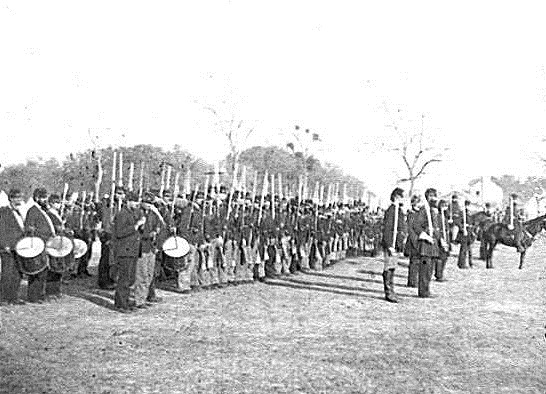
Philip M. Bryant:Writing Militarily

Our last guest for 2011 is Historical Fiction Writer Phillip Bryant. This is a new side of fiction we’ve never explored at the Rising Muse, so for those history buffs out there, here’s a treat…

“Sometimes a good story can miss the mark when we lack the minutia of details that can transport the reader or give our plot realism. SometimesPhil these details are elusive unless time has been spent living the life we wish to portray. Although a brief article on civil war or military parlance can’t make up for having lived it, I will outlay some things that I hope will be helpful in creating realistic scenes, dialogue, plots, and character arcs.

I have always been a military history buff, the American Civil War being my favorite area of research but most periods of wars have drawn my interest. I’ve also been both a Civil War and WWII reenactor for over ten years.

One thing, no matter what period one is writing about, it was probably an era of conflict. What we see in movies and television is often inaccurate or cliché. Until the Second World War introduced a large and permanent standing army, our wars were fought by volunteer armies raised from state levees and disbanded as soon as peace was achieved. This brings the type of movie character we are familiar with, the fatherly sergeant, the young and inexperienced privates, into conflict with a very real dynamic that existed between soldiers and the command structure used at the time. For the Civil War time period, picking one or two published journals like Hardtack and Coffee by John Billings or Company Aytch by Samuel Watkins will give you an idea of soldier life. Another great resource is The Life of Billy Yank and The Life of Johnny Reb by Bell Irvin Wiley.

Do not assume that the army organization and functionality has remained static. Organization and how armies were used changed with tactics and wars. Here’s a quick guide to the basic elements of an army unit. These exist in any branch of the army (cavalry, artillery).

For Revolutionary War, War of 1812, Mexican American War, Civil War, and Spanish American War the basic element was the company. The reason for this is that fire is massed in a tight formation, two ranks. The smallest element in the company was the comrades in arms, a group of four men who made up a skirmish group.

The next formation up was the battalion, a grouping of companies under the second in command of a regiment. It is rare that this unit is separated from the regiment but a battalion could be sent off on a small mission where it is not expected to run into much resistance. Picket (a string of vedettes along a long line like on a river bank separating forces or spread out along a line of miles whose purpose is to be an early warning for the larger force behind it) and garrison duty would be the only reason a battalion might be separated from their regiment.

The primary unit of all of these time periods was the regiment, made up of 10 companies that march, bivouac, and fight together. Volunteer regiments (as opposed to regular army regiments) were raised by the states and federalized for national service. They retained their state designation and the governor of each state had the power to grant commissioned officers. Volunteers were raised from each county in the state, sometimes from specific counties in the state and the volunteers being formed into companies from those who volunteered from that county, so that one served with men one knew already. This was a consistent practice up to WWII. Officers and noncommissioned officers would be elected after the formation of each company or the captaincy of each company would be commissioned by the governor and other commissioned officers by the same process. When writing about soldiers in these time periods, it was the regiment that held their allegiance most and governed their daily lives.

The next unit of note was the brigade, made up of between three to four regiments. When reading about these various wars and battles, one often runs into the brigade being mentioned most as tactics governed the movements of brigade sized units about the battlefield.

The third and fourth unit was the division (made up of three to four brigades) and the corps (made up of three to four divisions). These are forces made up of thousands of men and controlled by the commander of the army.

The last organization is the army, a grouping together in a geographical theater of operations (a term meaning anything from a state to a region to an entire continent). An army was usually comprised of a variety of organizational schemes. For instance, as the civil war progressed and the need to control the vast armies grew, army commanders used a variety of methods to group regiments and brigades together. Up until 1862 the largest designation was the division or, as at Fredericksburg, Right, Center, and Left Grand Divisions made up of several divisions. After the Union disaster of Fredericksburg, Corps were formed and Union armies kept these designations and organization for the duration of the war. The Confederate forces used different means of organizing itself and never adopted the Corps structure.”

PhilbioPhillip M. Bryant Attended the University of New Mexico and earned his bachelor’s degree in history and with a minor in American studies. He has been active in local New Mexico reenacting and on the national level is a member of the 23rd SNY as part of the Army of the Pacific, 1st Federal Division. He has been researching the American Civil War for over 25 years. His sources have included diary accounts, autobiographies, historical monographs and first-hand reports on the actions taken 150 ago published in the War of the Rebellion battle reports and War Department communications. Phillip lives in Albuquerque, New Mexico with his wife of 18 years, is a deacon, an IT administrator, served in the Army National Guard for 15 years, and is a long time history buff. His first novel is out and he’s working on the sequel now.

Phillip’s novel They Met at Shiloh is now available on Amazon!

Get off your soapbox…

How many times when we are ranting about any subject we are told to get off our soapboxes? I found myself in a situation like that and it was me who told myself to get off the soapbox. But a writer’s mind keeps always thinking about words and after the words left my mouth I wondered where did this phrase come from. So if you’re wondering too, join me in a little history lesson…

Sometime in the 19th century, after WWI groups would gather in public places to listen to orators discuss different topics of interest: politics, religion, etc. In order to lift the speaker from the crowd they usually utilized a wooden box to stand on and do their speeches.

At the time soap was packed in sturdy wooden crates that made it easy and convenient for this orators to utilize them. Not only they were free, as they were disposed after being shipped to their destinations, but they were easy to carry around and sturdy enough to hold the speakers.

Although things have evolved tremendously, it is considered now any forum of public expression as some kind of soapboxing. So websites and blogs utilized for expressing opinions are the new forms of a soapbox. Who knew? Therefore join me every Monday, Wednesday and Friday on my little inspirational soapbox. I enjoy it very much.

Also remember that Growth Lessons is 99cents only until the end of the year. Time is ticking and it would be a great stuffing stocker.

Have a blessed day!

Spiritual Abuse

Researching information for this month’s articles I ran into something, that yes, I’ve seen but it had not clicked in my mind when I thought about abuse and it’s the term “spiritual abuse” in a relationship. This relates to when a spouse uses God to control or manipulate the other spouse with the Word of God or an alleged spiritual gift or “power”

These abusers use their spouses faith and a legalistic vision of the Word of God to manipulate, control and undermine their spouses. With this behavior the enforced their authority and the victim submits to avoid consequences not only with their perpetrator but with their higher power, as they believe this is coming from God himself.

The fact that the victims are being abused will make them be more submitted as they think that they must be doing something wrong, as they continue to be criticized or chastised by their abuser. On the other hand this can hinder their faith as they would have trouble understanding why God would allow them to live in such conditions, when it’s not God, it’s the other person’s free will that is attacking them.


Jeremiah 23:16 says “This is what the LORD Almighty says: “Do not listen to what the prophets are prophesying to you; they fill you with false hopes. They speak visions from their own minds, not from the mouth of the LORD.” But if this is your husband or boyfriend, how can you tell?

  • Study the Word yourself.
  • If your spirit says something is not right, it probably isn’t. Look it up before you agree to do something.
  • Pray and ask the Holy Spirit for clear direction.
  • Read the Word in context and not singling out scriptures. Sometimes just reading a few more sentences can bring clarity to the context.
  • In doubt, research. Sometimes just reading different versions of the same scripture will bring clarity to our notions.
  • Talk to other Christians (be careful about this one, you don’t want someone who is misguided as well)

If you want to identify a potential spiritual abuser, read Matthew 23:1-39 ESV Then Jesus said to the crowds and to his disciples, “The scribes and the Pharisees sit on Moses’ seat, so practice and observe whatever they tell you—but not what they do. For they preach, but do not practice. They tie up heavy burdens, hard to bear, and lay them on people’s shoulders, but they themselves are not willing to move them with their finger. They do all their deeds to be seen by others. For they make their phylacteries broad and their fringes long”

Be safe!

Remember to check out my new devotional Growth Lessons, and obtain a 10% discount the coupon code PN34W

The abuse that nobody sees

October is Domestic Violence Awareness Month. This is a cause very dear to my heart and once again I want to collaborate by bringing awareness to this illness in our society.

When most people think about domestic abuse they think of broken bones, black eyes and dishevel appearance. Usually the abuse is thought of as from a man to a woman. Although this stereotype is true, there’s a silent, sometimes subtle kind of abuse that goes on in many households undetected, that’s emotional abuse.

Emotional abuse is usually defined by instances where one spouse or partner belittlers, yells, name calls and is offensive towards the other spouse or partner. Some victims believe they are not being abused because they engage in the cycle by responding to the attacks.  I found this interesting article on emotional abuse that if you think you are in an abusive relationship you should read. It gives you the right questions to ask yourself to determine if you are in an emotional abusive relationship.

I’ve talked to Christian women in domestic violence situations that do not believe they are in an abusive relationship because there are no bruises on their bodies. They also quote scriptures about the wife being the role model to Christ for their husband. Yes, that can happen, if the man wants to be lead by Christ and not his emotions. When a man becomes abusive, he has become his own god, why would he need the real ONE?

I have been presented with this scripture in 1 Corinthians 7:12-16 ESV  “To the rest I say (I, not the Lord) that if any brother has a wife who is an unbeliever, and she consents to live with him, he should not divorce her. If any woman has a husband who is an unbeliever, and he consents to live with her, she should not divorce him. For the unbelieving husband is made holy because of his wife, (this particular portion makes a lot of women in abusive relations justify their acceptance to abusive situations, but like my pastor would say keep reading) and the unbelieving wife is made holy because of her husband. Otherwise your children would be unclean, but as it is, they are holy. But if the unbelieving partner separates, let it be so. In such cases the brother or sister is not enslaved. God has called you to peace. For how do you know, wife, whether you will save your husband? (Yes, as Christians we are to model Christ not only to our spouses but to everyone, but we are not the saviors, Jesus is. Only the spouses willingness to accept Christ and his lordship will save and change him) how do you know, husband, whether you will save your wife? “

God has a particular plan for your life, as stated in Jeremiah 29:11 ”For I know the plans I have for you,” declares the LORD, “plans to prosper you and not to harm you, plans to give you hope and a future. See those plans are specific for YOU and they are not to harm you. If God Almighty doesn’t want to harm you, do you think he wants you to be harm by your spouse? Read in the above scripture where it says, “God has called you to peace” Is that relationship bringing you peace?

I’m not advocating for any particular decision or solution, what to do is something you should decide with God in prayer. All I’m saying is that we need to look deeper into the Word and will of God for our lives. Slavery doesn’t come from God. There are options to stop the abuse. You need to recognize your value as a child of God, to know that you are loved, precious and accepted. That tolerating abuse is not the answer as it tells the abuser that is ok.

Please be safe

Blessings customs under the microscope

Achoo!…God Bless you! This is the first knee jerk response for most people when they hear someone sneeze. Gesundheit is another word used, which is a German word that according to my friend Webster means “to wish good health”

According to my research this practice stems from a bubonic plague in Rome around AD590. Pope Gregory I, ordered unending prayer throughout the streets and since sneezing was a common symptom of the plague, people would “bless” anyone sneezing as a chant of prayer against the disease.

In looking this up I found very interesting feedback. There are some people who are actually offended by someone saying “God Bless you” to their sneeze, even some believers who commented on an article that I read that thought that the practice was superstitious. In California, a teacher even scolded a student for “blessing” another one who sneezed. Wow!

The other blessing cliché that I’ve encounter is asking elders for blessings. Culturally, as a Hispanic, I’m accustomed to be blessed by my mother or any other family authority figure (aunts, uncles, grandparents). It is taught to the children to ask for their parents blessing when gathering or departing their presence. Even as grown ups most of us still ask for our elders blessing when interacting with them.  It’s a sign of respect, endearment and fellowship.

Blessing others is not far from biblical principles either. In the Old Testament we see various characters even fight for their parent’s blessing, which meant their wealth and prosperity in many cases. Read about Jacob and Esau and you will see how much a father’s blessing meant.

Personally I don’t mind being blessed; I sure can use all the ones I can get a hold of. So regardless of the setting, although it may be cliché, manners, and customs or in a deeper meaning, I don’t think that wishing someone blessings or placing blessings upon others; even strangers could be a negative thing.

So from my heart to yours…God Bless you today!

Christians have something to learn about celebrity fans

Michael Jackson Ster
Image via Wikipedia

I’m usually intrigued with criminal high profile cases. Today was the first day of the trial against the doctor accused to be responsible with the death of Michael Jackson, and of course I’m with the rest of the world watching. I couldn’t believe my ears when I heard a woman being interviewed who said that she came from Germany just to see the trial. Really?

No disrespect to Michael Jackson, he was a great artist and he has now passed on. There are people who are still claiming for him and he can’t do anything for them because he’s dead. This has nothing to do with MJ, it was this situation that got me thinking.  It made me look at our behaviors as Christians. Are we that bold as followers of Christ?

Jesus didn’t come to earth to entertain us, he gave his life for us, to save us from eternal damnation. He is alive and still intervening on our behalf and yet a lot of his so called followers do not exhibit the passion that some celebrity fans do.

Just following the same example, think how much sacrifice it may take to follow this trial for that person who came to the US from Germany. She was an adult, so I’m imagining that she should have a job, which means vacation time, travel expenses, lodging, food to see something she could have seen in the comfort of her bed as I am doing and gain nothing but satisfaction I guess.

On the other end, as a Christian, are you willing to cancel your family vacation and utilize all those resources to do a missions trip or spread the Good News? Are we this passionate to follow the Word of God? Do you spend your time doing what Jesus would ask us to do in Matthew 25:35-37 “For I was hungry and you gave me something to eat, I was thirsty and you gave me something to drink, I was a stranger and you invited me in, I needed clothes and you clothed me, I was sick and you looked after me, I was in prison and you came to visit me”

I’m not judging what others do with their free will, but it does let me know we can learn to be more passionate for He who matters over every other.

Food for thought!