Discovering God in Daily Moments

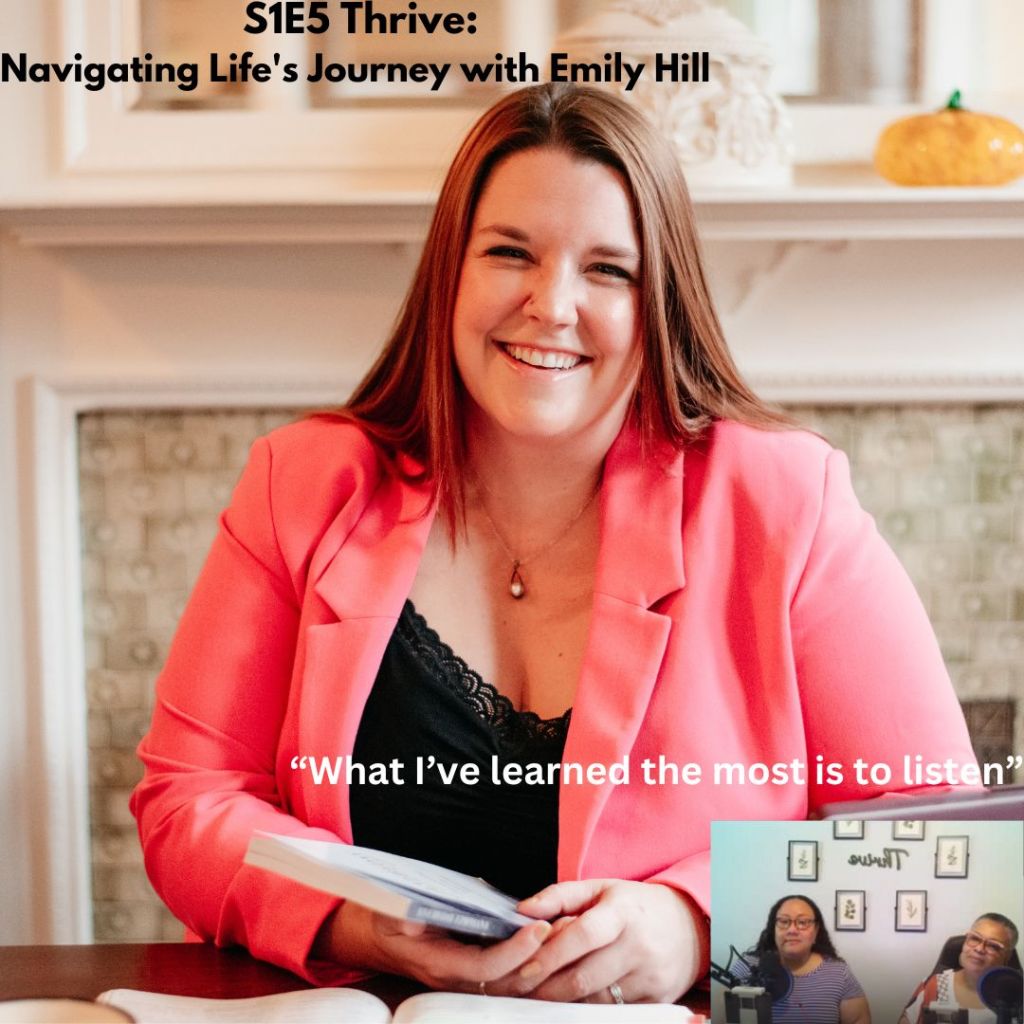
Are you ready to embark on a journey of faith, family, and mental health? Join us for a captivating conversation with Emily Hill, where we delve into the depths of life’s challenges and triumphs.

Emily’s story is one of resilience and discovery. Growing up in a pastor’s home, life seemed picture-perfect until the harsh realities of adulthood hit hard. From navigating the joys and struggles of marriage to grappling with the profound loss of miscarriage, Emily shares candidly about her journey through grief, anger, and ultimately, healing.

In this episode, Emily invites us into her world, where faith intersects with the everyday moments of life. Through personal anecdotes and reflections on scripture, she reveals how she found solace and purpose in the midst of darkness, discovering the real presence of God in the mundane and momentous alike.

But the conversation doesn’t stop there. Emily shines a light on the stigma surrounding mental health in religious communities, advocating for open dialogue and acceptance. She shares her vision for faith communities to become spaces of healing and support, where individuals can find both spiritual and tangible resources for mental well-being.

And don’t forget to check out Emily’s book, “Everyday Epiphany,” a devotional that explores the presence and purpose of God in the everyday moments of life. With personal anecdotes and insights drawn from scripture, this book offers a guiding light for those seeking to deepen their faith and find meaning in the midst of life’s challenges.

Join us as we explore the thin places where the natural and spiritual worlds collide, where grief is met with grace, and where hope shines brightest in the darkest of moments. Whether you’re seeking comfort, inspiration, or simply a listening ear, this episode promises to touch your heart and uplift your spirit.

Don’t miss out on this empowering conversation with Emily Hill, as we navigate the complexities of everyday life with faith, family, and mental health as our guiding lights.

Watch the full episode by clicking here and embark on your own journey of discovery and resilience. Because in the midst of life’s challenges, there is always hope to be found.

The Power of Hugs: Boost Your Health and Happiness

Did you know that there is a National Hugging Day? It’s a day dedicated to celebrating the warmth and comfort that hugs bring to our lives. It is celebrated on January 21st, but we decided to talk about it yesterday on our newest episode of Thrive. Hugs are more than just gestures of affection – they have a profound impact on both our mental and physical well-being.

The Origins of National Hugging Day

National Hugging Day was created by Pastor Kevin Zaborney in Clio, Ohio, with the simple yet powerful idea of encouraging people to share warm embraces with their loved ones more often. Since its inception in 1986, this holiday has gained recognition worldwide, highlighting the importance of human connection and touch in our lives.

The Science of Hugs: How They Benefit Your Health

Hugs aren’t just nice – they’re essential for our overall health and happiness. Here are some of the incredible benefits of hugs backed by science:

  1. Boosted Immunity: Hugs can enhance your immune system by stimulating the thymus gland, which plays a crucial role in immune function.
  2. Improved Heart Health: Hugs lower blood pressure and reduce the risk of heart disease by promoting relaxation.
  3. Pain Relief: The release of oxytocin during hugs acts as a natural painkiller, soothing aches and discomfort.
  4. Emotional Bonding: Hugging fosters emotional bonds and strengthens relationships, creating a sense of connection with others.
  5. Mood Enhancement: Hugs trigger the release of endorphins, those delightful “feel-good” chemicals that lift your mood and combat feelings of loneliness.
  6. Better Sleep: A comforting hug before bedtime can promote better sleep by relaxing your body and mind.

What Happens in Your Brain When You Hug Someone?

When you receive a hug, it triggers a cascade of neurochemical signals in your brain. These signals lead to a decrease in cortisol, the stress hormone, creating a sense of safety and calmness. Additionally, hugs stimulate the release of oxytocin, often referred to as the “love hormone,” which promotes emotional bonding and enhances feelings of trust and connection.

How Many Hugs Do You Need?

According to research, hugs aren’t just beneficial – they’re necessary for our well-being. To thrive in life, aim for at least four hugs a day for basic survival, eight hugs daily for emotional balance, and twelve hugs daily for personal growth and flourishing.

Tune in to the latest episode of the Thrive by the Rising Muse, to learn more about the science behind hugs and how you can incorporate more hugs into your daily life. Together, let’s embrace wellness and thrive!

To access S1 E3 The Power of Hugs, click here

Embracing Healing and Empathy Through Trauma-Informed Care – A Sneak Peek into Thrive Podcast

In a world where health and wellness discussions often narrow down to symptoms and diagnoses, there emerges a beacon of hope and understanding—a holistic approach known as trauma-informed care (TIC). As we gear up for the launch of the much-anticipated podcast, Thrive, set to premiere on April 7th, we delve into a topic that resonates deeply with our core themes: Christianity, mental health, parenting, family, and women’s issues. Today, we explore the transformative potential of trauma-informed care, an approach that aligns perfectly with Thrive’s mission to foster healing, empathy, and connection.

Understanding Trauma-Informed Care

Trauma-informed care represents a paradigm shift in health services, focusing on the question, “What happened to you?” rather than “What’s wrong with you?” This approach recognizes the profound impact of trauma on an individual’s well-being and strives to understand their entire story. It’s an ethos that doesn’t just aim to treat but to heal, acknowledging the person’s experiences, strengths, and resilience.

The Pillars of Trauma-Informed Care

Safety First: Creating environments where individuals feel both physically and emotionally secure is the foundation of TIC. This sense of safety is pivotal for healing.

Trust and Transparency: Openness and honesty in communication are key. Trust is a two-way street that fosters a therapeutic alliance.

Peer Support: Sharing experiences with others who have walked similar paths can be incredibly healing. It’s about building a community of understanding and support.

Collaboration: True healing involves working together, respecting each other’s expertise, and making decisions collaboratively.

Empowerment: Recognizing and nurturing individual strengths and resilience is at the heart of TIC. It’s about highlighting what individuals are capable of, not just what they’ve endured.

Humility and Responsiveness: Acknowledging personal biases and the impact of historical trauma is essential. TIC is about being adaptable and responsive to the unique needs of each individual.

Why Trauma-Informed Care Matters

The significance of trauma-informed care extends beyond the individual to the community and society at large. It promotes better patient engagement, improved health outcomes, and enhances the well-being of caregivers. It’s a testament to the power of empathy, understanding, and kindness.

Bringing Trauma-Informed Care into Our Lives

Incorporating the principles of trauma-informed care into our daily interactions doesn’t require a medical degree. It starts with being a good listener, creating safe spaces for open dialogue, showing kindness in our actions, and educating ourselves about the impact of trauma. These small steps can make a profound difference in someone’s life.

Thrive: A Journey of Healing and Understanding

As Thrive prepares to launch, our aim is to create a platform that embodies the principles of trauma-informed care. Each episode is designed to enlighten, inspire, and connect with listeners on a deep level, covering a wide range of topics from Christianity and mental health to parenting, family, and women’s issues. Thrive is not just a podcast; it’s a movement towards a more empathetic and understanding society.

Trauma-informed care reminds us of the power of seeing the person behind the symptoms, of understanding the story behind the pain. As we eagerly anticipate the premiere of Thrive, let us commit to approaching every interaction with empathy, kindness, and an open heart. Because when we understand what has happened to someone, we open the door to healing and connection.

Remember, it’s not just about what’s wrong; it’s about what happened. And that matters. Join us on April 7th for the launch of Thrive, where together, we can embark on a journey of healing, understanding, and thriving.

Finding Comfort in Connection, Self-Care, and Faith During the Holidays

The holiday season is often portrayed as a time of joy, celebration, and togetherness. However, for many individuals, it can be a challenging period marked by loneliness, grief, and sadness. Whether due to the loss of a loved one, being far from family and friends, or struggling to form connections, the holidays can magnify feelings of isolation. Today, we’ll explore the various challenges people may face during this time and offer suggestions on how to cope, with a special emphasis on incorporating faith as a source of solace and strength.

1. Acknowledge and Validate Feelings:

The first step in addressing holiday loneliness and grief is to acknowledge and validate your feelings. It’s okay to feel sad, and it’s important to recognize that others may be experiencing similar emotions. Understanding that these feelings are a natural part of the holiday season can be a crucial first step toward healing.

2. Connect with Supportive Communities:

If you find yourself far from loved ones or lacking a strong social support system, consider reaching out to local communities, religious groups, or online forums. Attend community events, volunteer at local charities, or participate in virtual gatherings. Building connections, even if they are temporary, can provide a sense of belonging and alleviate loneliness.

3. Create Meaningful Traditions:

Crafting new traditions that align with your current circumstances can help reframe the holiday season. Whether it’s volunteering at a local shelter, starting a personal ritual, or joining community events, creating meaningful experiences can bring a sense of purpose and fulfillment.

This may sound silly as you’re by yourself, but it can be quite meaningful. One of my silly traditions is for New Year’s Eve. I don’t like to be out of my house, but I stay up late. After the new year has started, I locate a comedy channel and watch stand up comedy until I fall asleep. I look forward to that little tradition every year.

4. Embrace Self-Care Practices:

Self-care is crucial during times of loneliness and grief. Focus on activities that bring you joy, relaxation, and comfort. This could include spending time in nature, practicing mindfulness, indulging in hobbies, or simply taking a break to rest and recharge. Prioritize your mental and emotional well-being as an essential part of your holiday routine.

5. Seek Professional Support:

If feelings of loneliness and grief become overwhelming, seeking professional support can be incredibly beneficial. Therapists, counselors, and support groups can offer guidance, understanding, and coping strategies tailored to your specific situation.

6. Include God in Your Journey:

For those who find strength in their faith, including God in the process of navigating difficult times can provide solace and comfort. Engage in prayer, meditation, or attend religious services to connect with a higher power. Allow your faith to be a source of hope and guidance as you navigate the challenges of the holiday season.

If you want to start a habit of prayer or meditation, consider checking out my new book, The 15 day Challenge to a Stronger You! One of the challenges in the book is creating the habit of daily meditation.

The holiday season may bring forth a mix of emotions, but it’s essential to approach this time with compassion and self-care. By acknowledging your feelings, fostering connections, creating meaningful traditions, and including God in your journey, you can find strength and resilience during difficult times. Remember that you are not alone, and there are resources and communities available to support you on your path to healing and peace.

Shedding Light on Seasonal Affective Disorder (SADS): Understanding and Managing the Winter Blues

As winter blankets the world in frosty landscapes and chilly weather, some individuals find themselves grappling with a condition known as Seasonal Affective Disorder (SADS). SADS is more than just the winter blues; it’s a form of depression that occurs at a specific time of year, most commonly during the darker winter months. Let’s shed some light on SADS, understand its impact, and explore practical ways to manage it, including spiritual resources.

What is SADS?

Seasonal Affective Disorder is a subtype of major depressive disorder that follows a seasonal pattern. According to the American Psychiatric Association, SADS typically begins and ends around the same time each year, with symptoms most commonly appearing in the fall and continuing into the winter months. These symptoms can include persistent sadness, loss of interest or pleasure, changes in sleep and appetite, and low energy.

Here are some suggestions for individuals experiencing Seasonal Affective Disorder (SADS):

Educate Yourself

Take the time to learn more about SADS. Understanding the condition and its symptoms can empower you to recognize the signs early and seek appropriate help. Reliable sources such as medical websites, books, or articles from reputable health organizations can provide valuable insights.

Build a Support System:

Reach out to friends and family members and let them know about your struggle with SADS. Building a support network can provide emotional assistance and encouragement during challenging times. Share your experiences, and do not hesitate to lean on those who care about your well-being.

Consider Therapy and Medication if Necessary:

Consult with a healthcare professional to discuss the possibility of medication as part of your treatment plan. Certain medications, such as antidepressants, may be prescribed to alleviate symptoms of SADS. Your healthcare provider can guide you in determining the most suitable options.

Monitor Your Sleep Patterns:

Ensure you are getting sufficient and quality sleep. Establish a consistent sleep routine, create a comfortable sleeping environment, and consider relaxation techniques before bedtime. Quality sleep is integral to maintaining good mental health.

Practice Self-Compassion:

Be kind to yourself. Acknowledge that dealing with SADS can be challenging, and it’s okay to ask for help. Avoid self-judgment and negative self-talk. Embrace self-compassion and treat yourself with the same kindness you would offer to a friend facing a similar challenge.

Light Therapy:

A highly effective method for tackling Seasonal Affective Disorder (SADS) is through light therapy, scientifically referred to as phototherapy. Light boxes, designed to replicate natural sunlight, play a crucial role in mood regulation by triggering the production of serotonin—a neurotransmitter associated with a sense of well-being. Following the guidance of experts at the Mayo Clinic, incorporating a 20 to 30-minute session with a light box into your morning routine is recommended to harness its mood-enhancing benefits.

Use Your Faith:

Turning to spiritual practices can be a valuable wellspring of comfort and support for those grappling with Seasonal Affective Disorder (SADS). Activities such as meditation, prayer, or mindfulness exercises serve as powerful tools for individuals seeking connection with a higher power or inner peace. Notably, research featured in the Journal of Behavioral Medicine advocates for the integration of spirituality into mental health interventions, emphasizing its potential to augment overall well-being.

Example: Embrace a spiritual routine in your daily life, like morning meditation or prayer, to center yourself and discover solace amid the trials of the winter season. By nurturing your spiritual well-being, you can fortify your resilience and find strength in challenging moments.

If someone you love struggle with SADS, here’s some suggestions for you

Open Communication:

Create a safe and non-judgmental space for open communication. Encourage your loved one to share their feelings and experiences with SADS. Listen attentively, validate their emotions, and avoid offering quick solutions. Sometimes, just having someone to talk to can make a significant difference.

Encourage Professional Help:

Gently suggest and encourage your loved one to seek professional help. Mental health professionals, such as therapists or counselors, can provide the necessary guidance and support. Assure them that seeking help is a sign of strength, and you will be there to support them throughout the process.

Be Patient and Understanding:

Recognize that managing SADS is a process that may take time. Be patient with your loved one and understand that they may have good days and challenging days. Offer your support consistently and reassure them that you are there for the long haul.

Maintain Your Own Well-Being:

Supporting someone with SADS can be emotionally demanding. Take care of your own mental and emotional well-being. Seek support from friends, family, or a support group to share your experiences and ensure you have the resilience needed to provide ongoing support.

Remember, your understanding, encouragement, and active participation in your loved one’s journey can have a profound impact on their ability to manage SADS. Continue to be a pillar of support, and celebrate progress, no matter how small, together.

Even if nobody around you suffer from SADS you can help by spreading awareness about SADS. Understanding and compassion are crucial in creating a supportive community. Share this article, and let others know that SADS is a real condition that deserves attention and understanding. Think of it as a way to show love and compassion to those struggling during the holiday season.

In conclusion, while Seasonal Affective Disorder may cast a shadow over the winter months, there are effective strategies that can bring relief. Incorporating practices like light therapy, regular exercise, and spiritual routines can significantly improve one’s well-being. If you or someone you know is facing the challenges of SADS, take proactive steps today.

Remember, the path to managing SADS is a personal journey, and there is no one-size-fits-all solution. Feel empowered to customize these strategies to align with your preferences and unique needs. Additionally, seeking guidance from healthcare professionals ensures a comprehensive and personalized approach to your well-being.

Let’s collectively embrace the metaphorical and literal light, working together to foster a community that prioritizes and supports mental well-being for everyone. By sharing our experiences and supporting one another, we can navigate through the shadows of SADS and emerge into the brighter days ahead.

As always, be blessed!

The puzzle of life

I really do not believe in coincidences. I do believe in a masterplan, which is like a puzzle with many pieces that need to fall into place for the complete picture to come together. Here are some of the issues we face when we are trying to complete the puzzle.

Too many pieces

Photo by Magda Ehlers on Pexels.com

When we look at all the things that we are juggling we become overwhelmed. How is this going to happen? How is that going to happen? It can be overwhelming. But just like a puzzle, you can only put one piece at a time together. The same way, start with the corners. In real life, the corners are those small tasks that make it easy to check off our lists. It will give us a sense of accomplishment to have something done.

I am currently helping homeschool one of my nephews. It is a lot of material that I must review every week to make sure that he has all the lessons he needs to complete. It is also a lot to review afterwards. I made a spreadsheet. That is my way of organizing my pending tasks. I have all the subjects we need to cover with the dates that we will be working. Every week I go cell by cell of that spreadsheet, adding each task that he needs to complete per subject. If it gets to be too much, I do something else and come back to it.

I printed all the worksheets and literature that he will be reviewing this semester and it is in piles in my office. Once I schedule on my spreadsheet the tasks for the week, I go to my piles and pull out those sheets, then I put them in a binder for him.

If I were just looking at the piles of work that needed to be completed, I promise you that I would freeze and get nothing done.

It does not fit

Photo by Ann H on Pexels.com

Many puzzle pieces look alike, and we do not understand why this one is not fitting in place. We can be exceptionally good at trying to get a square peg in a round hole and get frustrated of why is not working. When something is not working, it is time to take a step back. Are you trying to do something that is not beneficial to you? Are you trying to go about something the wrong way? Are you trying to take a shortcut when the only way to get to the goal is by following the steps? Stop, see what you are doing and why are you doing it? Be honest with yourself. Talk to someone you trust about this roadblock. Sometimes another set of eyes can help you see where that piece fits, or if that puzzle piece is not part of your picture at all.

I have tried several business ventures. Aside from writing, I would like to be an entrepreneur, but not all business models are right for me. They do not fit my schedule, my personality and/or my values. I have had to take inventory when things are not working and realize that is not lack of dedication or motivation. This one is not for me. That is ok, not everything is for everyone.

Communicating, writing, interacting with people, that, is my gift. Selling products is not.

It is taking too long

I complete puzzles every day for fun. I do it on a mobile app. The game allows you to do as many pieces as you want. The same puzzle can be divided from 36 to 400 pieces, your choice. My usual setting is 144. The smaller numbers are too easy and boring. The larger numbers take me too long, usually more than one day and I want to see at least one complete puzzle a day. But the game has events that include puzzles of all sizes, you cannot customize those. I am not going to lie; I live the 400 pieces one for the end. It takes too long! But if I do not complete it, I cannot complete the event and get my reward.

The same happens to our daily life. The constant pressure can be paralyzing and give you the desire to give up. Sometimes it is ok to take a break and then come back to the task. Giving up is not a choice if you want the reward. Stopping and restarting is not failure, not continue to try is. Of course, that is if it is not something harmful that you need to stop altogether.

I hope this motivates you to go on today.

Blessings

Check out my new YouTube Channel

There is not much there right now. It is brand new but subscribe as updated content will be added soon! Thanks for all your support.

Mental Illness is Real

After the events of last week, the conversation about laws regarding access to weapons and mental health have intensified. One of the things that I’ve learned, being involved in the mental health field is that, the stigma of mental health and the issues some people have to access services, influences in having a larger number of untreated people with mental health conditions.

I wrote an article last year regarding “Faith and Mental Health”. One of the things that I’ve encountered as a Christian is that there are people who reject medical care for their mental health symptoms because they feel that it shows a lack of faith or just spiritual problems. I don’t deny that some people may be dealing with spiritual issues that cause their problems, but that doesn’t deny any mental health situations that they may be experiencing.

At the time that I’m writing this, it hasn’t been confirmed that the person who committed the horrible murders in Connecticut had mental health issues. My take on that is this, not all mental health patients are violent. At the same time I don’t think anyone in their right mind would enter a public place to kill innocent people, especially children.

I’ve heard many people saying that this incident is worse because it’s so close to the holidays. Believe it or not, the holidays can be a trigger, for some, unexpected reactions from those dealing with mental illness. The holidays are not a happy time for everyone. The stress of memories of past unpleasant prior holidays, family problems, financial issues, unemployment or something as simple as the weather changes during the winter, can be triggers to increase symptoms on someone with untreated mental illness.

From the spiritual standpoint, I believe that the enemy preys on those weaker during these times to ruin the celebration of the birth of Jesus. He knows he has been defeated and our victory celebration doesn’t sit well with him.

Revelations 12: 9-11

“And the great dragon was thrown down, the ancient serpent, the one who is called the devil and Satan, the one who deceives the whole inhabited earth – he was thrown down to the earth, and his angels were thrown down with him. And I heard a loud voice in heaven saying, “Now have come the salvation and the power and the kingdom of our God and the authority of his Christ, because the accuser of our brothers was thrown down, the one who accuses them before our God day and night. And they overcame him because of the blood of the Lamb and because of the word of their testimony, and they did not love their life up to death.”

Instead of judging those around you with possible mental illness, educate yourself. There are many mental diagnoses, but the most common ones are depression and anxiety. If you or someone close to you presents these symptoms, seek help or encourage to seek help.

John 14:27

“Peace I leave with you;

my peace I give to you.

Not as the world gives do I give to you.

Let not your hearts be troubled, neither let them be afraid.”

Please take care of yourselves and each other. Blessings

Get your copy of Season’s Greetings from Amelia. This great novella brings mystery, suspense and the best stocking stuffer for your favorite e-reader. You can get your copy for just 0.99 cents on KindleSmashwords and Nook only during the month of December.

season (1)

Faith and Mental Health

 Mental Health is one controversial subject in religious circles. Emotional disturbances are not necessarily visible and therefore sometimes not viewed as real health problems and the treatment of there or lack of thereof is not always addressed appropriately.

Emotional conditions are usually viewed in religious settings as a lack of faith, a lack of prayer or lack of surrendering to God. I don’t discount that there are times were a believer’s struggle are due to those things, but as with physical healing, I wouldn’t recommend a cancer patient to stop or not engage in treatment; I wouldn’t discourage someone struggling emotionally to do the same. Matthew 4:23 (MSG) states, “People brought anybody with an ailment, whether mental, emotional, or physical. Jesus healed them one and all”; which tells me that in God’s eyes they were all the same.

I think that sometimes believers fail to educate themselves in the nature of mental health conditions.  A high percentage of mental health conditions are biological in nature. Just like diabetes, they are due to a chemical imbalance in the body, in this case; the brain, which is as much as an organ as the pancreas is. Just like diabetes, high blood pressure and cancer, most mental health conditions have a pre-disposition genetic component. It is true that a pre-disposition doesn’t mean that it will happen, just that the chances are higher. This has been proven with alcoholism and depression.

Can God heal people from these conditions? Absolutely, however that doesn’t mean that these struggles are not as real as physical ailments and they should be treated as such.

Some churches have a more open minded approach to these issues and have counseling programs available to their parishioners. There are many Christian programs (like Celebrate Recovery) and counselors out there that can not only understand the condition but also provide the spiritual support to the person dealing with these struggles.

In my opinion there are three major mental health conditions that are majorly misunderstood within the faith community. Those are: depression, anxiety and addictions. Absolutely keeping God first in anything in our lives is a most. At the same time if you or a loved one is struggling with emotional conditions do not be ashamed to seek professional help, or to encourage and support a loved one to seek it.

James 5:16

Therefore, confess your sins to one another

and pray for one another,

that you may be healed.

The prayer of a righteous person

has great power as it is working.

Moving Forward

First of all I want to apologize for not writing in the last few days, between Camp Nano and other distractions I have not been able to sit down long enough to concentrate. I’ve been thinking a lot about how sometimes we are affected by issues regardless if they have direct or indirect impact in our lives.

Life is never without challenges, disappointments and painful events, most of them out of our control. The way we react to those events and the way we view those events will determine our behavior and ultimately potential future outcomes.

When something unexpected affects negatively our lives its very common to feel anger, sadness, shock, resentment, disappointment, grief and many other negative feelings. Ephesians 4:26 reads “In your anger do not sin” : Do not let the sun go down while you are still angry” but I know there are wounds that are longer lasting, however once the sun comes back up, it may be time to start our baby steps back on the road of life.

We believe that we have no control over those feelings and that’s not totally true. Yes, those feelings are normal. We should not stuff them or deny them. We should talk about them and process them, the problem arises when we sulk and get stuck on them.

At some point the grieving process of an event runs its course and yes, the timing is different for everyone, but when the grief hinders you from functioning, you’ve gone too long.

That’s why I say that you can ultimately impact your future outcomes, for example…the loss of a relationship may be devastating, but it could open the door to self examination, discovery and the potential of a new, sometimes even better relationship. The loss of a loved one is devastating, but if you have faith that they are in a place of no pain and no sorrow, that will give you hope. The loss of employment or some other financial loss will not be easy to recover until you get back on your feet.

Feel what you need to feel, process what you need to process, but then it’s time to get up and move on. Trust that God will make everything right and that he’s in control. That there’s no evil that will not be avenged and no good deed unrewarded.

Faith will get you through

Be blessed.

Doing the right thing is not always fun

I recently encountered a situation were I was in a group and someone without provocation ( I promise) came and was very rude and disrespectful to me. My reaction:nothing! The people in the group where I was congratulated me for my reaction, stating that I had done the right thing, that the person’s attitude had been uncalled for and that I had taken the high road. So if I did the right thing, how did it not feel good? 

I said nothing, I did nothing. Inside there was a volcano of all the things I wanted to say and do, but nothing came out. There was a voice inside of me telling me how much of a wimp I was that I had not put this person in their place and tell them A, B, and C. How much I didn’t know how to react to situation like this. Sounds familiar? Yes, it’s called Satan! But at the time I was to angry to realize it.

I went home and I was pacing still reviewing scenarios in my head of what I should have said and done and all of the sudden I stopped. I remembered something I’ve told many people who can’t let go of a situation: Why are you carrying this person with you? Are you willing to have them move in with you?

Did you know that’s what happen when you hold on to a resentment? Yes, the person moves in with you and sleeps with you and eats with you and watches television right there by your side. I decided that I didn’t like this person enough to have them move in, plus I had made steak for dinner and it was very good and juicy and I only had one and didn’t want to share.

I moved on to why is this bothering me so much. I made reference to my own series in offenses. Why did this offended me and what was God trying to teach me?

The answer to the first one is pride. I was very uncomfortable by the fact that this was done in front of people and that I held restraint. Instead of being proud of myself for doing what I was supposed to do, my pride was hurt by the fact that I didn’t get even.

What was God trying to teach me through this situation? I meditated on this quite a bit. I think my lessons here were, definitely treat others as you like to be treated. I don’t think I’m rude to other people, but it always important to be watchful of how we do things. The other lesson is to keep your emotions in check and not allow them to lead you, which I didn’t and I did. The situation where we all were was a very tense one. This other person could have been reacting to the stress of our surroundings. In a way, I did the same thing by getting angry even though I didn’t show it.  Last but not least, that taking control of the flesh is not always fun, it’s painful but worth it.

Be blessed!